
The San Francisco Bay Area has long played an important part in the history of movies.
A brief history compiled by Gary Meyer
(November 14, 2024)
Motion pictures were started in 1872 on the Stanford farm on Palo Alto when Eadweard Muybridge’s multi-image motion studies led to movies and in 1880 the first public showing of motion pictures took place in San Francisco. In 1902 four San Francisco brothers formed a distribution and production company, the Miles Brothers Motion Picture Company. They built the first studio in 1906 on Market Street . It survived the earthquake but the fires after destroyed it. A few days before the earthquake they filmed “A Trip Down Market Street” and followed the route after the earthquake.
Essanay Film Manufacturing Company opened their extensive studios in Niles, near Fremont, in 1912, making movies with Bronco Billy Anderson and Charlie Chaplin all over the area. You can visit the Museum and watch movies there today. The California Motion Picture Company established their San Rafael studio on San Rafael . Movies in color were developed in Marin.
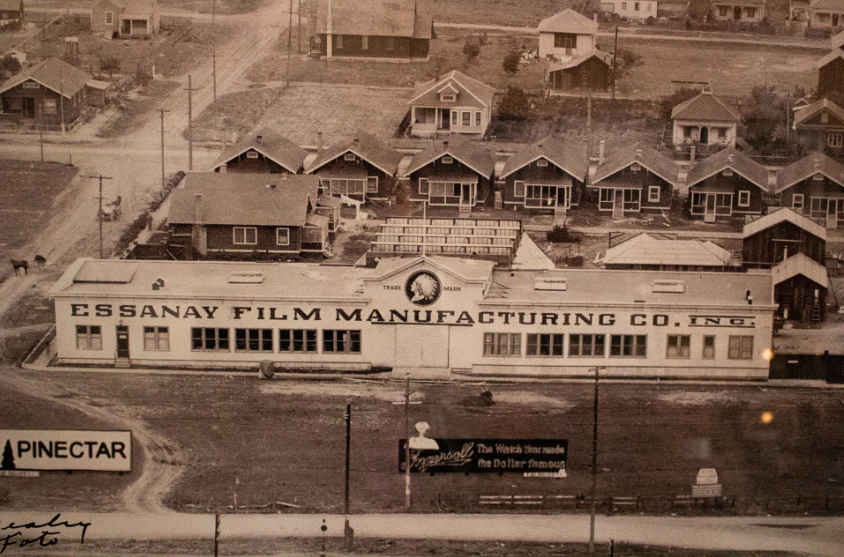
Back in the 1910s, the Essanay Film Manufacturing Co. was a big deal in Niles, California, as well as West Coast filmmaking. (Courtesy of Niles Essanay Silent Film Museum)
The first feature talkie, The Jazz Singer, was partially filmed near Union Square (1927). San Francisco became a favorite location for movies in the silent era and the trend has never stopped.
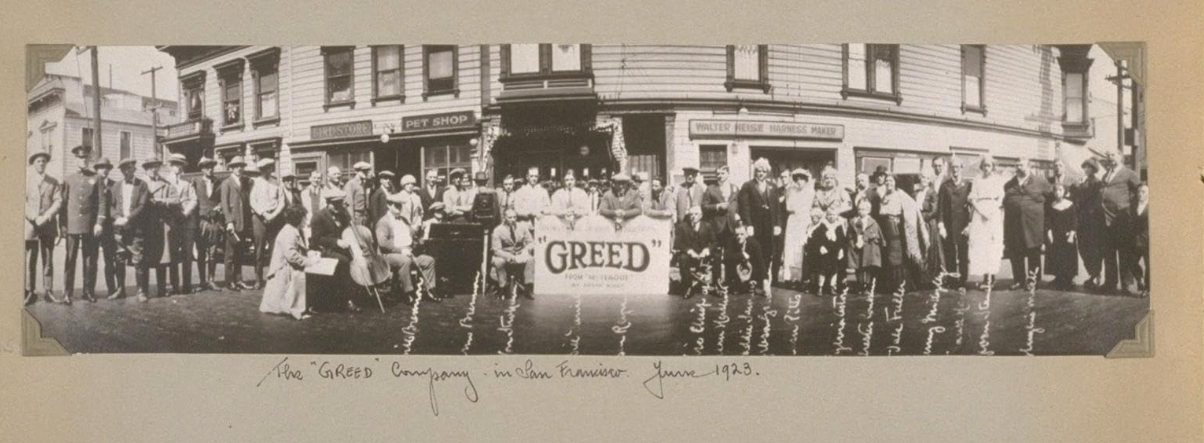
Erich von Stroheim’s Greed (1924) may have been the longest movie made up until then at over nine hours but cut by MGM to 140 minutes. Read about its famous location at Hayes & Laguna.
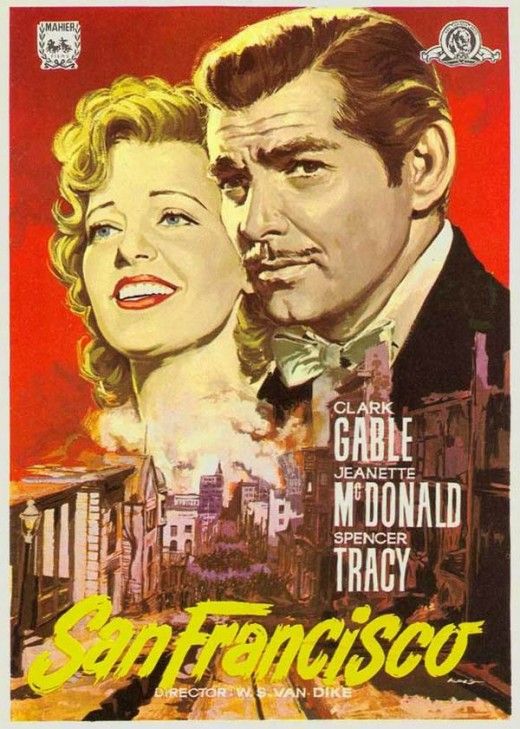
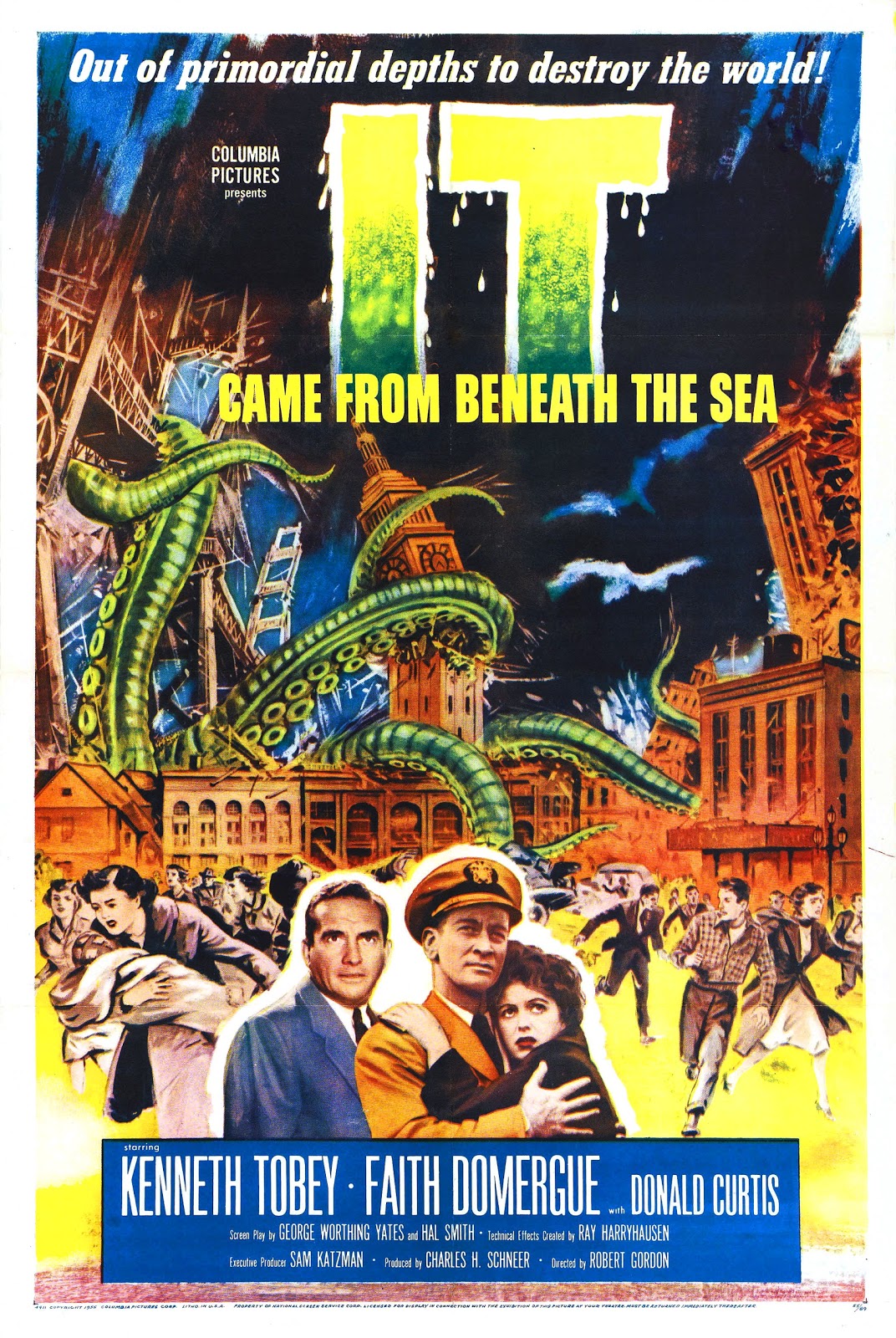
Hundreds of movies have been filmed in the bay area and locals enjoy pointing out mistakes like continuity that has a character turning a corner and being in a different neighborhood miles away and of course there is Dustin Hoffman and Katherine Ross driving across the the Bay Bridge to Berkeley on the upper deck—not possible when it was filmed. (At 2:00 in this video)
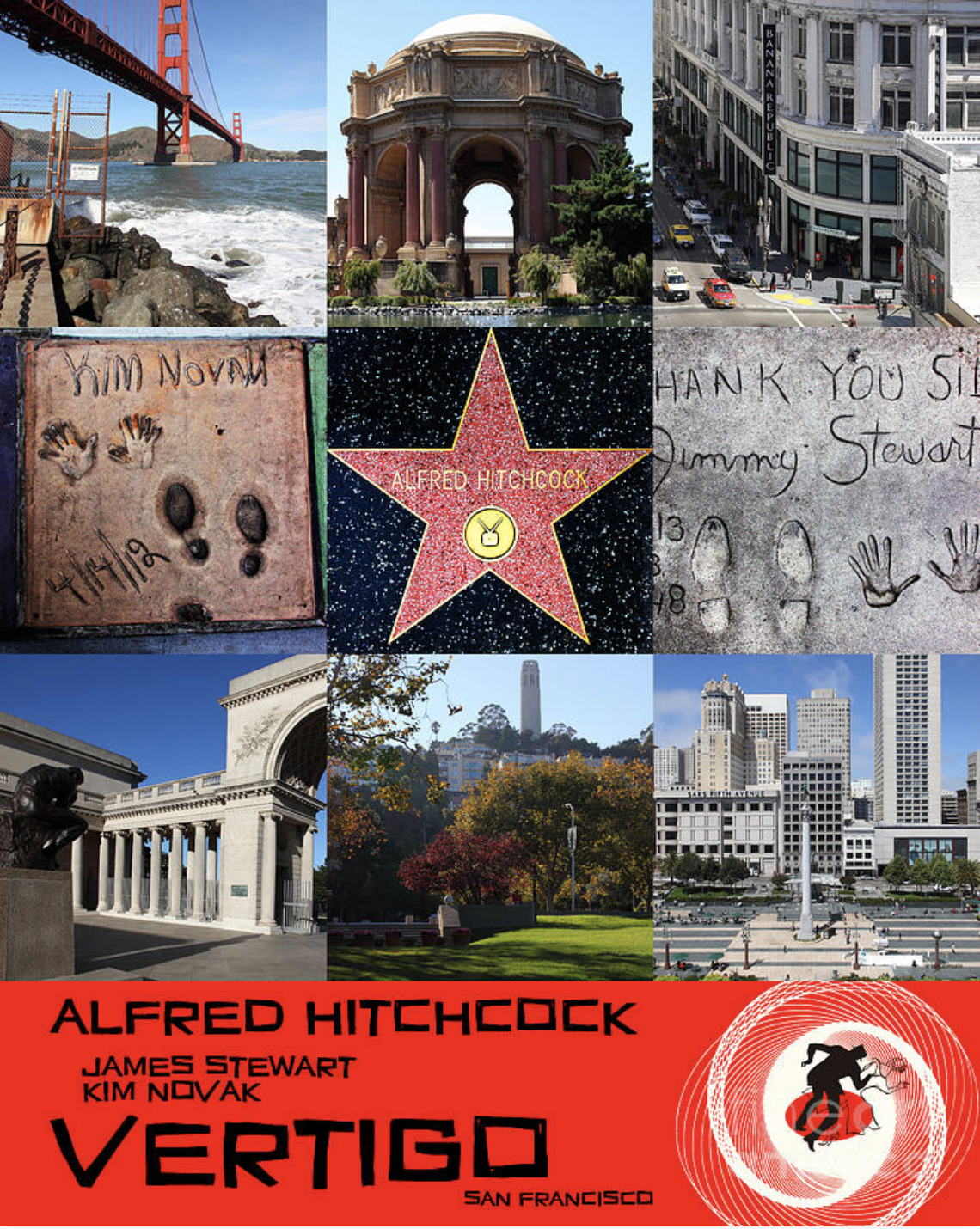
Numerous movie tours of San Francisco are offered like by guides like Bay Area Movie Tours.
There are in-person Alfred Hitchcock and Film Noir walking tours available.
Sterling Hedgepath offers some online Vertigo tips. An Internet search will find numerous others including both self-guided and personalized tours like Jesse Warr‘s day long experience. Or book a stay at the Hotel Vertigo, a location in the film the called the Empire.
Watch Vertigo‘s San Francisco Then and Now.
The first film festival in the Americas was founded in 1957 by theater owners Irving and Irma Levin and the San Francisco International Film Festival is still going strong.
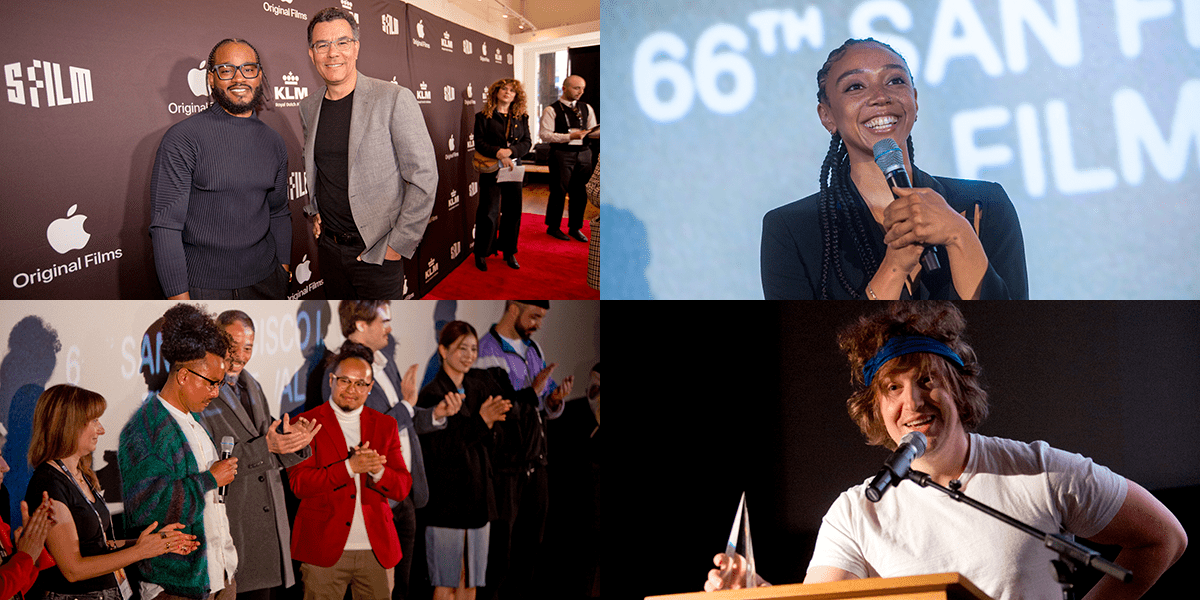
SFIFF Opening Night 2023Producer Ryan Coogler and director Peter Nicks (photo courtesy SFFILM/Tommy Lau); director Savanah Leaf (photo courtesy SFFILM/Pamela Gentile); director Matt Johnson (photo courtesy SFFILM/Tommy Lau); and the crew of What These Walls Won’t Hold (photo courtesy SFFILM/Tommy Lau).
And the bay area is now home to dozens of festivals large and small, many with a focus on a special interest area. There were 17 festivals (and counting?) in October, 2024 alone.
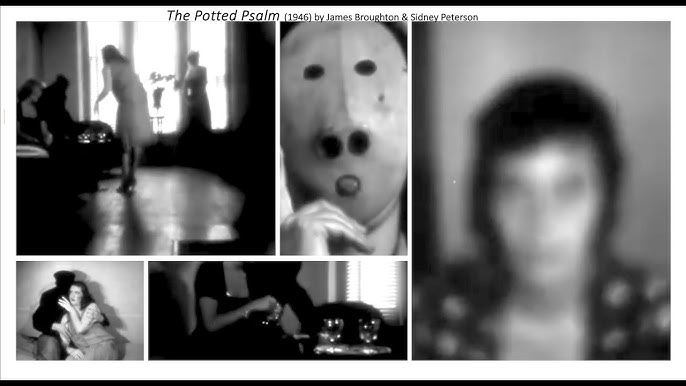
Experimental and underground filmmakers have long been drawn to the countercultural activity in bay area. It started most notably with James Broughton and Sidney Peterson in 1946 and it has never let up.
 Important film schools emerged at the San Francisco Art Institute and San Francisco State University. Many students have gone on to successful careers in all areas of film, the more adventurous makers finding creative ways to survive with their experimental works by having popular showings in unusual locations, at museums, galleries, and via distribution, largely through a filmmaker’s cooperative, Canyon Cinema, founded by filmmaker Bruce Baillie in 1961. The catalog currently offers more than 3,500 works in digital media, 8mm, Super 8, 16mm, and 35mm prints from 300 artists with many available for streaming online. They established an exhibition program, Canyon Cinematheque, in 1968 (now San Francisco Cinematheque).
Some of those experimental filmmakers were innovators in animation and special effects whose work has made a huge impact on the industry. John Lasseter opened Pixar while Lucas’ Industrial Light and Magic became one of the top special effects houses in the world. Henry Selick and Phil Tippet set up independent production houses s[ecalzing in stop-motion animation. The late but fondly remembered Colossal Pictures and PDI/Dreamworks supported dozens of creative artists, many still creating imaginative work here.
The Bay Area is a documentary mecca with dozens of award-winning filmmakers (past and present) telling non-fiction stories that open our minds in new ways. Collaboratives and non-profit organizations help support the work of independent filmmakers. The Documentary Film Institute was founded at SFSU.

Zachary Fink, Joni Cooper, Melissa Langer, Catherine Axley, Minette Nelson, David Eckles, Theo Rigby, Alyssa Fedele, S. Leo Chiang, Nancy Kelly, Kenji Yamamoto at California Film Institute’s Doclands. Photo © Tommy Lau Photography
The Berkeley Art Museum Pacific Film Archive is one of the world’s great cinema treasures with its expansive collection of film prints and ephemera while presenting a wide range of movies spanning the history of the art, often with filmmakers in attendance. Plus their invaluable research resources with an huge library and the online Cinefiles.
There was a time when there were many art houses and repertory programs but there are only a handful now, all with ambitious selections, including the Roxie in San Francisco mixing first run international and independent movies with rare classics and many festivals; the Smith Rafael Film Center in San Rafael has three screens showing a variety of cinematic experiences with numerous filmmakers in person plus several festivals; Oakland’s New Parkway is a quirky twin cinema with food and drink to go along with eccentric programming and many local filmmakers appearing with their works: and the Stanford Theatre, Palo Alto’s movie palace dedicated to American classics.
There are historic theaters showing films (Oakland: Grand Lake & Piedmont, Orinda/Moraga: Orinda & Rheem; San Francisco: Alamo New Mission, Balboa, Vogue, & 4 Star) and several palaces mostly offering live performances (SF: Castro, Warfield, Curran, Geary, Strand; Oakland: Paramount & Fox; Redwood City: Fox; San Jose: California) plus the Alhambra and Metro in San Francisco are gyms with much of the original decor intact while Berkeley’s Oaks has recently opened as a climbing gym.
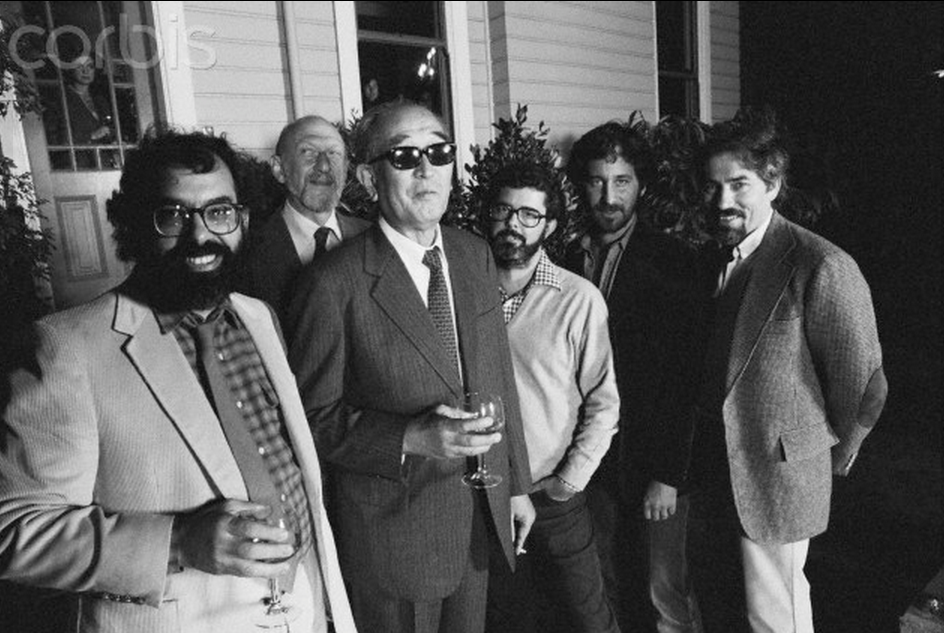
Francis Ford Coppola, Irvin Kershner, Akira Kurosawa, George Lucas, Steven Spielberg, & Carroll Ballard at Coppola’s house in San Francisco, 1980
Much of this history and these offerings drew George Lucas, Francis Ford Coppola, Phil Kaufman, Carroll Ballard, Wayne Wang, Terry Zwigoff, John Korty, Sean Penn, Joan Chen, Robert Redford, Chris Columbus, Barry Levinson, Michael Ritchie, Steve Okazaki, Rob Nilsson, Finn Taylor, and Clint Eastwood, feature film directors who established their base in Northern California . More recently Barry Jenkins, Ryan Coogler, Carlos López Estrada, and Boots Riley are leaders of the new wave of directors making an impact in fiction filmmaking though most are not living here full time anymore.
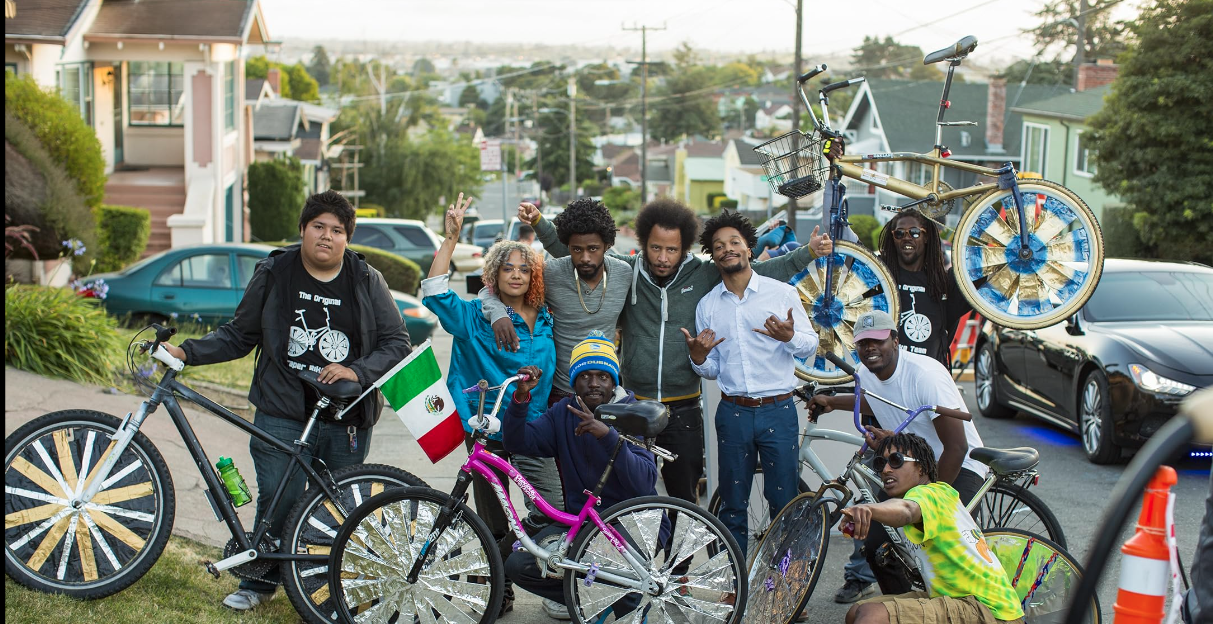
Boots Riley, Jermaine Fowler, Tessa Thompson, and LaKeith Stanfield in “Sorry to Bother You” (2018)
And then there was Saul Zaentz with his ambitions to make sure terrific music and great films found audiences, often when he was told they were not “commercial.
“Saul Zaentz was a world-renowned film producer known for his masterful literary film adaptations with exceptional cinematography, costume and set design, sound and music that earned three Academy Awards for Best Picture. He is celebrated for independently financing his films and managing the infamous Fantasy Records label in Berkeley, CA. Born in 1921 in Passaic, New Jersey, Zaentz served in the US Army during WWII. He moved to San Francisco in 1948, joining Fantasy Records in 1955 where he managed tours for jazz legends like Duke Ellington and Dave Brubeck.
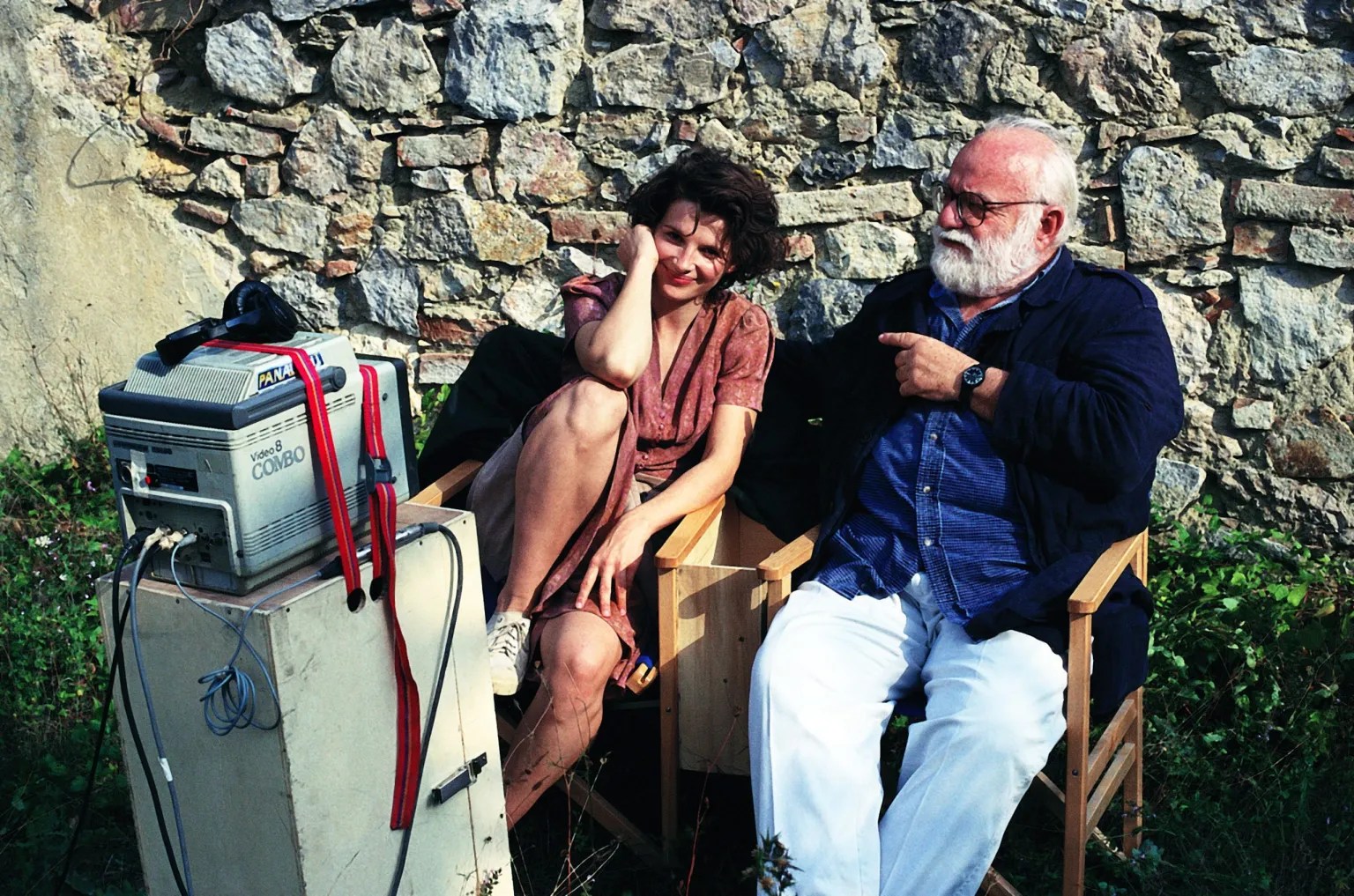
Saul with Juliette Binoche on the set of “The English Patient.”
His film career began with “Payday” (1975) and the Oscar-winning “One Flew Over the Cuckoo’s Nest” (1976). He also produced “Three Warriors” (1977), “The Lord of the Rings” (1978) and won his second Best Picture Oscar for “Amadeus” (1985). Other notable works include “The Mosquito Coast,” “The Unbearable Lightness of Being,” and the nine-time Oscar-winning “The English Patient” (1997). Zaentz received the Irving G. Thalberg Award in 1997 and the BAFTA Academy Fellowship in 2003.”
It is reported that he once said, “We had the great distinction of being known as those assholes out of Berkeley. Then, after Amadeus, it was those lucky assholes out of Berkeley.”
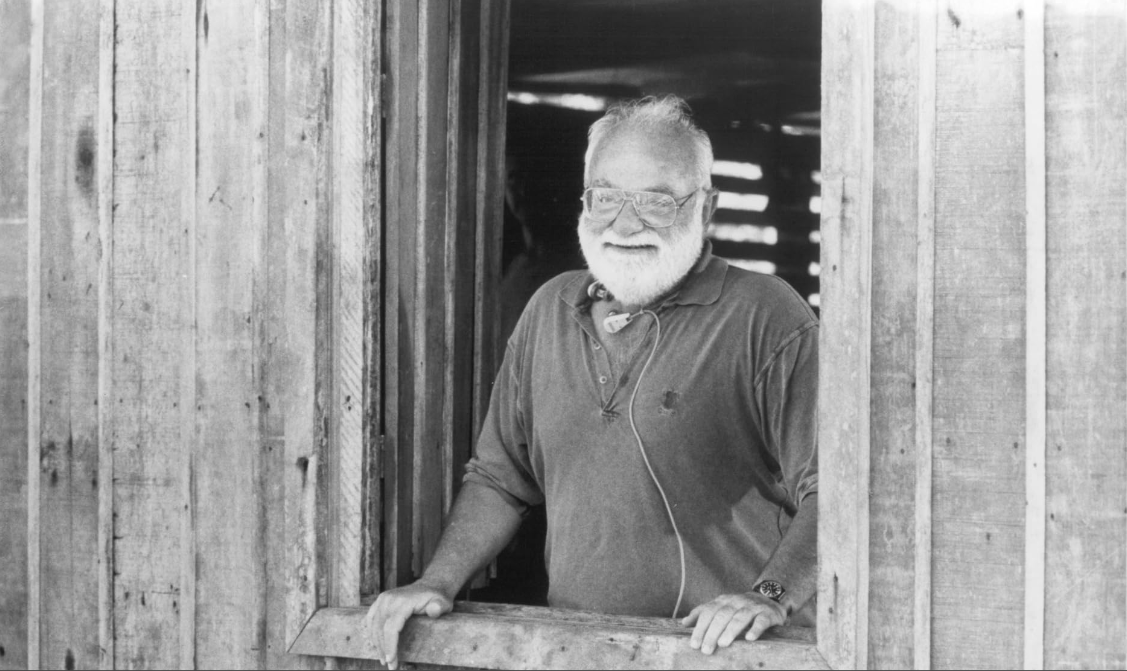
Read our interview with Paul Zaentz.
You will also find the full schedule for the “Tribute to Saul Zaentz”at the Smith Rafael Film Center, November 15-17, 2024.
BOOKS ABOUT THE SAN FRANCISCO BAY AREA FILM SCENE
(Click on each title for more about the book)
Celluloid San Francisco: The Film Lover’s Guide to Bay Area Movie Locations by Jim Van Buskirk and Will Shank
River of Shadows: Eadweard Muybridge and the Technological West by Rebecca Solnit
Cinema by the Bay by Sheerly Avni
Golden Gate and the Silver Screen by Geoffrey Bell. (Read an excerpt)
Broncho Billy and the Essanay Film Company by David Kiehn
Silent Locations– John Bengston’s fascinating website with video tours and books tracks down the locations of silent films, many made in the bay area with numerous Buster Keaton and Charles Chaplin featured.
The Complete GREED of Erich von Stroheim by Herman G. Weinberg
Greed by Jonathan Rosenbaum
An online resource is Reel SF regularly being updated (sign up for free subscription) with now insights into where films were shot.
Footsteps in the Fog: Alfred Hitchcock’s San Francisco by Jeff Kraft and Aaron Leventhal
The San Francisco of Alfred Hitchcock’s Vertigo edited by Douglas A. Cunningham
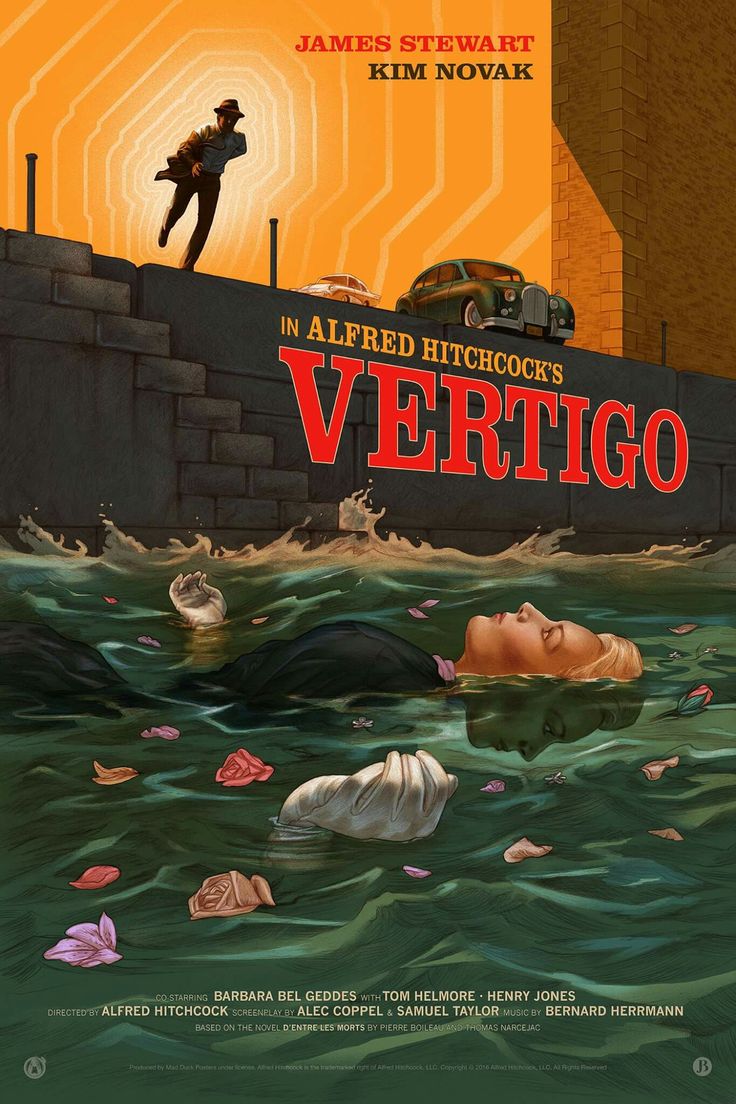
Atmospheric new poster by Gray-Lord on Deviant Art.
San Francisco Noir: The City in Film Noir from 1940 to the Present by Nathaniel Rich
Radical Light: Alternative Film & Video in the San Francisco Bay Area, 1945-2000, co-edited by Steve Anker, Kathy Geritz, and Steve Seid
Philip Kaufman by Annette Insdorf
Skywalking: The Life and Films of George Lucas by Dale Pollock
Industrial Light and Magic: The Art of Special Effects by Thomas G. Smith
Francis Ford Coppola– there are many books about this director
To Infinity and Beyond!: The Story of Pixar Animation Studios by Karen Paik
The Pixar Touch by David. A. Price
Left in the Dark : Portraits of San Francisco Movie Theatres edited by Julie Lindow and photographs by R.A. McBride
Four invaluable books from the Arcadia series: Theatres of: Jack Tillmany’sSan Francisco, Oakland, the SF Peninsula, co-written with Gary Parks, and Park’s San Jose.
Fox: The Last Word…Story of the World’s Finest Theatre by Preston J. Kaufman- This is a rare and high priced book but you can see excerpts here with added technical details.
The Oakland Paramount by Susannah Harris Stone
Infinite City by Rebecca Solnit- includes a map of San Francisco cinemas
World Film Locations: San Francisco by Scott Jordan Harris
Hollywood in San Francisco: Location Shooting and the Aesthetics of Urban Decline by Joshua Gleich
Watch SF Film Noir Locations Then and Now presented by Reel SF’s Brian Hollins at the San Francisco Public Library.
Don Herron is not currently offering his terrific in person Film Noir tours but check in with him at Up and Down These Mean Streets to be informed when they start again.
For more places to visit in the bay area relating to movies and other media read Adventures Outside of the Theater.
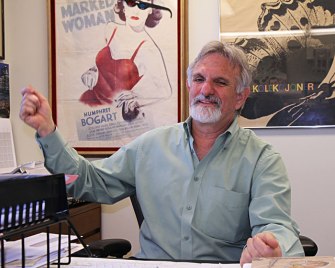 Gary Meyer started his first theater in the family barn when he was twelve-years-old. He directed a monster movie there and wanted to show it on the set. It became The Above-the-Ground Theatre screening dozens of silent films with music arranged from his parents’ record collection. Over 250 films were screened along with live productions, workshops and the publication of a literary/arts/satire zines, “Nort!” :Afterthought” and a film newsletter, “Ciné.” After film school at SFSU he calls his first job as a booker for United Artists Theatres “grad school” that prepared him for co-founding Landmark Theatres in 1975. It was the first national arthouse chain in the U.S. focused on creative marketing strategies to build loyal audiences for non-Hollywood fare. After selling Landmark, he consulted on many projects including Sundance Cinemas and the Brooklyn Academy of Music’s Rose Cinemas, created several film festivals including the Dockers Classically Independent Film Festival and Tube Film Festival for the X Games, and resurrected the 1926 Balboa Theatre in San Francisco. Meyer joined the Telluride Film Festival in 1998, becoming a Festival Co-Director in 2007-2014. He founded the online magazine, “EatDrinkFilms” in April 2014 and consults for festivals while offering pro bono advice to independent filmmakers and cinemas. He started “EatDrinkFilms” to give a voice to writers wanting to explore food, beverage and the movies from unique perspectives. Meyer, Editor/Publisher, also contributes articles.
He has co-produced the award-winning feature length documentary The Art of Eating- The Life of M.F.K. Fisher directed by Gregory Bezat and they are in early production on Dilemma in the Deep.
 eatdrinkfilms.com