
By Noma Faingold (Updated September 10, 2025)
Artist Rose B. Simpson is more than a little preoccupied with vessels. She views pottery, cars, her figurative sculptures, the womb and clay, a material she most often uses in her creations, as vessels.

Courtesy of Rose B. Simpson
“I think in clay. Clay was the earth that grew our food, was the house we lived in, was the pottery we ate out of and prayed with,” Simpson told a de Young Museum audience at a very personal lecture she delivered earlier this year. “My relationship to clay is ancestral and it has a deep genetic memory. It’s like a family member for us.”
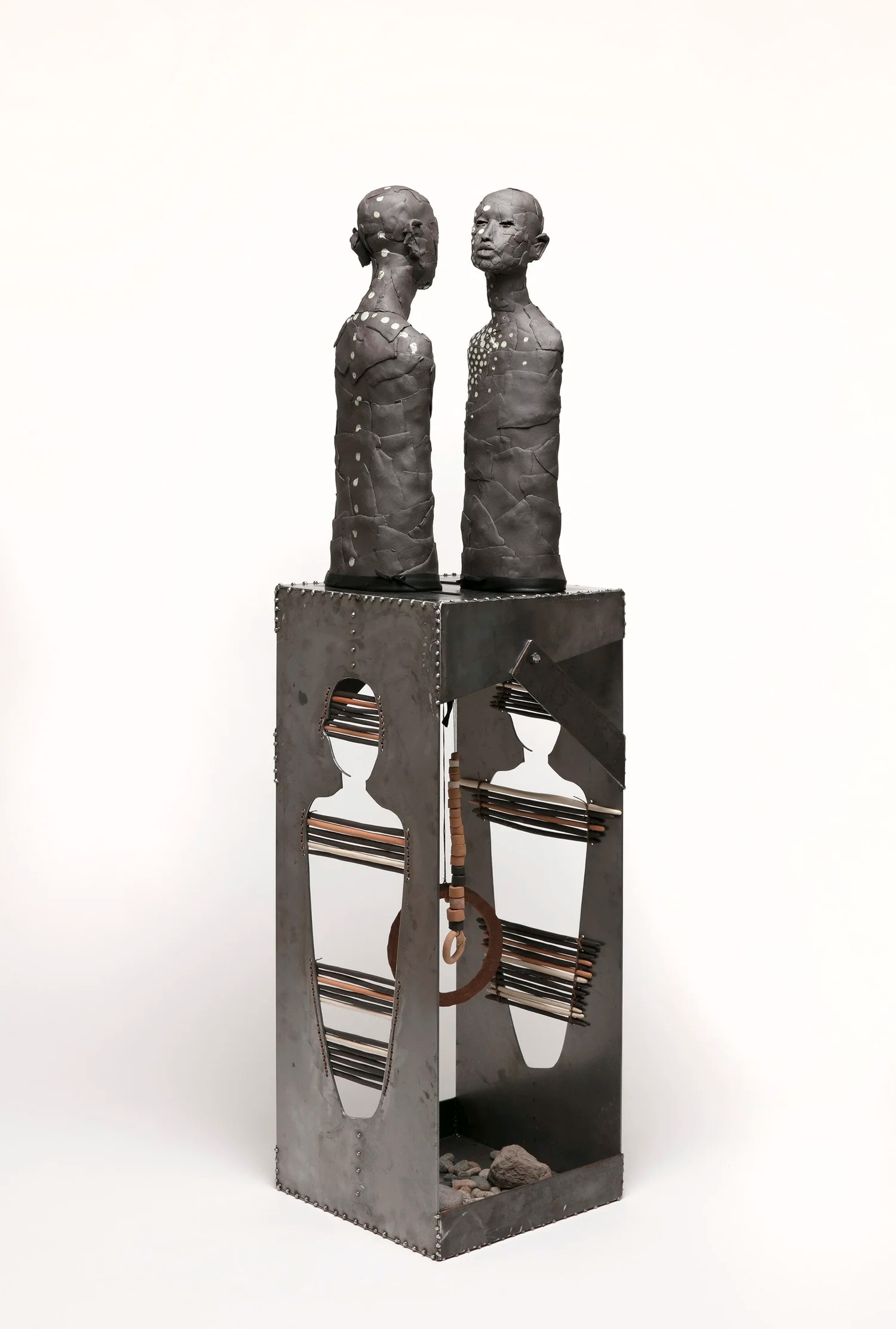
In Memoriam; Genocide Makes it Complicated. 2019 Courtesy of Rose B. Simpson
Coming from a long line of Native American ceramic artists of the Santa Clara Pueblo (Kha’po’oe Ówîngeh), based just south of Española, New Mexico, pottery is in Simpson’s DNA. While she still lives at the pueblo and has her studio close by, she has forged a different creative path, while examining the past, present and future.
Her installation titled, “LEXICON,” which will be on view starting August 30, in de Young’s Wilsey Court, is comprised of three parts:
“Bosque”
Photo by Kate Russell. Courtesy of the Fine Arts Museums of San Francisco, Jessica Silverman, San Francisco and Jack Shainman, New York.
A 1964 Buick Riviera, making its debut at the de Young, has been meticulously rebuilt by Simpson and painted in vibrant Tewa polychrome. She named the piece Bosque (Spanish word for forest). Simpson made this second customized car into a lowrider, since Española is considered the lowrider capital of the world.
In 2018, Simpson earned an Automotive Science Certificate at Northern New Mexico College in Española with a goal of making sure she can drive her art cars.
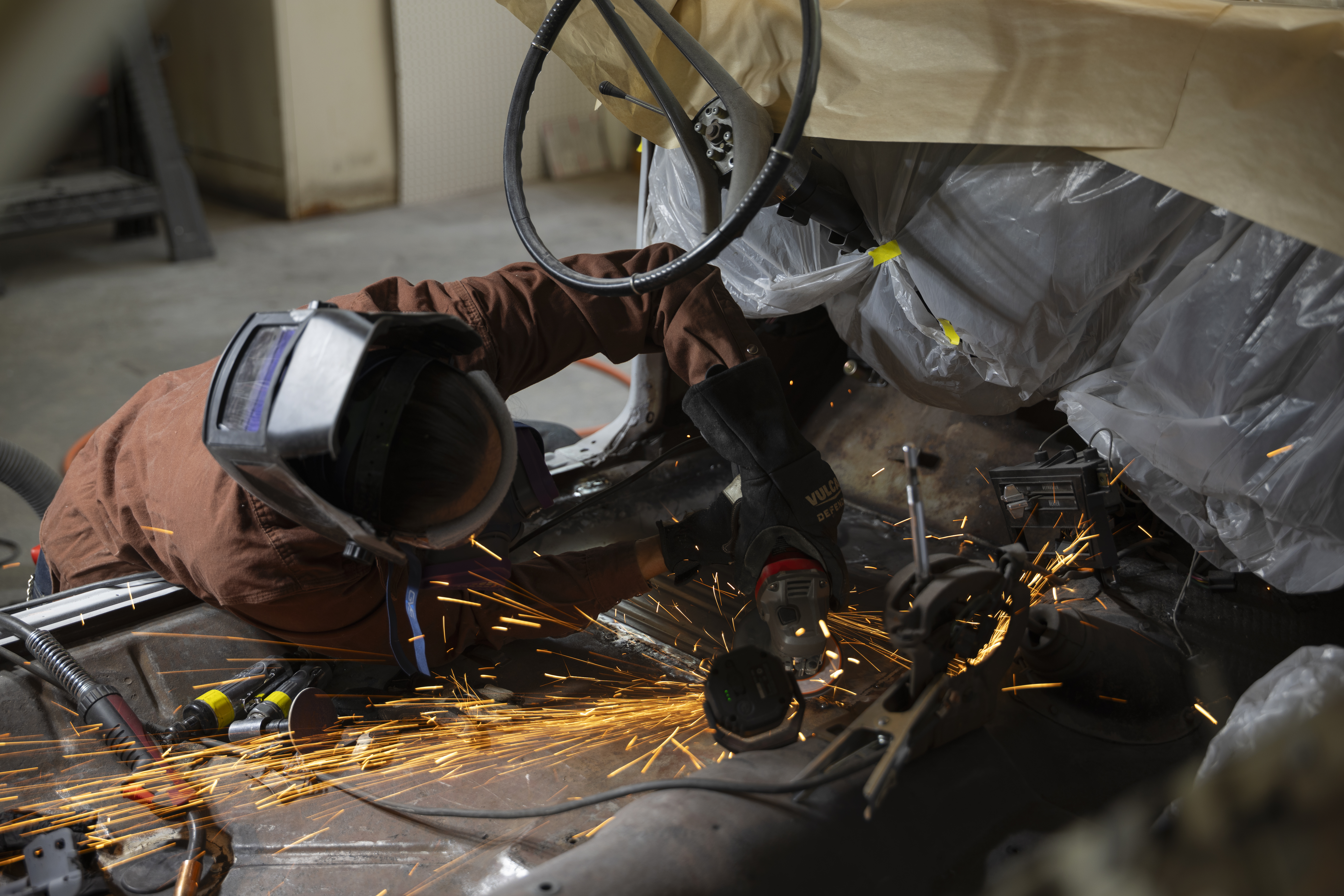
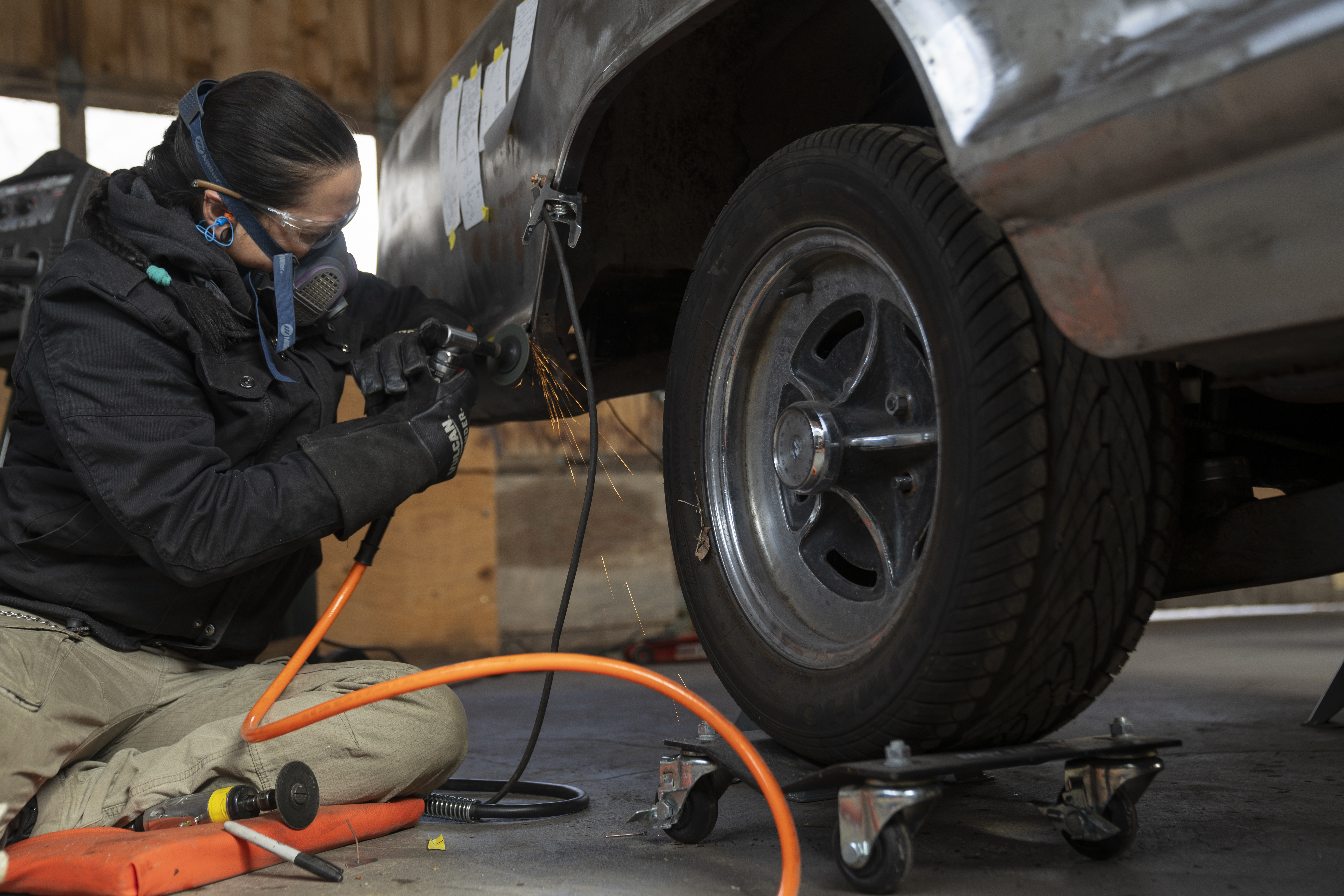
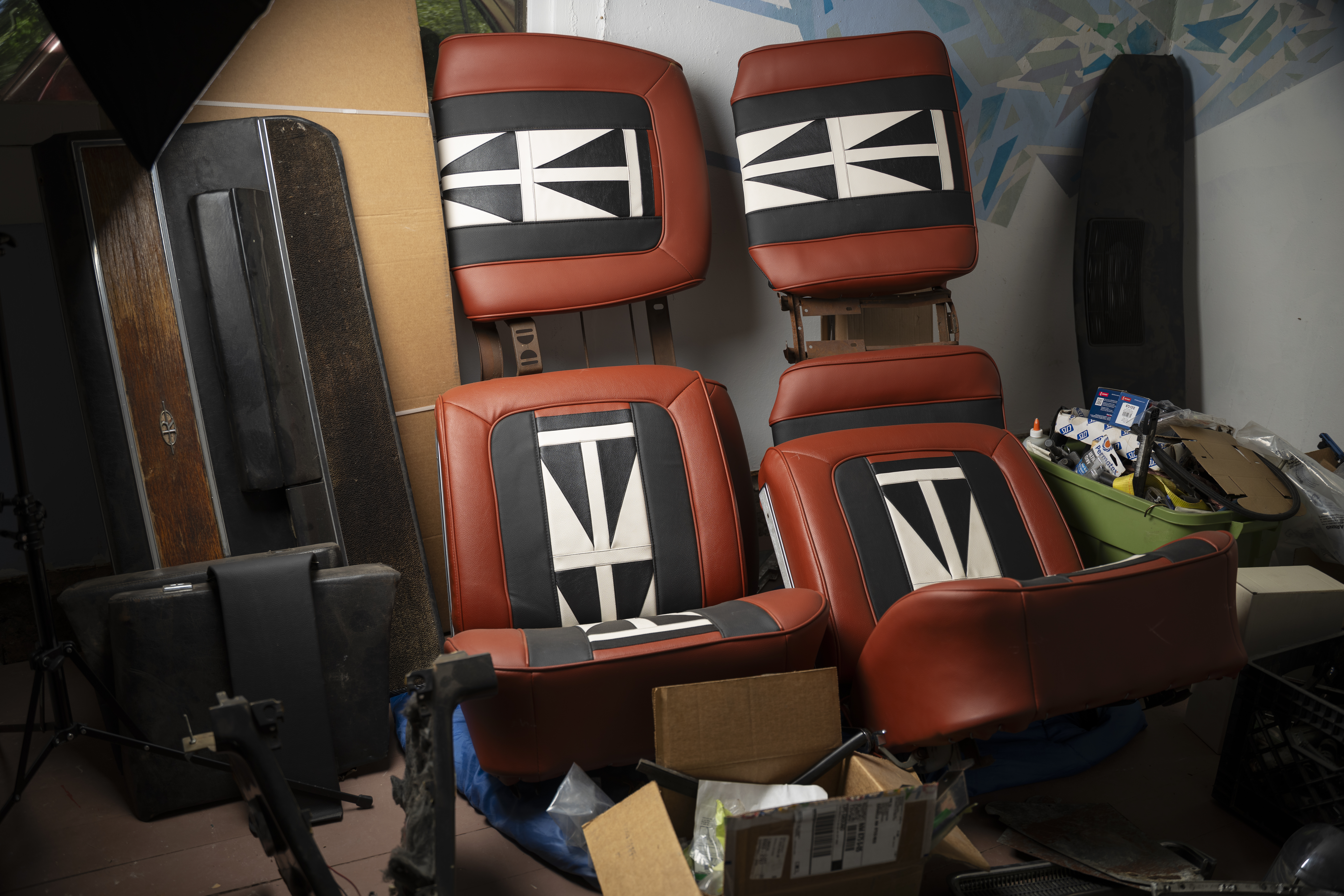
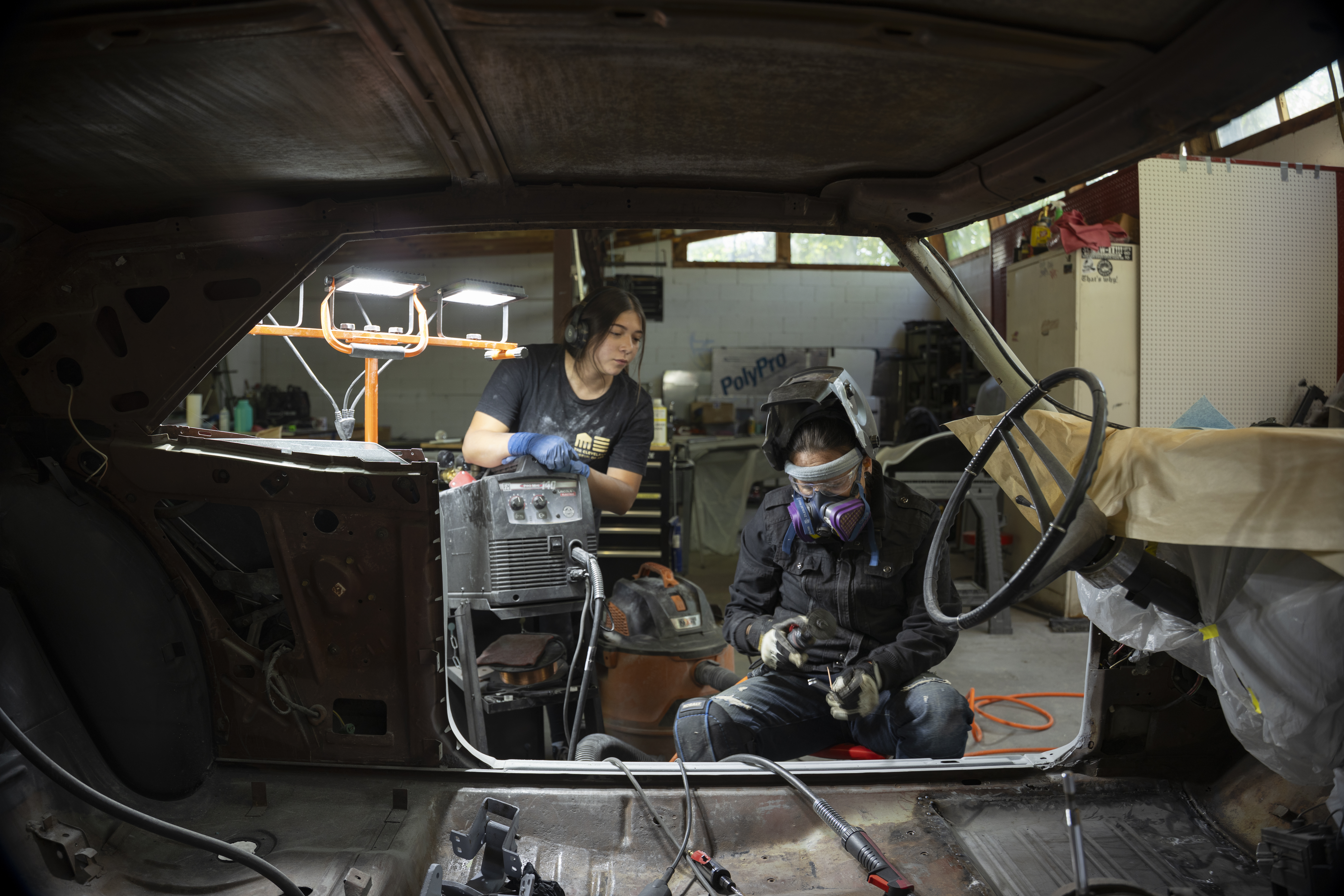
Simpson took the Buick apart before transforming it. She found a running engine in Detroit. She did the metalwork, smoothing out dents and patching the numerous areas of rust. She researched Tewa polychrome (pottery featuring multiple colors, including terracotta and cream, applied to the surface using intricate designs and patterns). She even sewed the interior leather upholstery to match the exterior.
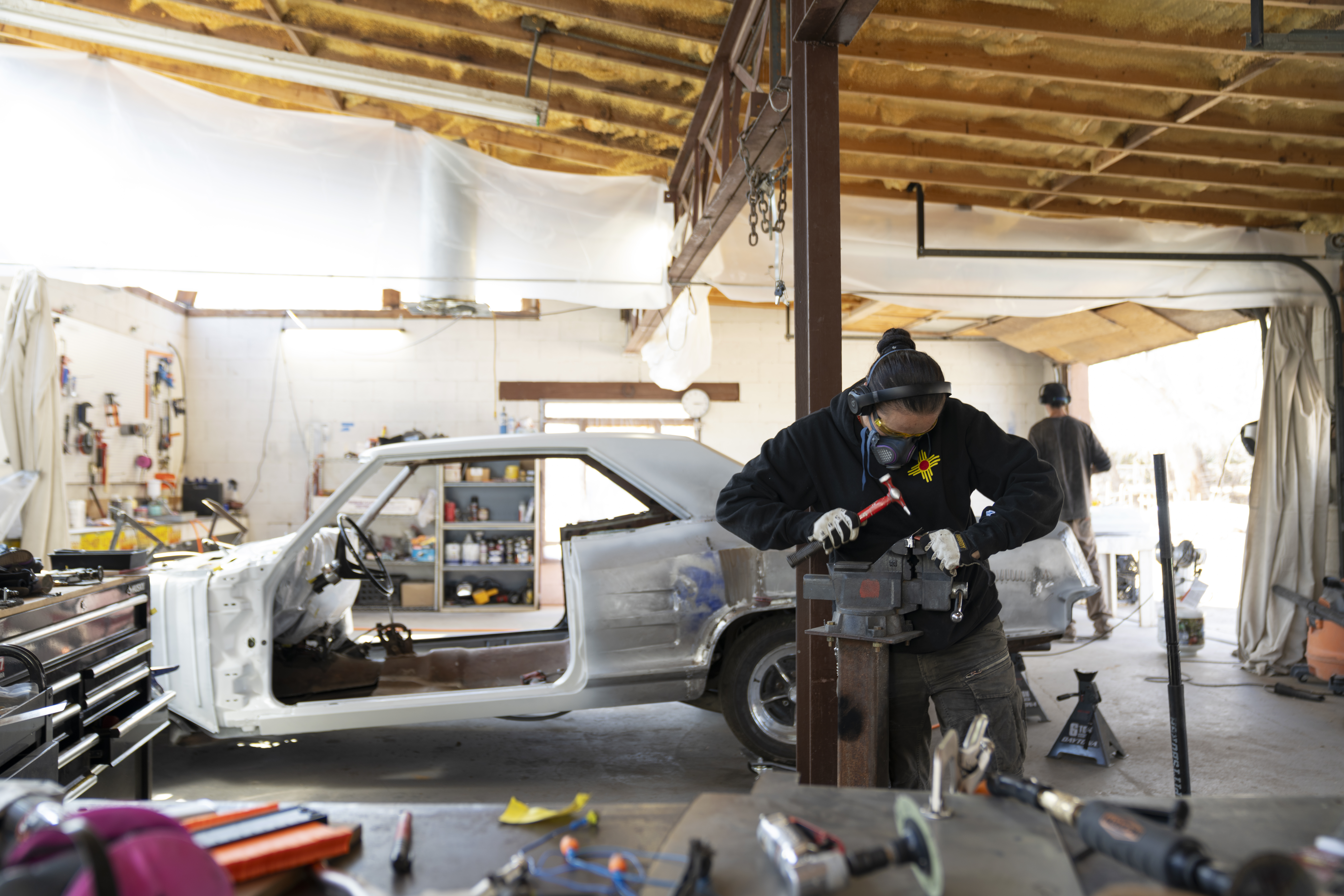
Rose B Simpson working on her 1964 Buick Riviera, Bosque. All photos in the Bosque series by Kate Russell. Courtesy of the Fine Arts Museums of San Francisco, Jessica Silverman, San Francisco and Jack Shainman, New York.
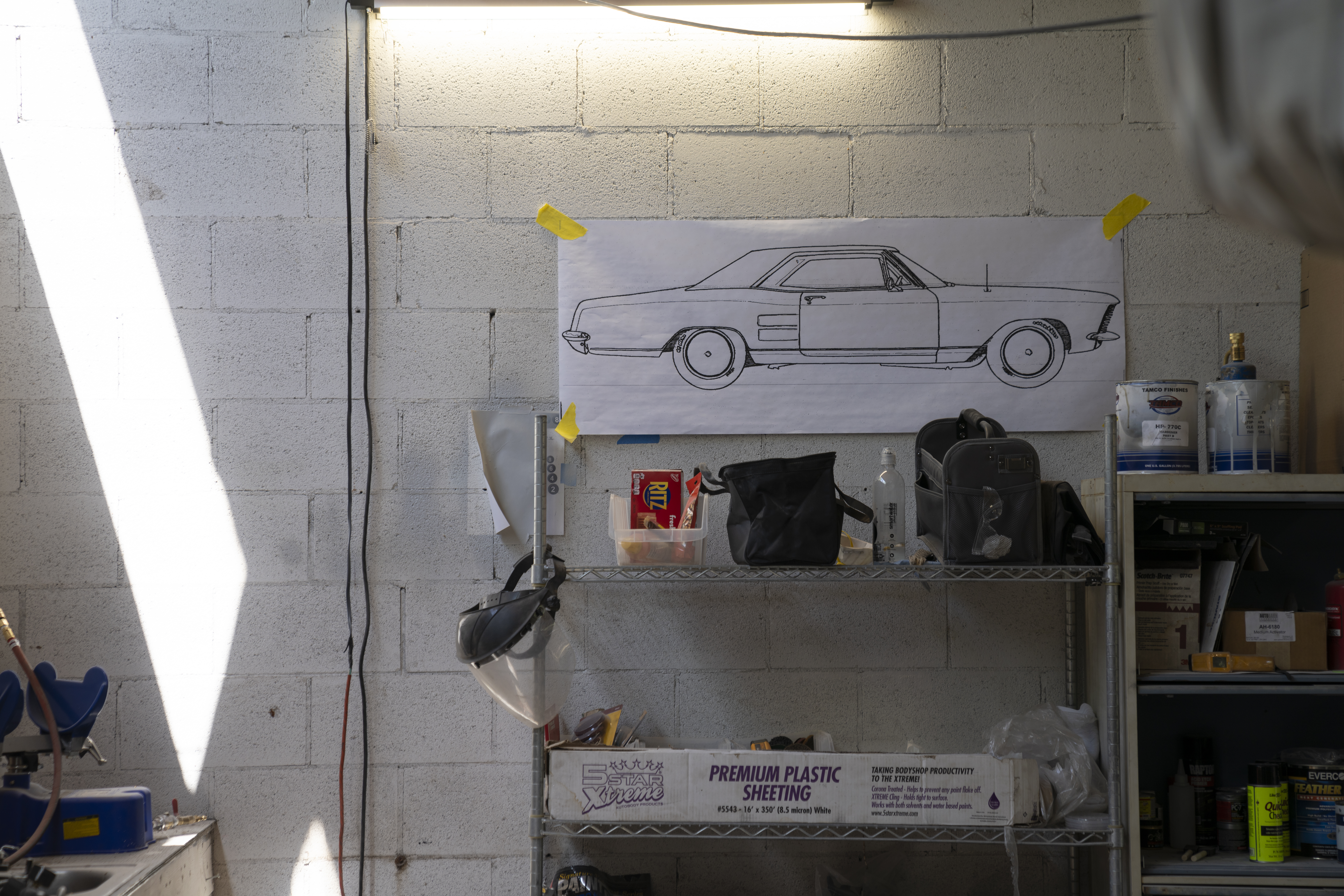
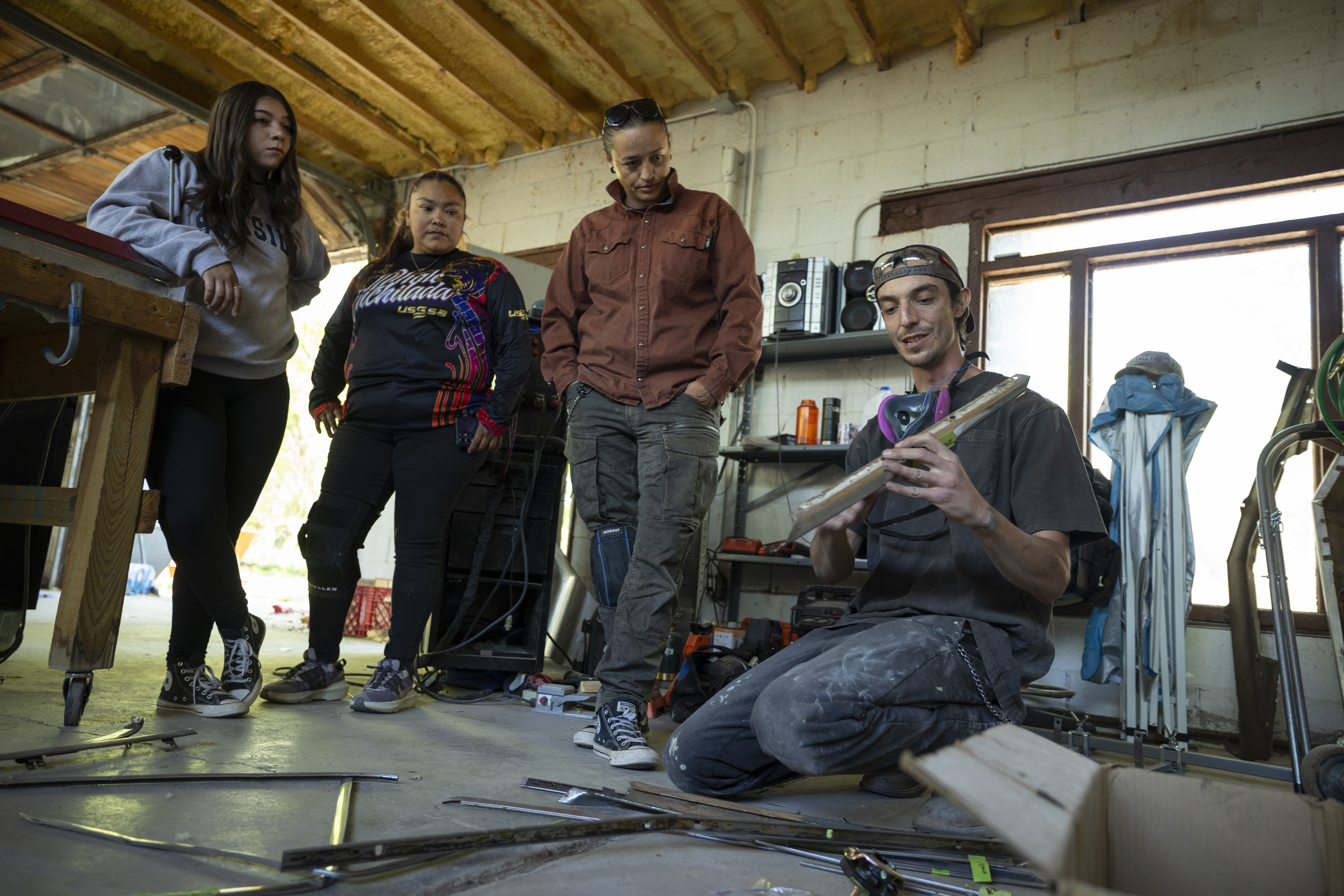
(l to r) Cele Sena, Wanda Abeyta, Rose Simpson, Dylan Madri

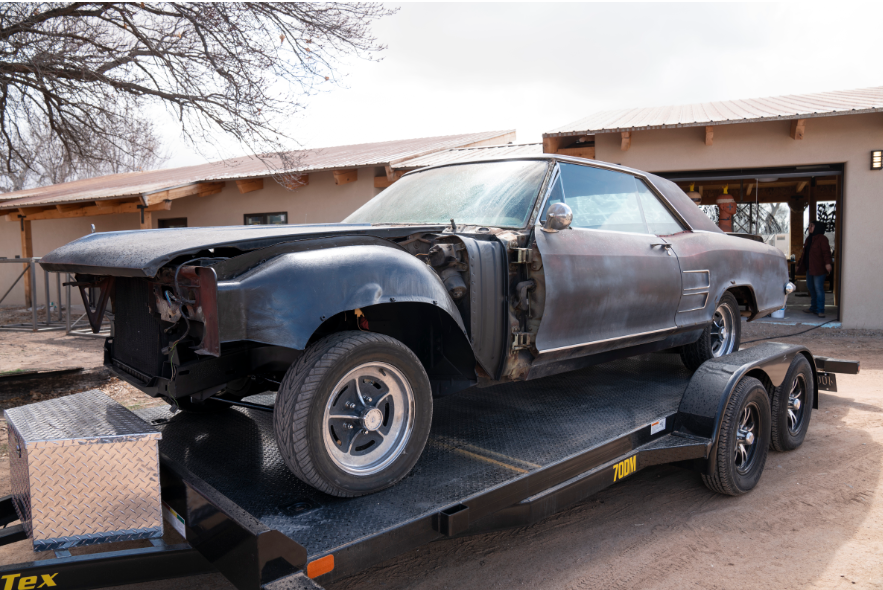
Rose Simpson rebuild of a Buick Riviera, leaving her shop on the Santa Claran Pueblo
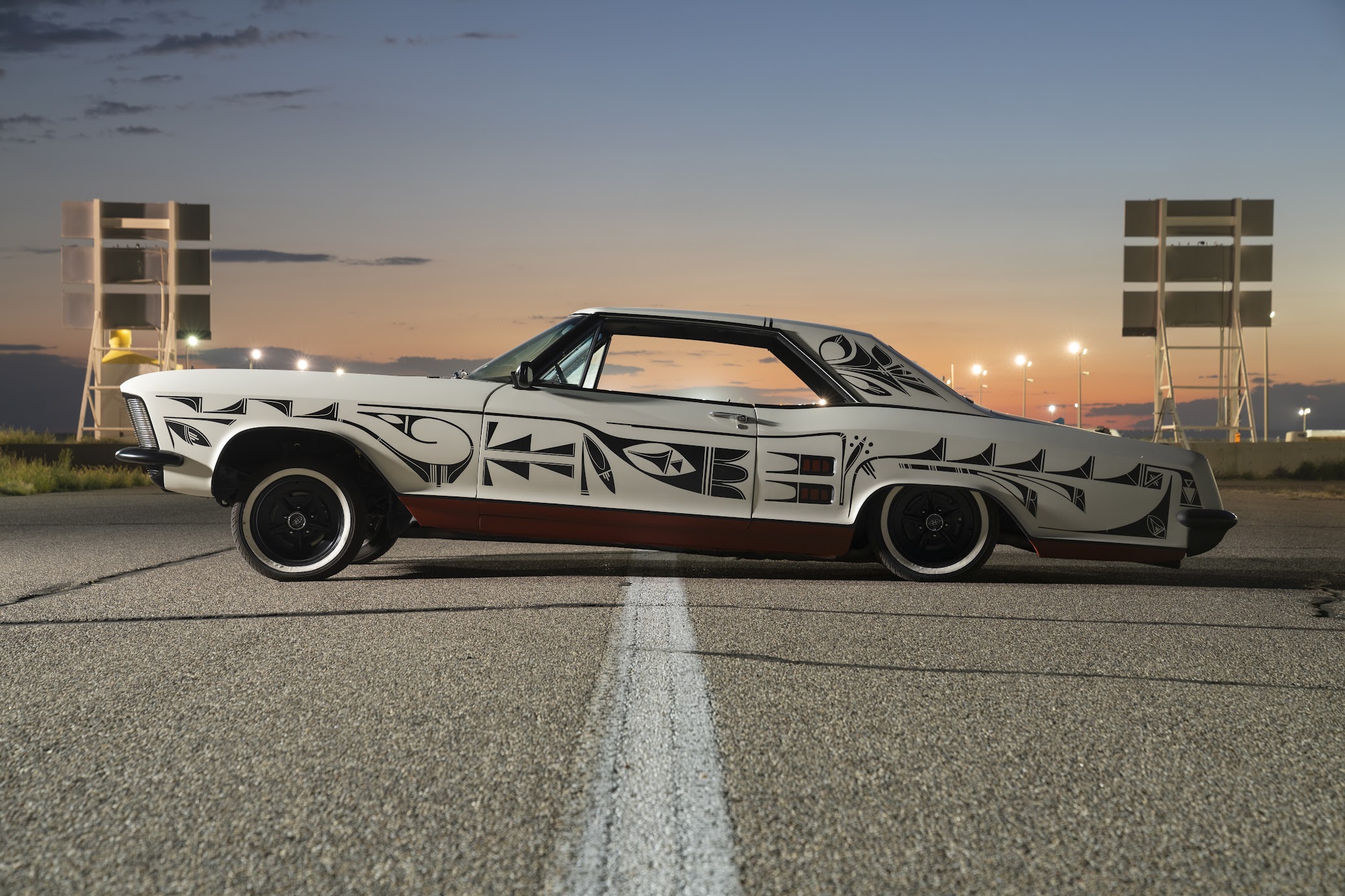
“Bosque,” 2024. 1964 Buick Riviera. Bodywork and customization by artist.
“Maria”
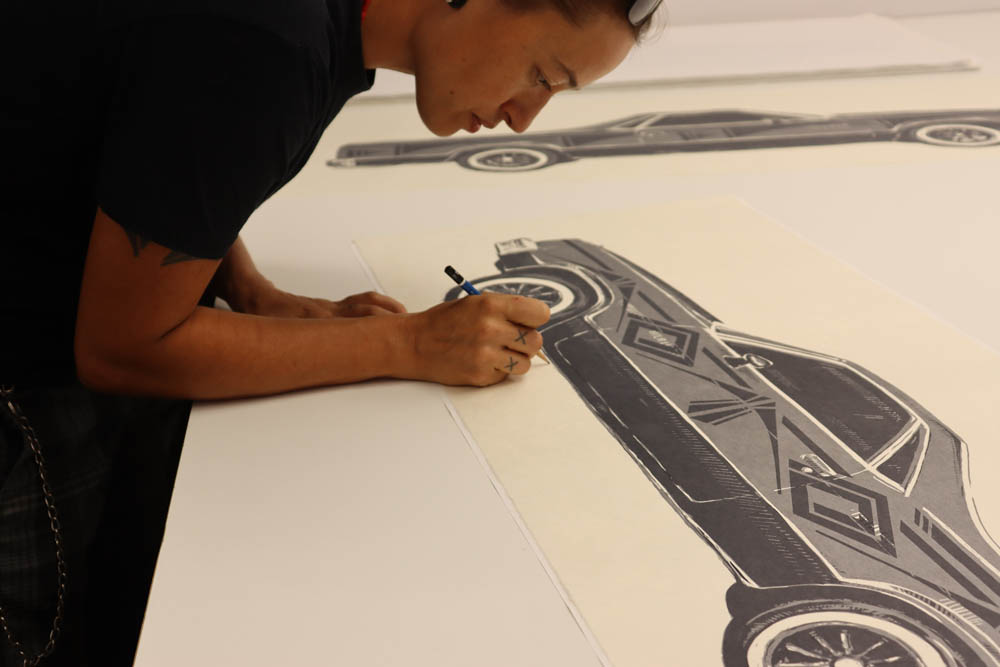
Rose draws for a lithograph series at Tamarind.

Rose with Maria. Photo by Kate Russell. Courtesy of the Fine Arts Museums of San Francisco, Jessica Silverman, San Francisco and Jack Shainman, New York.
The celebrated “Maria,” which she modified and customized 10 years ago from a 1985 Chevy El Camino, painting a black-on-black geometric motif, was inspired by Tewa ceramicist Maria Martinez (1887-1980) of the San Ildefonso Pueblo in New Mexico. Martinez popularized the distinct black gloss-and-matte contrasting patterns.
“Maria” is a hot rod Simpson occasionally drives. It has been exhibited in a few museums. “I transformed that car. How many times I sanded it, caressing every inch of that car,” Simpson said. “The car has a heartbeat.”
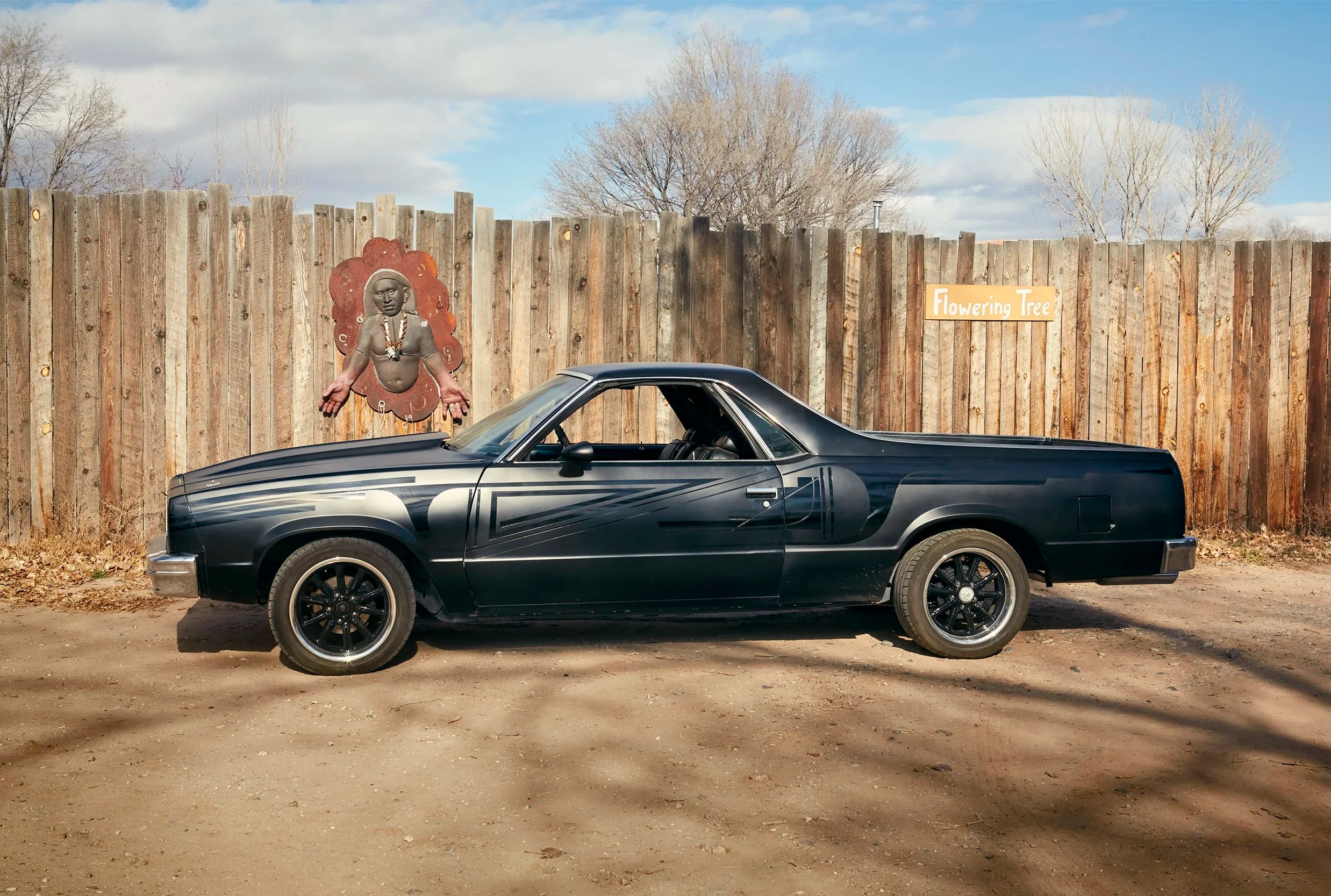
The 1985 Chevy El Camino that Simpson titled Maria, after artist Maria Martinez. Photo by Kate Orne. Courtesy of Upstate Diary
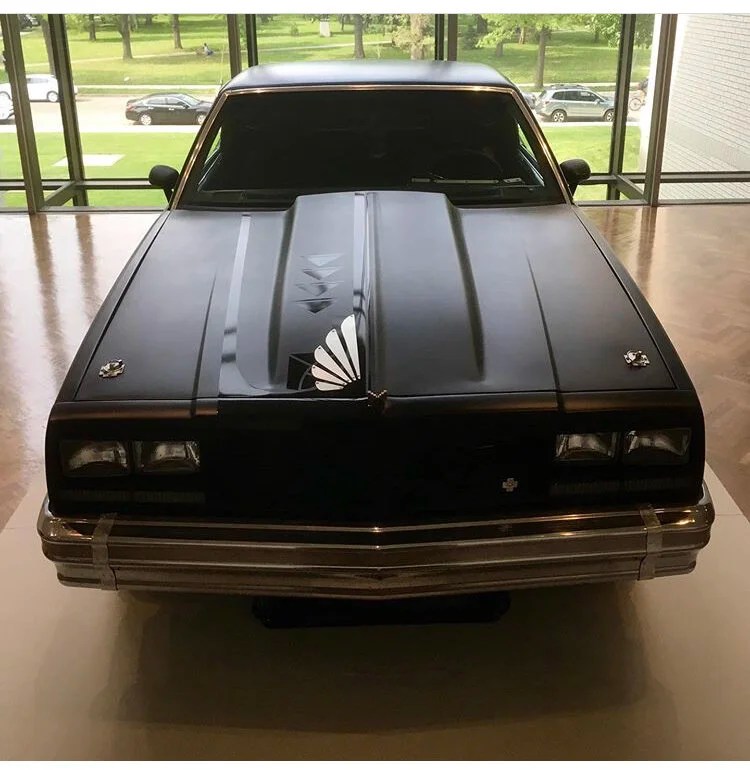
Photo by Kate Russell
Simpson took Maria to the Denver Art Museum for a performance and installation.
Mural
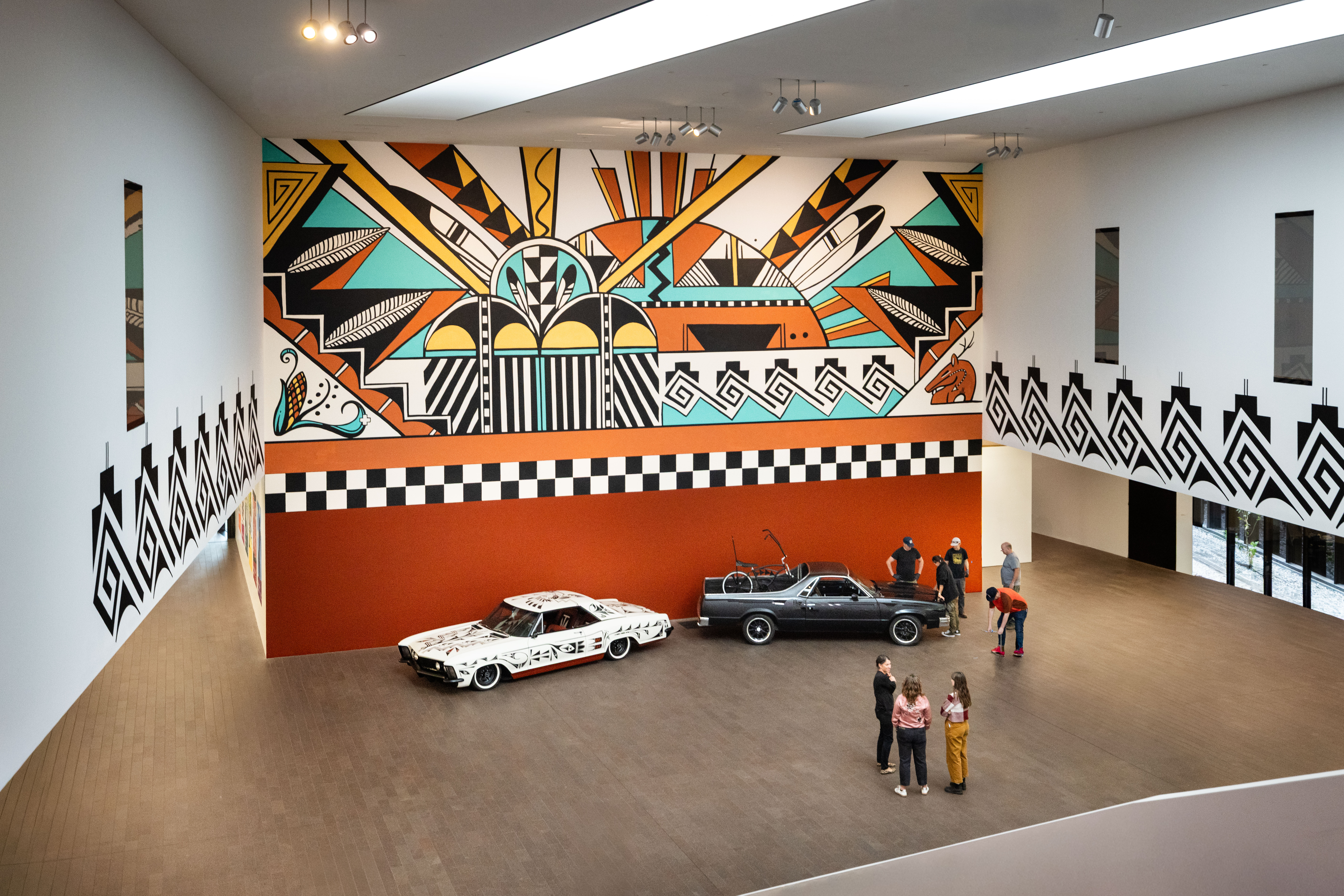
Installation view of Rose B. Simpson- LEXICON, at the de Young Museum, San Francisco, 2025. Photographs by Gary Sexton. Image courtesy of the Fine Arts Museums of San Francisco
A massive, colorful mural, with an expansive geometric design, evokes the environment of the Southwest. It is not a landscape, however. It is a mixture of figurative and familiar symbols. “The aesthetics will provide a sense of space and place because they are very tied to her identity and where she’s from,” Hillary C. Olcott, Curator of Arts of the Americas for the Fine Arts Museums of San Francisco (FAMSF), said.
The mural surrounds the two vehicles. It was painted by Simpson and her team during the museum’s visiting hours, from August 19-22. In other words, the public had the rare opportunity to watch the work in progress.
The sad part is the site-specific mural will be painted over when the exhibition ends on August 2, 2026.
“Rose is continuing her exploration in her practice of the vessel. The two cars are vessels. But she takes it one step further,” Olcott said. “The mural is inspired by pueblo pottery designs and Southwest aesthetics. Rose is intending to transform the Wilsey Court from a sort of void into a whole.”
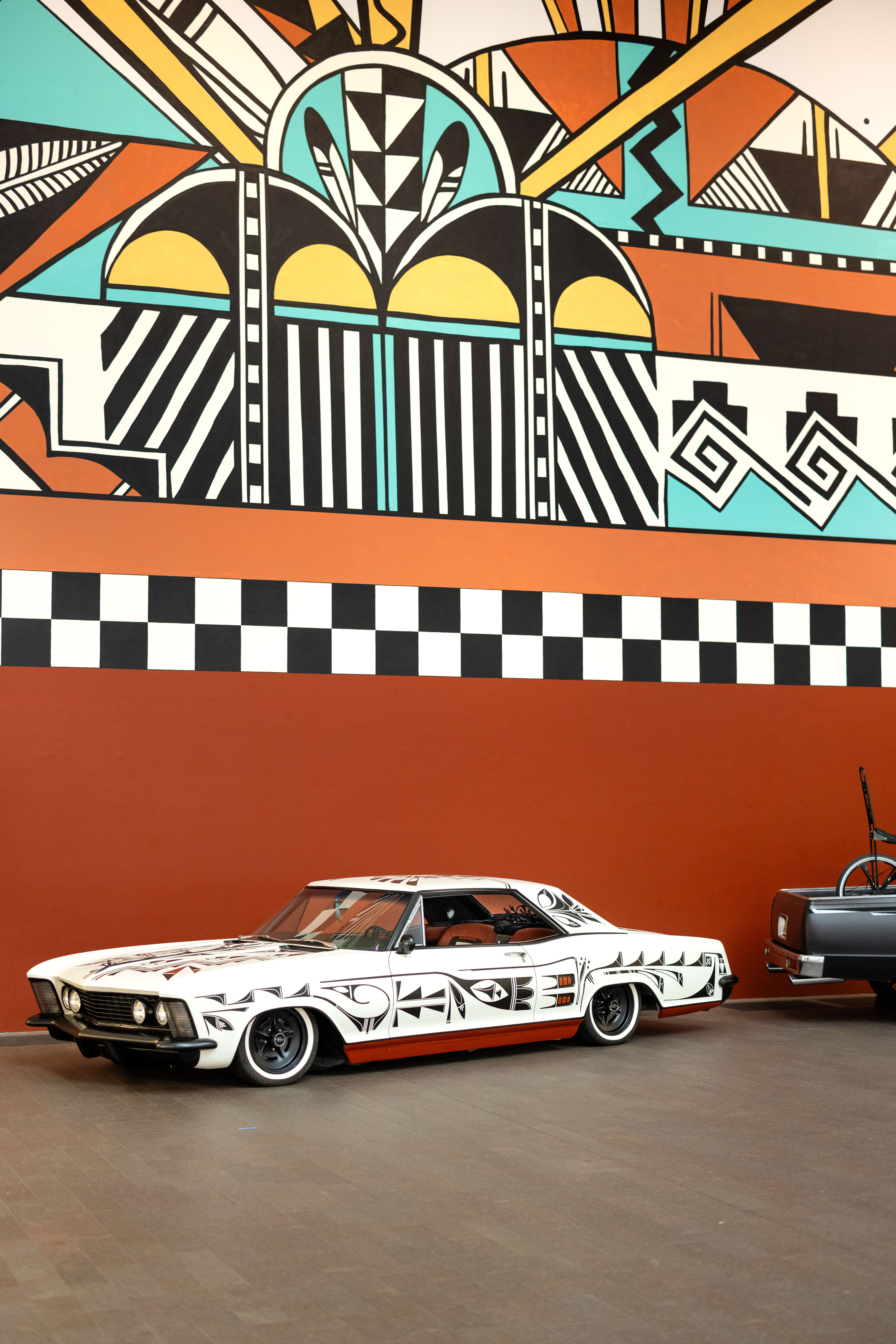
Installation view of Rose B. Simpson- LEXICON, at the de Young Museum, San Francisco, 2025. Photographs by Gary Sexton. Image courtesy of the Fine Arts Museums of San Francisco
Born in 1983, single mother Simpson was raised by matriarchal ceramic artists, including her mother, Roxanne Swentzell. Simpson learned by watching her DYI role model, who turned a toolshed into a house. Simpson remembers mixing mortar when she was a toddler for Swentzell to lay bricks in building their home.
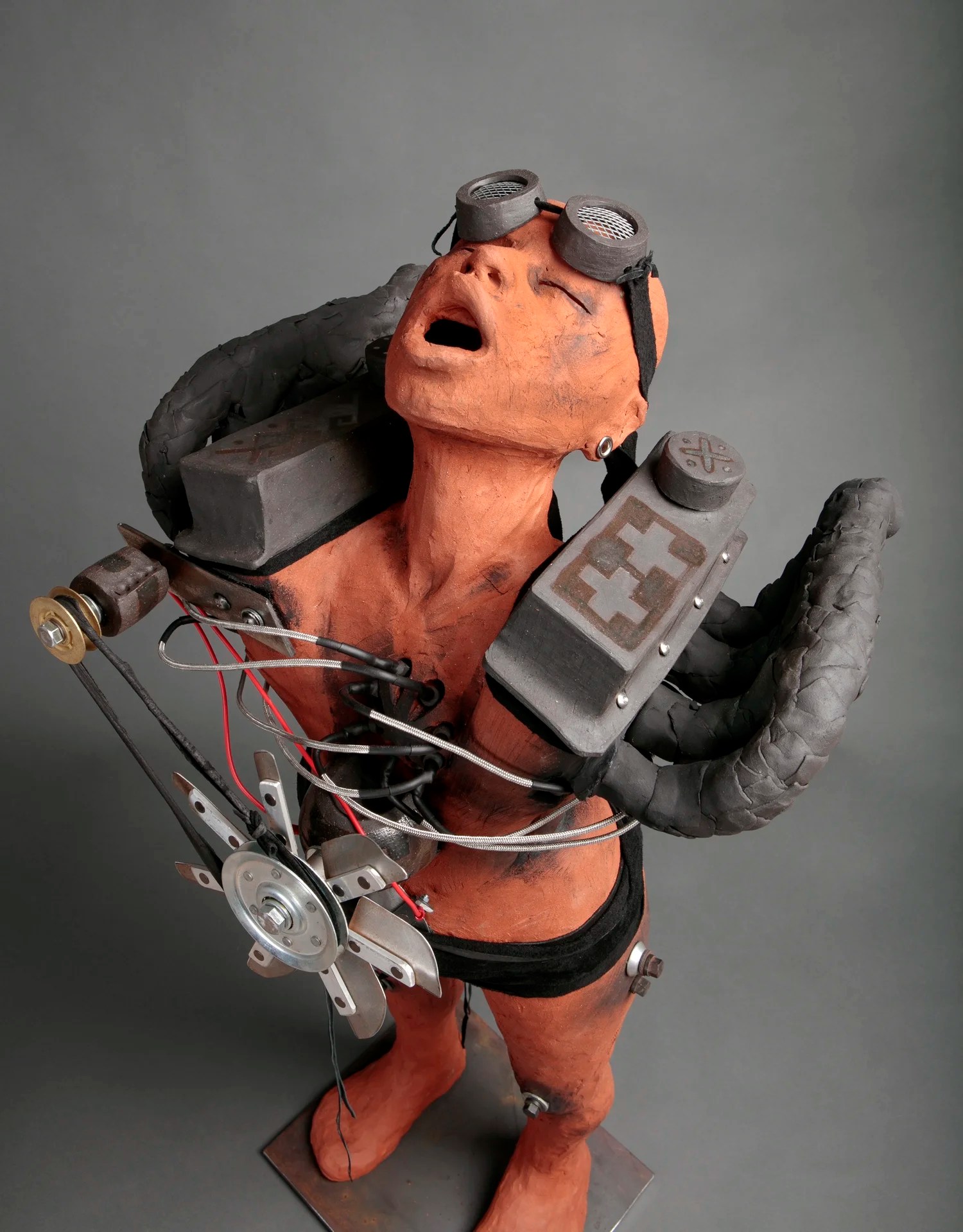
Self Portrait 2016. Courtesy of the artist.
Simpson is best known for purposefully raw and imperfect clay sculptures, as well as working across multiple media, including metalwork, painting, fashion, installations and performance. Her sculptures have a post-apocalyptic “Road Warrior” vibe. They are often adorned with found objects like brake discs and other car parts. She has called some of the sculptures “beings” or “ancestors.”
Her work has been exhibited at the Metropolitan Museum of Art, the Whitney and the Guggenheim in New York City, as well as the Smithsonian American Art Museum in Washington, D.C.
Her multiple degrees include an MFA in Ceramics from the Rhode Island School of Design. This year, she received an honorary PhD from that same institution.
Reoccurring themes in her artwork examine identity, ancestry, gender, motherhood, and marginality. She also looks inward, seeking personal growth through her creativity.
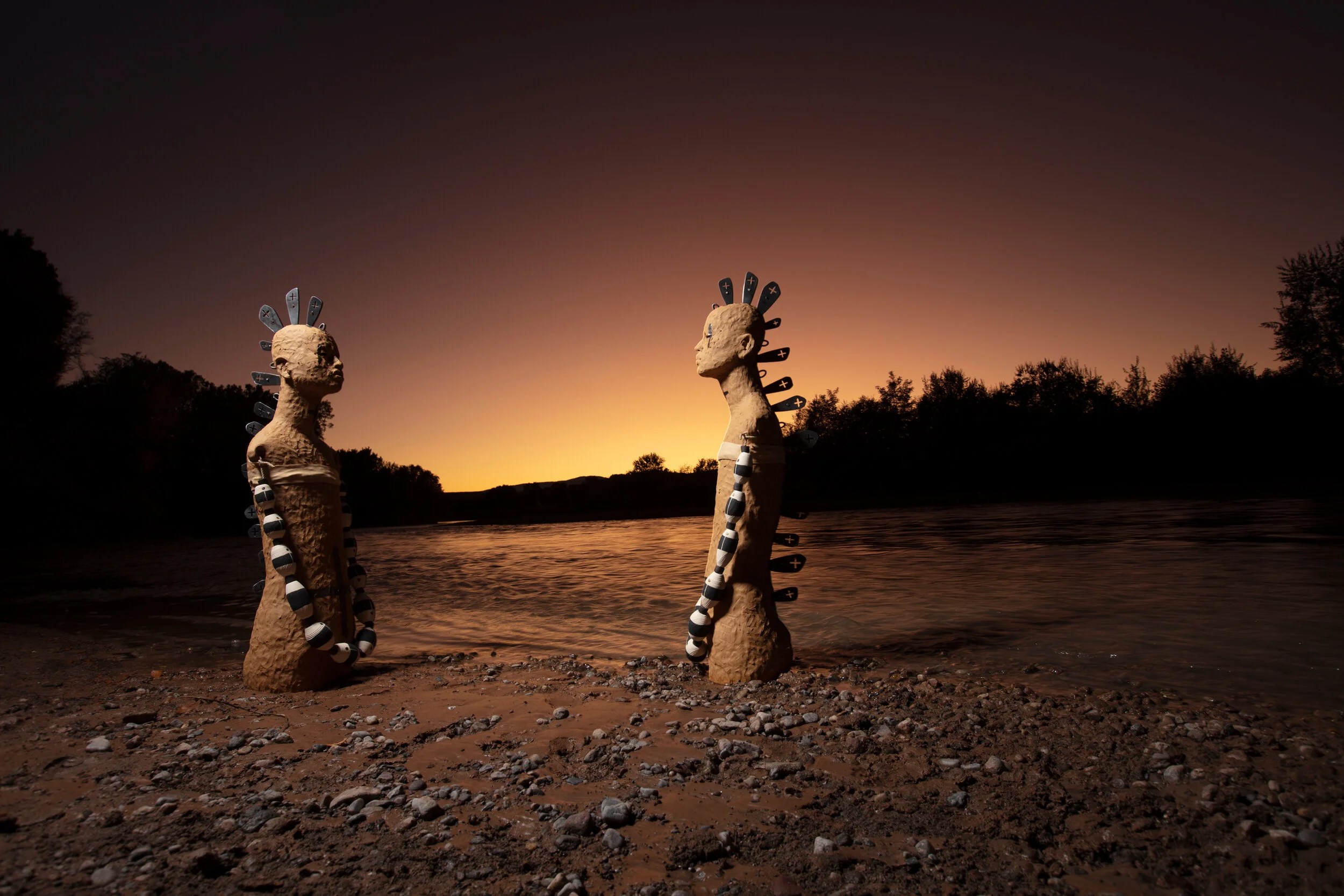
River Girls in situ (2019). Photo by Kate Russell
“I still like cars,” Simpson said, who bought her first at age 12.
“I’ve had a lot of cars in my life. I get emotionally attached to them,” she said. “I see opportunity. I see possibility. I see experience. I see beauty. I see cruising. I see connection. I see empowerment. I see being carried. I see being in a safe, beautiful, strong womb. I see an identity.”
Rose B. Simpson’s LEXICON installation runs August 30, 2025 through August 2, 2026 at the de Young Museum, 50 Hagiwara Tea Garden Drive, San Francisco. September 13 will be a free opening celebration for LEXICON, as well as a day focused on the four reimagined Native American galleries. Future programming for LEXICON to be announced, including possibly partnering with the local lowrider community to stage a cruise around the Golden Gate Park music concourse next year. Information at the Fine Arts Museums of San Francisco website.
Visitors can watch Simpson and her team paint the mural in Wilsey Court during opening hours on Simpson and her team during the museum’s visiting hours, from August 19-22.
Excellent illustrated talk by Rose B. Simpson for the Fine Arts Museums.
How Simpson’s lowrider is an homage to Pueblo potters. Read and view here.
“Pulling the Thread” is a podcast interviewing alumni of Rhode Island School of Design. In this episode Simpson discusses the “Maria” project.
PBS video story of Native Women Artists Exhibition featuring Simpson. Watch here.
“Everyday Icons” features Simpson talking about her art and the Native design influences on her work with automobiles. (May, 2023)
More articles and videos here.
Watch “Rose B. Simpson on Indigenous Art, Storytelling, and Pueblo Cultural Heritage” on “Indigenous Ways” podcast. (August 14, 2025)
“Dream House” is an immersive and architectural installation where artist Rose B. Simpson allows viewers to enter the different rooms of her psyche and walk through her dreams (April, 2024)
Concurrent with the Rose B. Simpson opening a dedicated team of curators has been rethinking how Native American art is displayed at the de Young. The newly reimagined Native American art galleries center Native voices, values, and creativity.
Watch this new documentary, “Re-Envisioning Native American Art at the de Young.”

Noma Faingold is a writer and photographer who lives in Noe Valley. A native San Franciscan who grew up in the Sunset District, Faingold is a frequent contributor to the Richmond Review and Sunset Beacon newspapers, among others. She is obsessed with pop culture and the arts, especially film, theater and fashion. Noma has written about poet Lawrence Ferlinghetti, artists Tamara de Łempicka, Isaac Julien, and Wayne Thiebaud, numerous independent filmmakers, and singer/songwriters Janis Joplin, Diane Warren, and Linda Smith for EatDrinkFilms.
 eatdrinkfilms.com