
By Noma Faingold (August 1, 2025)
“I never wanted to be a poet. It chose me. I didn’t choose it. One becomes a poet almost against one’s will, certainly against one’s better judgement. I wanted to be a painter, but from the age of 10, these damn poems kept coming. Perhaps one of these days they will leave me alone and I can get back to painting.”
– Lawrence Ferlinghetti, poet laureate, publisher, activist, playwright, novelist and painter
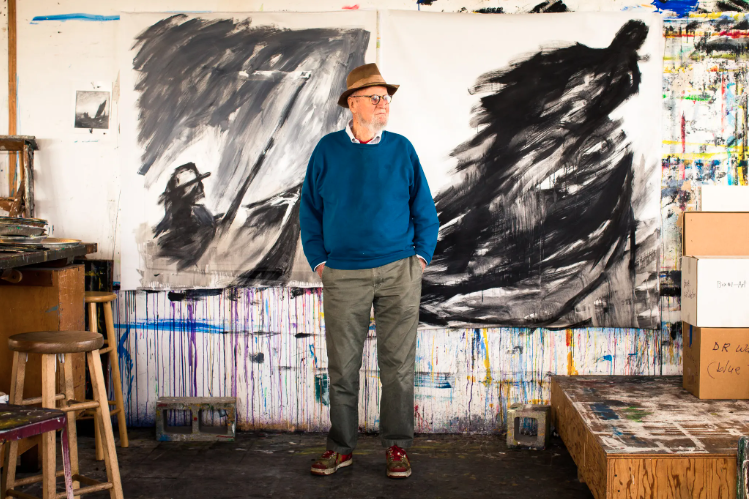
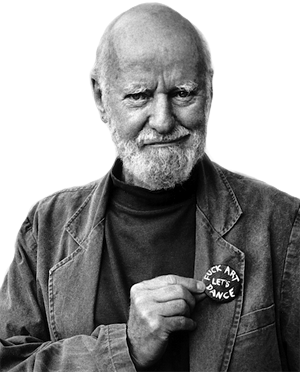
The poet and artist Lawrence Ferlinghetti in his San Francisco studio. (Photo courtesy of Brian Flaherty for The New York Times)
Calling someone an “icon” is annoyingly overused these days. However, when it comes to the late multi-hyphenate Lawrence Ferlinghetti (1919-2021), the moniker is appropriate, especially in San Francisco, where he thrived artistically and socially since his arrival in 1951.
With all his accomplishments, perhaps he is least known as an exceptional visual artist. That might change when an exhibition titled, “Ferlinghetti for San Francisco,” opened at the Legion of Honor on July 19.
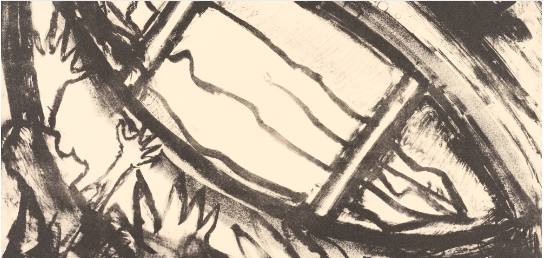
“Lovers at Sea” (1992). Fine Arts Museums of San Francisco, Gift of the Lawrence Ferlinghetti Artworks Trust, 2022.22.18 © Lawrence Ferlinghetti / Artists Rights Society (ARS), New York
“This exhibition is so much needed. It’s a little bellwether awakening from the sleep that we are all in,” Mauro Aprile Zanetti said, a writer and filmmaker, who was Ferlinghetti’s assistant and collaborator from 2013 until he passed. “This exhibit is a seed. We need a full retrospective. Lawrence was like the fog of the city. He was one of those pillars in all that he represented and what he allowed to happen. It’s the time to unearth these jewels.”
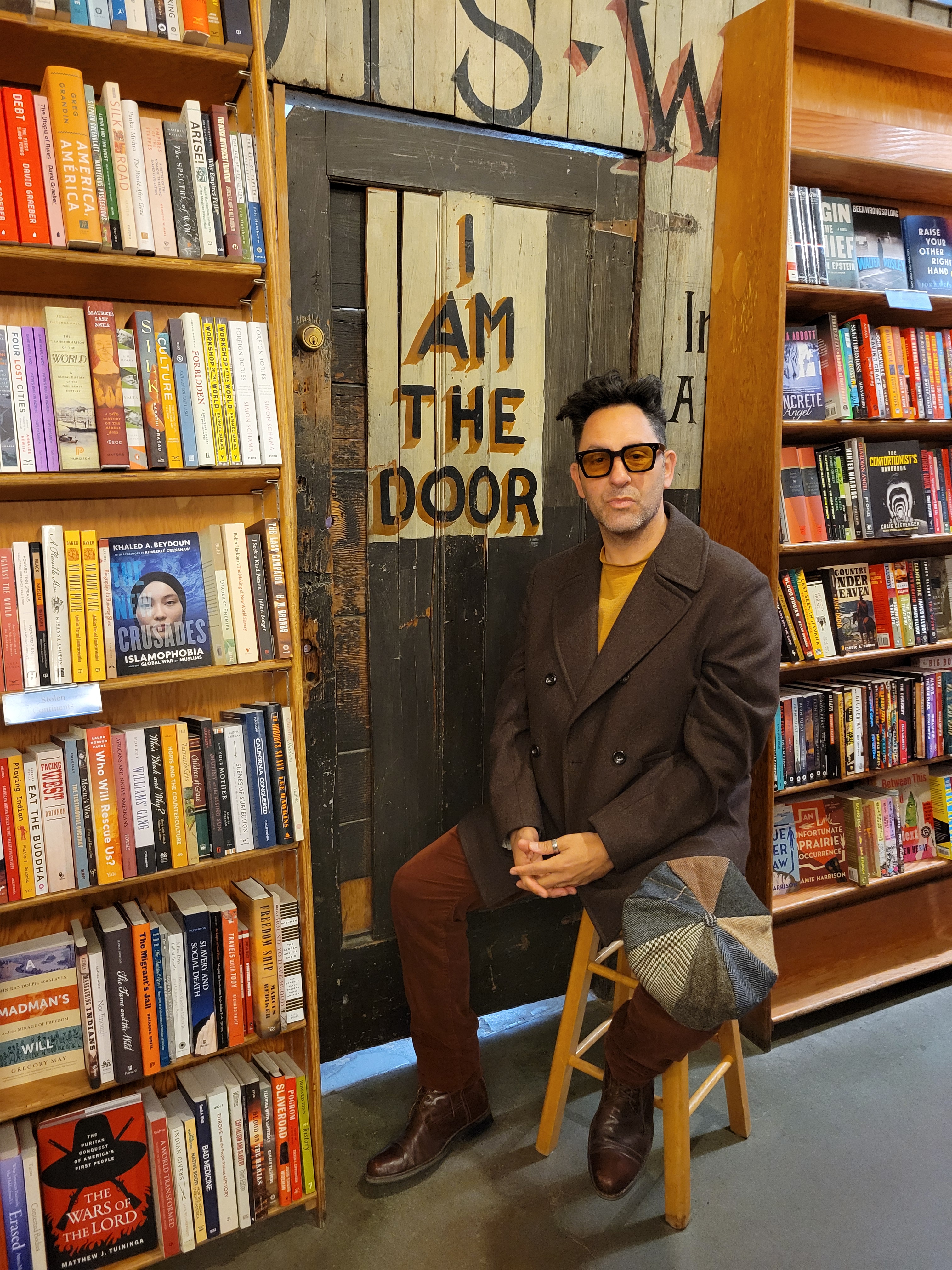
Mauro Aprile Zanetti at City Lights (Photo by Noma Faingold)
Zanetti consulted with the Fine Arts Museums of San Francisco (FAMSF) as the exhibit of more than 20 drawings and prints took shape. Natalia Lauricella, Curator of Print and Drawings, Achenbach Foundation for Graphic Arts for FAMSF, utilized the institution’s permanent collection, bolstered by gifts from local artist Sue Kulby in 2017 and the Lawrence Ferlinghetti Artworks Trust in 2022.
“The exhibition honors a San Francisco bohemian and his inclusive, creative spirit,” Lauricella said. “It will remind us of the city’s radical artistic past.”
San Francisco’s first poet laureate (in 1998) was making art since he was 10 years old, sketching long before he was writing. He always had a sketchbook with him, no matter where he traveled. The Legion exhibit will actually display a small sketchbook from when he spent time drawing during a visit to the museum in 2002.
Ferlinghetti has described his twice-orphaned early years as Dickensian. Born in Bronxville, New York, his Italian immigrant father had already died months earlier. As an infant, his mother was committed to a mental hospital and he was raised by an aunt in Paris until age five, when she returned him to New York to stay with other family members. Any hope of a stable home life ended with the 1929 stock market crash. He wound up in a New York suburb, where he was taken in by another family, who sent him to boarding school.
In 1941, he earned an undergraduate degree in journalism from the University of North Carolina at Chapel Hill.
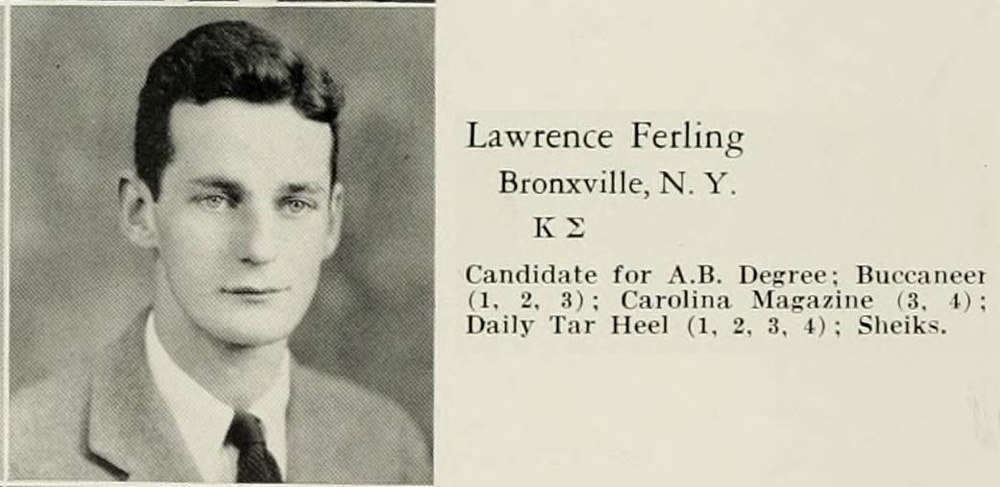
While attending UNC he wrote for various campus publications. His surname was “Ferling” as his father had changed the spelling when he emigrated to the United States. Lawrence later changed it back to “Ferlinghetti.”
He then served in the Navy during World War II for four years, including as captain of a submarine on D-Day (Invasion of Normandy). He was then transferred to the war in the Pacific. Upon seeing what the atomic bomb did to Nagasaki, he instantly became a pacifist.
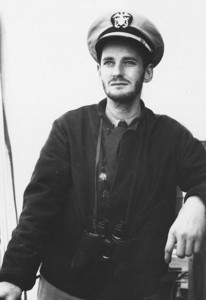
25 year-old US Navy Lieutenant in command of a subchaser (SC-1308) off the coast of Normandy, France.
Ferlinghetti returned to school, getting an advanced degree in English Literature at Columbia University. Taking advantage of the G.I. Bill, he earned a PhD at the Paris-Sorbonne University in 1950. He met his wife, Sheldon Kirby-Smith (“Kirby), in 1946 on a ship headed to France. Turns out, she was on her way to the same school in Paris.
They left Paris at the end of 1950 and arrived in San Francisco on January 1, 1951.
Why San Francisco?
Ferlinghetti once said, “It seemed like it was the last frontier. It seemed like you could do anything you wanted to here.”
In 1953, he co-founded City Lights Bookstore (initially called City Lights Pocket Book Shop) in North Beach with Peter D. Martin. The idea was to make the 300 square foot space the first paperback-only bookstore in the country, with the intention of democratizing culture.
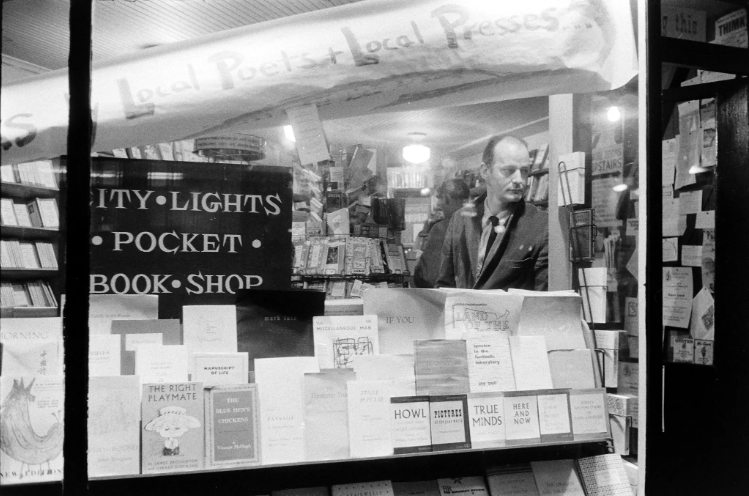
Lawrence Ferlinghetti at his City Lights book store in San Francisco, which he co-founded in 1953. (Photo by Nat Farbman forTime Life Pictures)
Paul Yamazaki, 76, who has worked at City Lights for 55 years, as a buyer since 1981, got to see the shop and publishing house gradually expand. “He brought in a group of people who shared the vision and he trusted us to do our jobs,” he said.
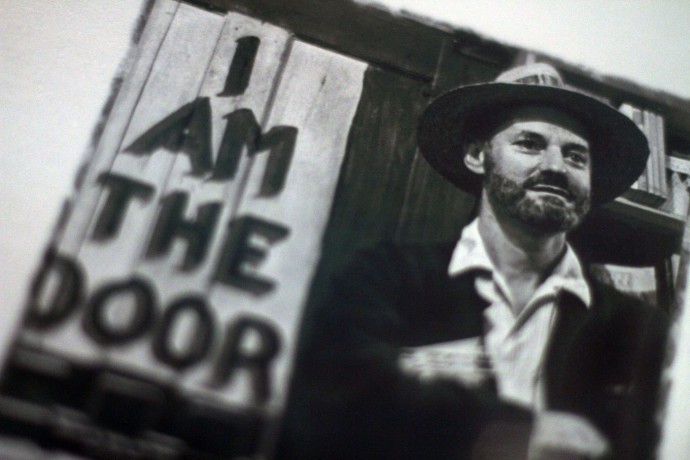
There were stools and chairs, encouraging patrons to linger. To this day, it’s a gathering place to share ideas, find progressive, thought-provoking work of fiction, non-fiction and poetry. It’s an indie operation in its truest form.
In its infancy, it was Martin’s idea to keep the store open until midnight. “They were attracting different kinds of people, like The Beats,” Zanetti said. “He didn’t consider himself a Beat poet. But he got into that stream.”
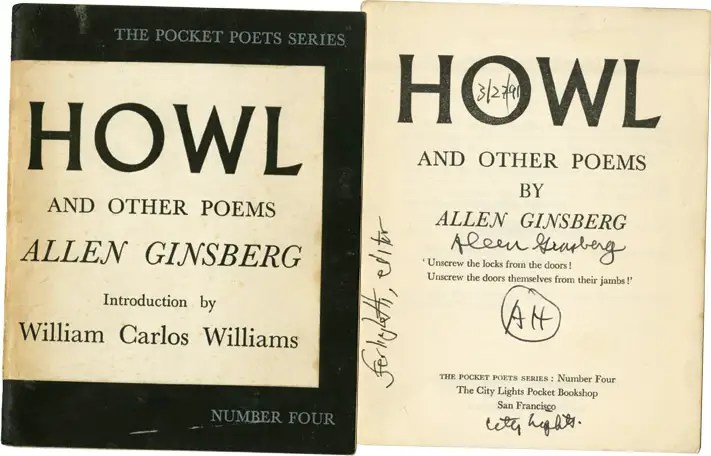
An important milestone was when Ferlinghetti published the incendiary, “Howl,” by Beat poet Allen Ginsberg. In 1956, Ferlinghetti was arrested for selling “lewd and indecent” material. He went to court with the American Civil Liberties Union (ACLU) defending him. They won a landmark ruling in favor of free speech in 1957. The case established legal precedent.
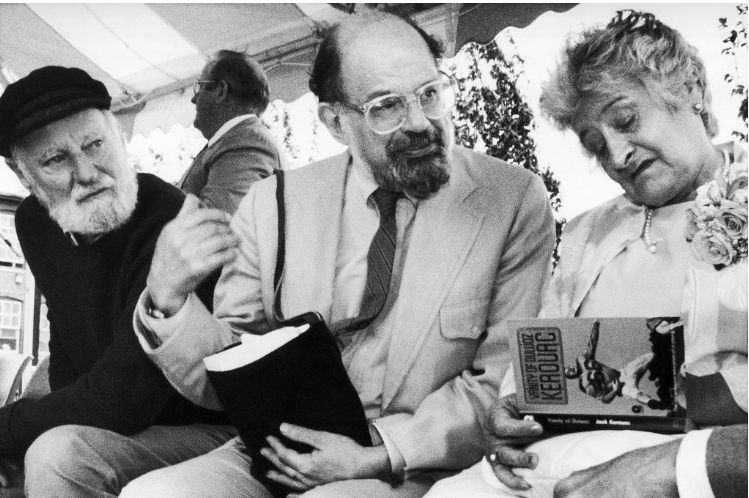
The poets Lawrence Ferlinghetti, left, and Allen Ginsberg, with Stella Kerouac, who was signing one of her late husband’s books in 1988. Photo courtesy of Jon Chase/Associated Press
“Publishing and defending ‘Howl’ is foundational to City Lights,” Executive Director and Publisher at City Lights, Elaine Katzenberger said. She began working at the bookstore in 1987, before moving onto the publishing wing as an editor in 1993. “He was risking his business. That steadfast commitment to the defense of free expression in part of the DNA of City Lights.”
Ferlinghetti’s most read poetry collection is “Coney Island of the Mind” (1958), which has sold more than 1 million copies. It’s been described as a tome for resistance, a wake-up call for past generations, as well as the current generation, to the nightmare of the military industrial complex in America.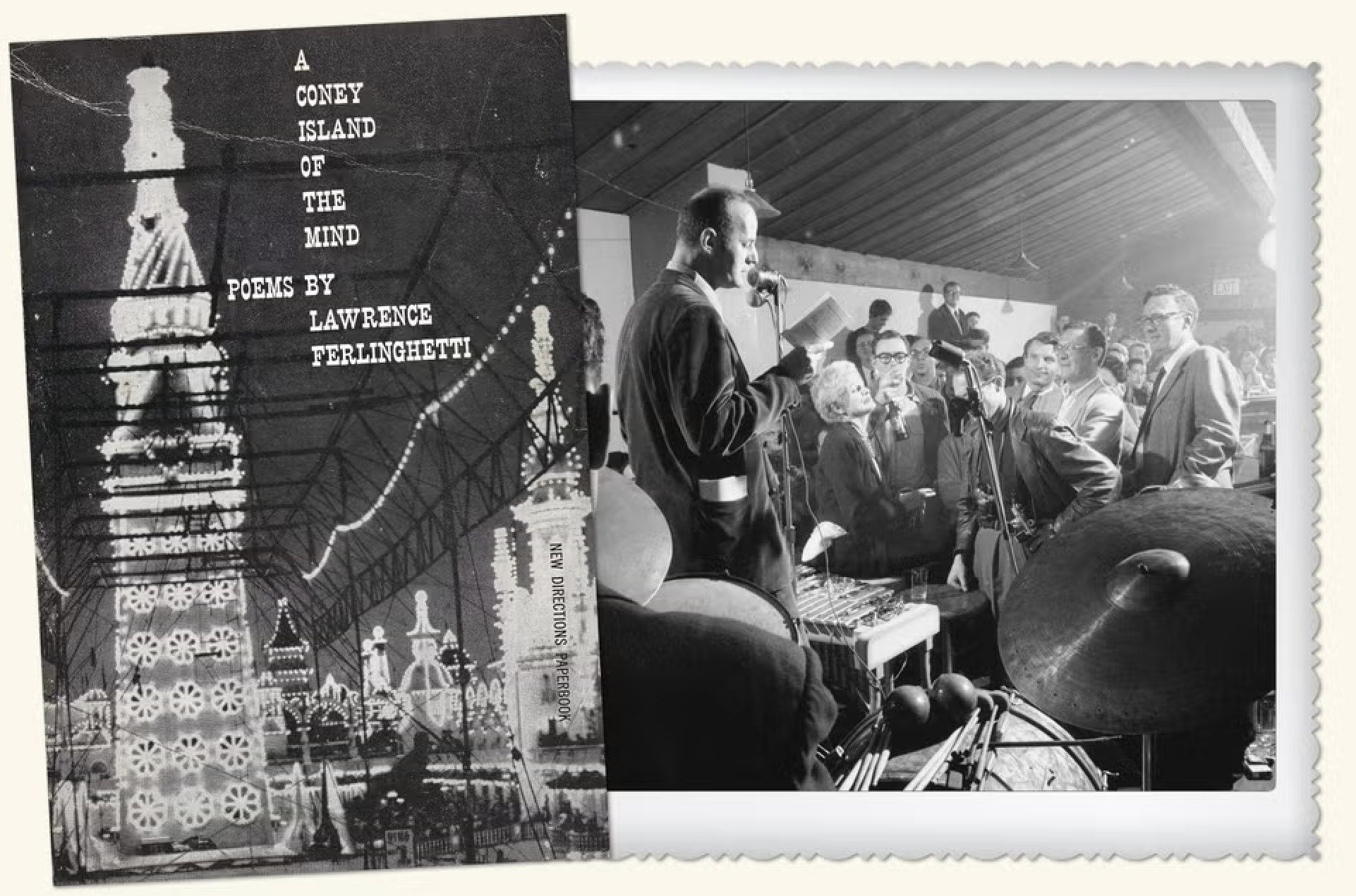
Ferlinghetti has already written, spoken and painted about all that is happening now,” Zanetti said. “He was more than a prophet, unfortunately.”
Critics have said Ferlinghetti’s poetry has a visual dimension. He explored parallel themes in his writing and visual art. In fact, many of his paintings contain words, phrases and even slogans. He added them spontaneously while creating imagery, not later.
“The way he wrote is exactly in his sketches. He was so simple. It was just a stream,” Zanetti said. “The words came from the street. They were words of a daily life. The simplicity is so powerful, it knocks you down. Words are wounds on the canvas in his paintings.”
For 40 years, Ferlinghetti painted at his Hunter’s Point Shipyards studio. According to Katzenberger, he went to the studio almost every day. “Painting was just as central to him, not what he became or who he considered himself to be,” she said. “Maybe he was a little disappointed for that part of his life, which didn’t take off. I’m sure he’d be very happy about this museum show.”
His work has been exhibited in the U.S. and internationally at museums and galleries. Large pieces like “War” (1993), “Those Unrelenting Destinies” (1983) and an FAMSF acquisition, “This Is Not a Man” (1993) of a man strapped to an electric chair, might evoke feelings of isolation and dread. However, in some of Ferlinghetti art, human resilience shines through.
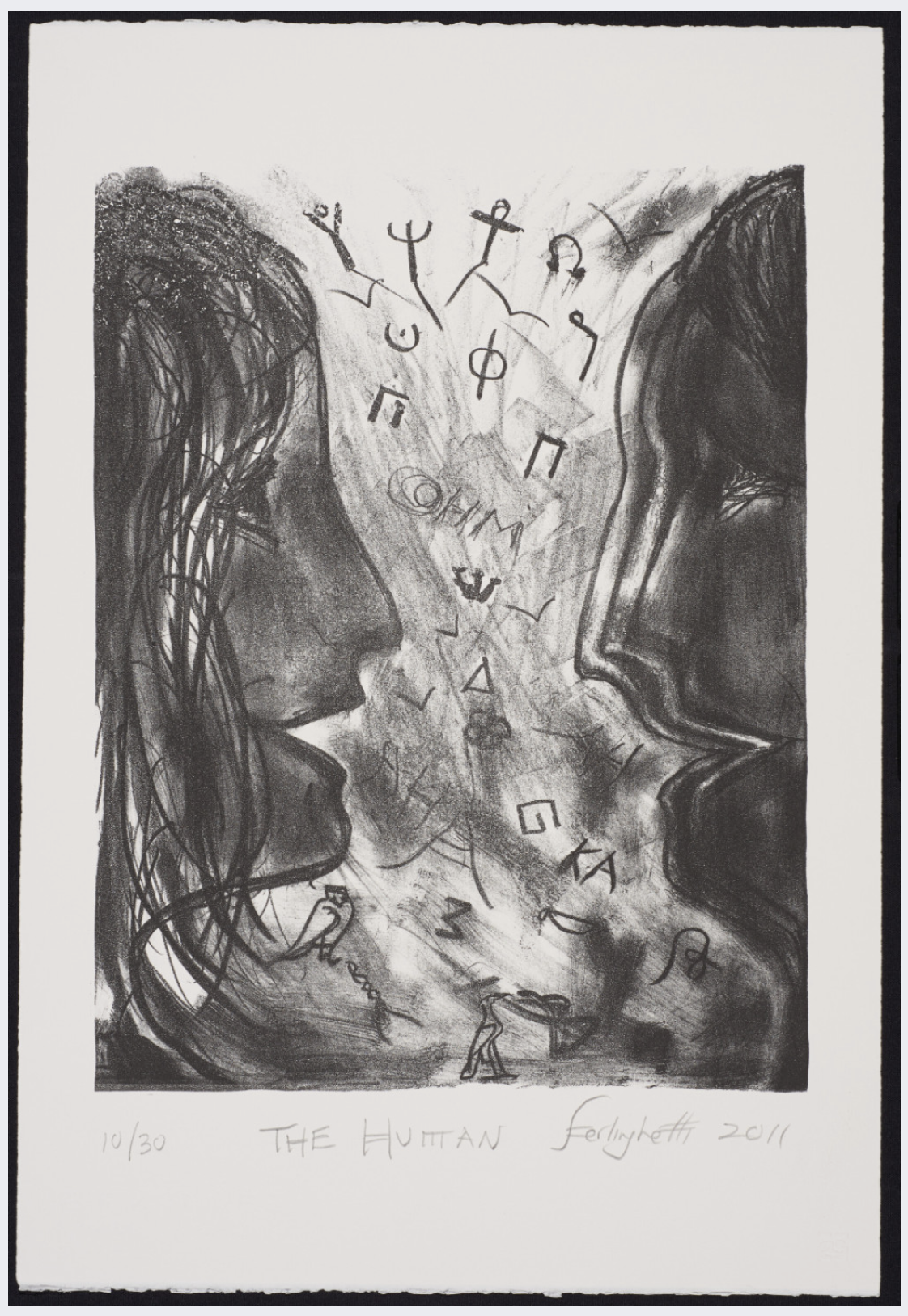
From the portfolio “Out of Chaos” (2011) Lawrence Ferlinghetti, John DeMerritt. © 2025 Estate of Lawrence Ferlinghetti / Artist Rights Society, NY (Courtesy FAMSF)
Ferlinghetti, who was influenced by artists J.M.W. Turner and Francisco Goya, had a bold and unfussy painting style that focused on political and literary themes. He also painted female nudes. Ominous images of boats and the sea were reoccurring motifs.
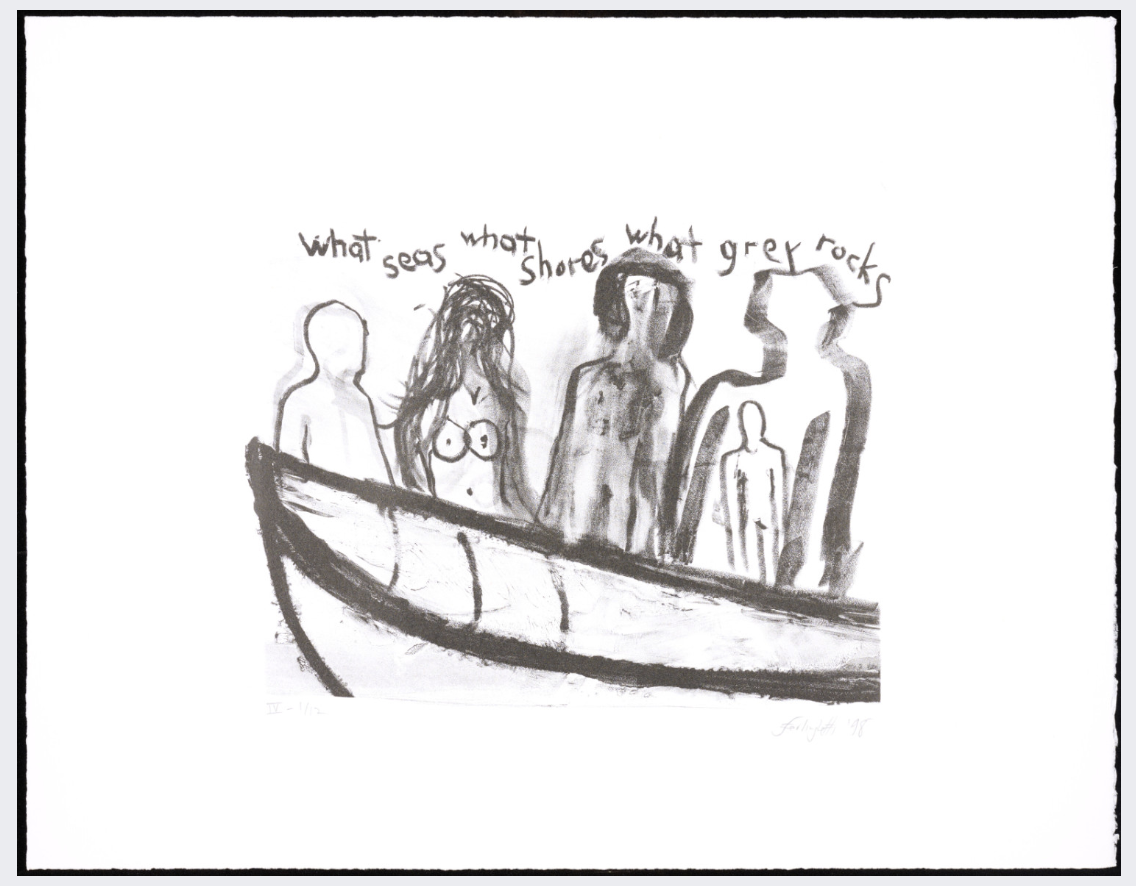
The Sea Within Us V (What Islands) (1998) © 2025 Estate of Lawrence Ferlinghetti / Artist Rights Society, NY (courtesy FAMSF)
“His art feels unfiltered. There’s a lot of free expression and it’s a little avant-garde. You get a sense of the hand,” Lauricella said. “Painting gave him some freedom from social and intellectual expectations in his public life. He could create without editing. The human condition comes through in his poetry and his art. The exhibition will show another side of him that people get to see.”
When Ferlinghetti was losing his sight, due to glaucoma around 2016, he couldn’t really paint or sketch anymore. But he continued to work on his final novel, “Little Boy,” with Zanetti. “I was his eyes,” he said. “The book was already drafted. We were just cleaning up a few things. We edited it together and finished it.”
The semi-autobiographical book was released on March 24, 2019, on Ferlinghetti’s 100th birthday. Zanetti noticed a sharp physical decline in Ferlinghetti after the novel was published. “He was quite fragile,” he said. “He was done. He was always quoting Samuel Beckett.”
Zanetti got that call from Ferlinghetti’s son, Lorenzo, that the end was near. When Zanetti arrived at the apartment on Francisco Street, where Zanetti had been almost every day in Ferlinghetti’s final years, he hesitated in entering the bedroom. Ferlinghetti was lying on his bed, his breathing labored. “Lorenzo told him that Mauro was here and he moved his hand to reach out.”
Over the decades, Ferlinghetti didn’t actually spend that much time at City Lights Bookstore, although there are reminders of him throughout the shop, such as signs he painted on the walls that read, “Stash Your Cell Phone” and “Be Here Now.”
“Some human beings are extra special. He knows what he was here to do and he did it,” Katzenberger said. “He was beloved and respected. I am glad I knew him and got to be part of something really beautiful.”
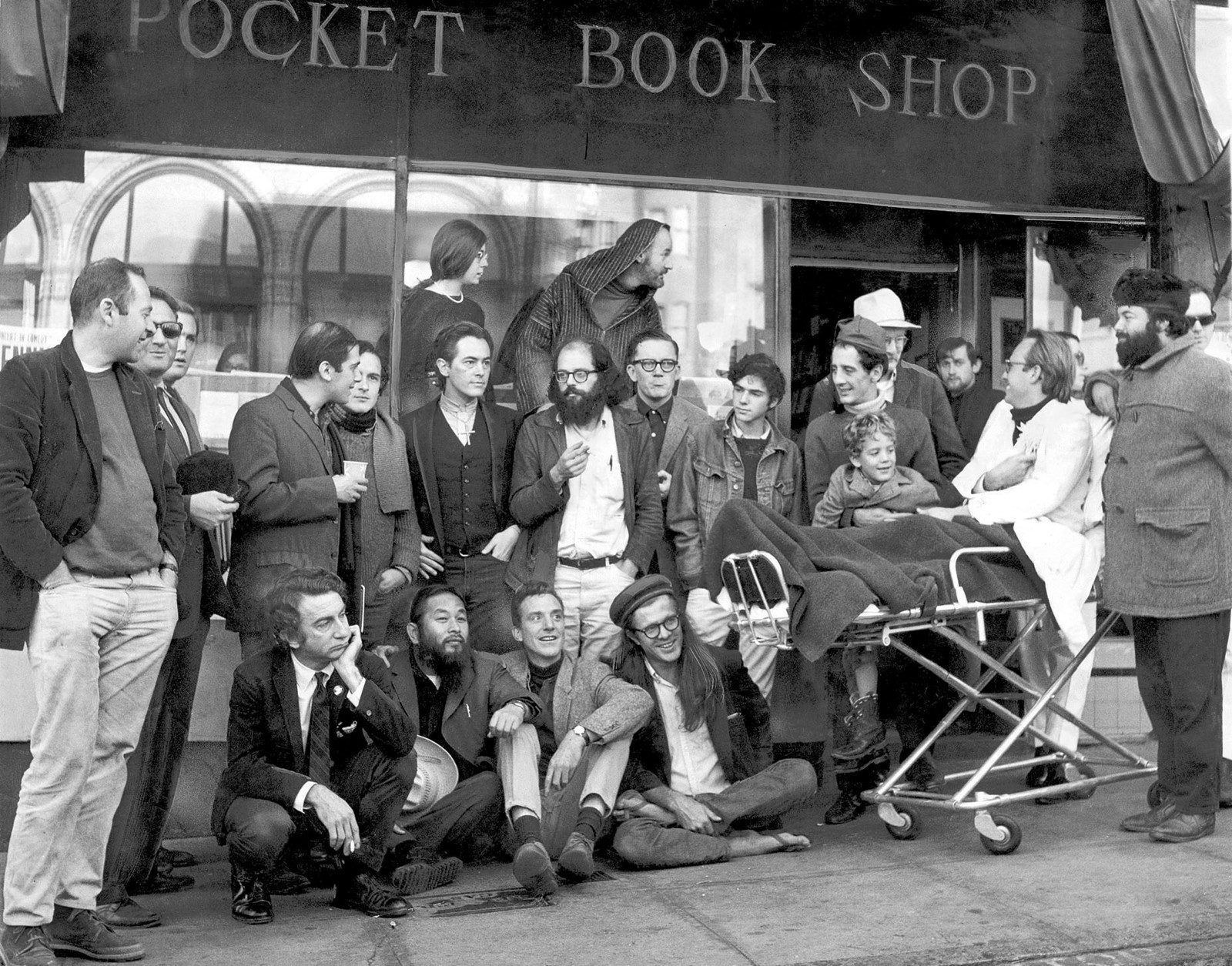
Gathering of Beat Poets, City Lights Bookstore, San Francisco, 1965 (From the Archives of American Art, Smithsonian Institution Washington, D.C.
The “Ferlinghetti for San Francisco” exhibition is currently on display through March 22, 2026, at the Legion of Honor Museum, 100 34th Ave, San Francisco. For more information about the Fine Arts Museum’ exhibits go here.
For further information, articles about the exhibit, and tickets look here.
The Fine Arts Museums of San Francisco have a large collection of art by Ferlinghetti beyond the exhibit and most can be viewed here.
Listen to Ferlinghetti read “The Changing Light” (courtesy of Jim McKee & Earwax Productions)
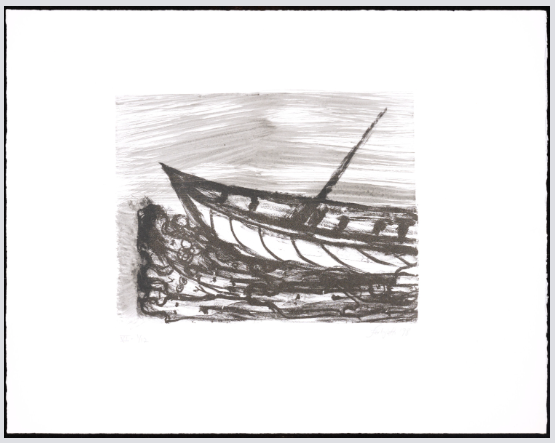
“The Sea Within Us” (1998) © 2025 Estate of Lawrence Ferlinghetti / Artist Rights Society, NY (courtesy FAMSF)
Listen to The Kitchen Sisters who present a heartfelt tribute to Lawrence for his 99th birthday, featuring the work of sound designer Jim McKee who, for more than 20 years, recorded and chronicled Lawrence’s life, poetry and world. In this lushly produced soundscape, Lawrence talks about his youth, reads his poetry, and muses with his friend Erik Bauersfeld about life, death and the meaning of art.

Jim McKee, Lawrence Ferlinghetti, and Erik Bauersfeld (Courtesy of The Kitchen Sisters and Earwax Productions)
Books by Lawrence Ferlinghetti
City Lights Bookstore is the place in San Francisco for books you will not find elsewhere in practically every imaginable category. Check the readings and other live events. Lose yourself among the volumes for hours.
City Lights Books publishes new works and keeps the back stock available for many classics including “Howl” and related items.

Read Joan Frank’s SF Chronicle review of Neeli Cherkovski’s 2022 book “Ferlinghetti:ALife.”
Two essential essays by Mauro Aprile Zanetti with wonderful photos and images :
“Lawrence Ferlinghetti’s Life + Legacy”
“Living Poetry: My Time with Lawrence Ferlinghetti in San Francisco”
The editors of Alta select “8 Essential Lawrence Ferlinghetti Reads.”
Peter Fish reviews the exhibit and talks with longtime City Lights book buyer Paul Yamazaki for Alta.
Gary Snyder Warmly Remembering his friend for The Beat Museum.
Lunch Poems: Lawrence Ferlinghetti 2006 at UC Berkeley
Often very funny lecture about a wide range of topics with poems at the San Francisco Public Library, 1998
Noma Faingold is a writer and photographer who lives in Noe Valley. A native San Franciscan who grew up in the Sunset District, Faingold is a frequent contributor to the Richmond Review and Sunset Beacon newspapers, among others. She is obsessed with pop culture and the arts, especially film, theater and fashion. Noma has written about artists Tamara de Łempicka, Isaac Julien, and Wayne Thiebaud, numerous independent filmmakers, and singer/songwriters Janis Joplin, Diane Warren, and Linda Smith for EatDrinkFilms.
 eatdrinkfilms.com