
An Interview with Producer Paul Zaentz
By Gary Meyer
(updated November 21, 2024)
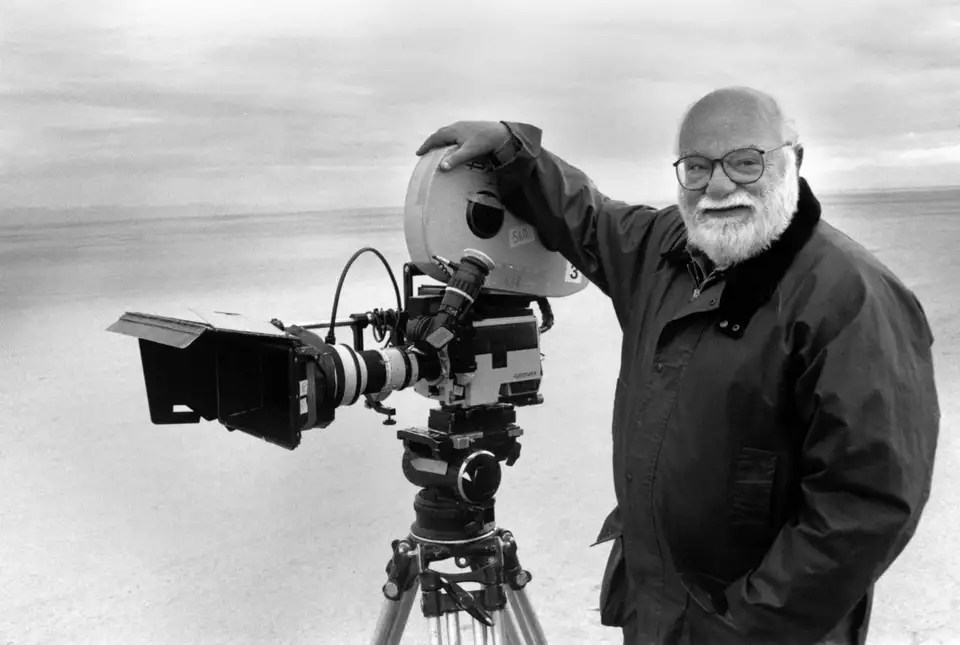
34 Oscar nominations.
22 Wins including 3 Best Pictures.
That is only a fraction of the awards the Bay Area ‘s Saul Zaentz won for the terrific movies he brought to the international big screen.
The Berkeley FILM Foundation and the California Film Institute presented the Saul Zaentz Film Celebration, an event honoring the legacy of the legendary independent film producer, November 15-17, 2024, at the Smith Rafael Film Center in San Rafael, California.
One Flew Over the Cuckoo’s Nest (1976), Amadeus(1985), The Unbearable Lightness of Being (1996), and The English Patient (1997) will screen with special guests in conversation following each showing. There will also be a “conversation with Michael Ondaatje (author of The English Patient) and Davia Nelson (of The Kitchen Sisters). See the complete schedule here.
If anyone knew the late producer and the stories behind the making of his award-winning films, his Fantasy Records company, and acquiring the film and merchandising rights to J.R.R. Tolkien’s The Hobbit and The Lord of the Ri ngs, it is his nephew Paul Zaentz who was intimately involved in the production, sales, and legal issues around the movies.
We sat down with Paul to collect some behind-the-scenes tales “out of school.”
Milos Forman was a major figure in the “Czechoslovak New Wave” and then made the American comedy Taking Off that failed at the box office. What brought Milos to One Flew Over the Cuckoo’s Nest?
Paul: In the mid 1960s Kirk Douglas was on a U.S. government sponsored culture exchange in Prague and met Milos where they discussed Cuckoo’s Nest. Kirk told Milos he would send him a copy of the book. Milos never got the book and thought this big time American actor forgot about the promise as soon as he left Prague. Kirk, who did send the book, thought “This young punk Czech director never had the courtesy to drop me a line thanking me for sending the book.” After Milos was hired to direct the film, they were both at dinner at Michael Douglas’s house and they were leery about each other. Finally, they figured out the book was seized by Czech customs.

Co-Producer Michael Douglas, Miloš Forman, Louise Fletcher, Jack Nicholson, & Saul Zaentz with their Oscars
When Cuckoo’s Nest was announced in 1962 Kirk Douglas was going to star, but it took 13 years before the project came together and it was agreed that Kirk was too old to play McMurphy. How did Jack Nicholson become involved?
Paul: Saul took Nicholson to the theater to see the play and halfway through Jack slapped Saul on the knee and said, ‘we are going to make a lot of money.” When it was released in 1975 Cuckoo’s Nest was the 6th biggest all-time worldwide box office movie.
The profit from Cuckoo’s Nest allowed the Fantasy Building (now known as the Saul Zaentz Film Center) to become a reality that has been the home for dozens of filmmakers with an emphasis on documentary work. With extensive post-production facilities, multiple recording studio rooms (popular with both musicians and for post-production film sound work), a foley stage for creating sound effects, and two screening rooms, the Center attracted many post-production specialists. It was a popular place for high profile filmmakers to do post-production their way, sheltered from the studio heads interfering. The Berkeley FILM Foundation is based there.
A scene in Cuckoo’s Nest was reshot a few weeks after it was first filmed. However, when the scene was first shot Jack was clean shaven and when it was reshot he had a stubble of a beard. in post-production Milos used shots from both shoots so Jack’s face sometimes was clean shaven and sometimes had a stubble. When Milos was questioned about it by one of the editors Milos replied if it’s a good film no one will notice. Over the last 50 years very few people have picked up on that discrepancy.
After Cuckoo’s Nest Milos made Hair and Ragtime. And then he reunited with Saul for Amadeus, based on a hit play. How did Milos work with the play’s writer, Peter Shaffer?
Paul: Saul asked me to come to New York with him to see the play. After the play we met with Milos and Robbie Lantz, the agent that repped both Milos and the play’s author Peter Shaffer. We discussed that the play needed to be opened up to make a movie. Milos wanted to write the script. Peter joined the meeting and acknowledged his play must be opened up as a grand production to make a proper film from it. And he announced that he wanted to write script.
A compromise was agreed that Milos and Peter would go to Connecticut and seclude themselves on Milos’s farm to write together. If there was a disagreement Saul would decide. Note that these are two very different men, both very strong minded and very stubborn.
They go off to Connecticut and for weeks we hear nothing. Every day when Saul gets into the office, he asks me if Milos has called. Finally, after more than a month Milos calls and Saul puts him on the speaker phone.
Milos is telling us how great things are going. Saul asks, “You mean that you have not had any differences on the script?”
Milos says, “Of course but Peter will not be there when I shoot my movie.”
In the end Peter was on set nearly every day and there were no major changes to the script.

Paul: “This photo of me with Saul was taken by Phil Bray in Prague’s Tyl Theatre, now named the Estates Theatre, in July 1983 while we were filming DON GIOVANNI which actually had its world premiere in that same theatre, then called the National Theatre, in October 1787.”
The film was shot in Prague and Kroměříž where with minor changes it looked like 18th century Vienna where the story is set. Post-production was in Berkeley at Fantasy. Do you have a favorite story from that time?
Paul: Every day the receptionist would alert me when Milos arrived so I could go to his cutting room, hopefully before he would light up his first cigar, to say good morning and ask him where they ate last night – food was always very important to Milos.
One morning about 10 months into the 14 months of post-production Milos greets me with “I need to go to the hospital for an operation.”
I blurt out “What’s wrong?”
Milos points to his ear and says, “Here– I hear people telling me my movie is great.”
Then Milos points to his eye and says, “but here I see my movie is shit.”
Then he points to the area between his ear and eye and says, “so I must need an operation here.”
I was invited to a very early cut screening of Amadeus at the Piedmont Theatre. I remember the projector breaking down……
Paul: We will never forget that. The second time the film broke during that showing Milos charged up to projection booth and started screaming and audience could hear him.
That early screening version was well over three hours long. There were no limits on the running time but the version that Saul and Milos released was 158 minutes. And it went on to win eight Academy Awards including Best Picture and Best Director. Years later Warner Brothers wanted to bring out a BluRay and asked Milos might to add missing scenes he liked for this Special Edition.
There were four scenes that added 22 minutes. They are standalone segments. Though Warner’s called it “The Director’s Cut,” Milos later said it should be called “The DVD Cut.” We will show a new 4K restoration of his preferred original 1984 “Director’s Cut.”
I heard that Juliette Binoche was not originally cast in The Unbearable Lightness of Being.
Paul: An American actress had been cast to play Teresa and was in Paris rehearsing with director Phil Kaufman and Daniel Day Lewis when Juliette Binoche read for another role in the film. During that casting session the chemistry between Daniel and Juliette was quite apparent. Juliette had not been in an English language movie and her knowledge of the English language was far from perfect however Phil decided to make the change and as they say the rest is history. Look at Juliette’s career.
Nine years later on The English Patient Juliette had a coach who would translate her scenes into French so she would better understand the emotions of the moment.
On Saul and Milos’s last film Goya’s Ghosts Javier Bardem put the language hurdles into perspective for me. He told me when in a scene if he has to say “I love you” to a woman those words mean nothing to him because he has never said them. He has only said “te amo.”
The English Patient was originally going to be financed and distributed by 20th Century Fox but they pulled out before production. What happened?
Paul: We were so pleased after making that deal but we should have seen the signs. At the meeting with Fox after which nine of us all shook hands on the deal we thought we had made, one of the Fox executives declared Ralph Fiennes was so handsome and did his face have to be burned. To which I replied, “Have you read the script?”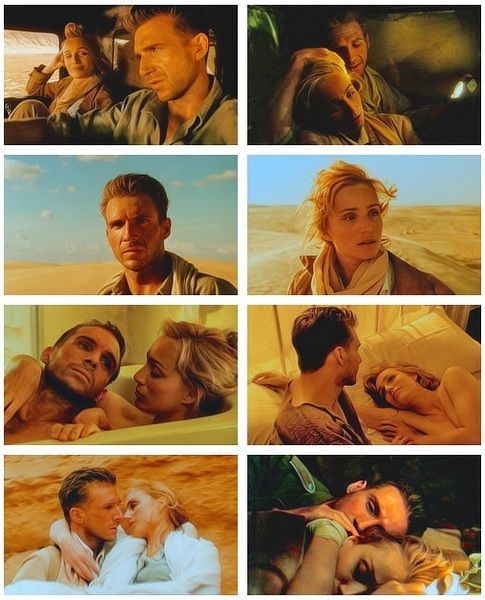
At that meeting in late winter 1995 the script was already “finished”, Ralph, Juliette Binoche and Kristin Scott Thomas were already cast, with John Seale as cinematographer, Stuart Craig as Production Designer, and a budget of $33,000,000.
A couple of months later Fox wanted us to replace Kristin with Demi Moore. Anthony responded that she is a good actress but not to play an English aristocrat in the 1930s. To which the executive said, “We know she will not be as good for your movie but she will be very good for our publicity and marketing.”
A few weeks later after the Cannes film festival Anthony cast Willem Dafoe and the studio’s reaction was that “Dafoe is not box office neutral — he is box office poison!” Fox suggested that we replace him with either John Goodman or Danny DeVito. And things went downhill from there. We were on location in Italy, three weeks before production was to start when word came that we had to find new financing—Fox pulled out. You can’t imagine what it was like for me to get up in front of everybody including the Italian crew and tell them that we were shutting down until we came up with the money to make the film.

Anthony Minghella and Saul Zaentz at the 69th Academy Awards (1997)
Harvey Weinstein was excited to become involved, approving of all the casting. Miramax’s enthusiastic campaign and full support led to great success critically and financially, winning many awards including nine more Oscars. But unresolved payments from Miramax resulted in a long-running lawsuit.
You were so busy with various aspects of getting Saul’s films made that it limited your ability to become a producer on all the films but you were an Associate or Executive Producer on them. You are still involved is many aspects of the company but you have produced a few films, correct?
Paul: I loved working with Anthony and was a producer on his next film, The Talented Mr. Ripley and unofficially was a producer on another one. His unexpected death in 2008 was devastating for me and so many others who loved him working with him. I was helping him develop another project at the time.
Coup 53 was a pet project I produced with editor Walter Murch and director Taghi Amarani. It is a theatrical documentary about a 1953 CIA/M16 staged coup in Iran that overthrew Prime Minister Mossadegh. Ralph Fiennes reads a transcript of an M16 agent who admits to plotting the coup with the CIA.
I have some new projects in development, but I have learned from experience that it best to keep quiet about them until the right moment.
Finally, it is rare for a producer to maintain control but you have been able to keep the movies in the family.
Paul: Last year I was able to purchase the library for my company Teatro della Pace Films. I am proud to be keeping the Zaentz legacy alive.
Thank you, Paul. We will see you at the Rafael Film Center for the Tribute to Saul Zaentz on Friday, Saturday and Sunday, November 15-17, 2024 (full schedule below). You will be speaking with some of the films and be around for people to meet.
To learn more about Paul Zaentz visit his Bio.
(A video interview with Paul for the recent showing of Amadeus with a live orchestra)

At the Rafael Film Center in San Rafael
FRIDAY, NOV 15
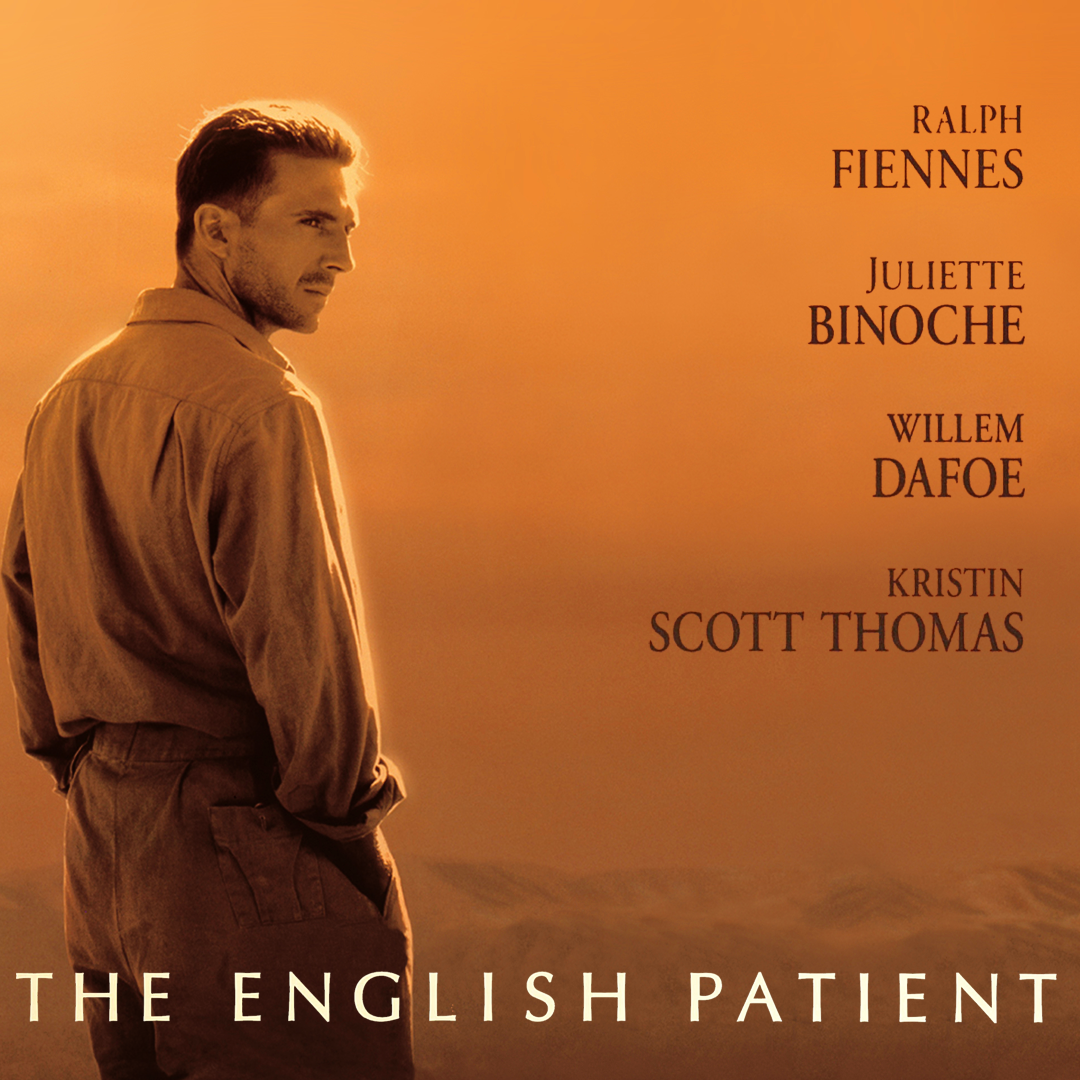
SCREENING + CONVERSATION
Pre-recorded intro by author Michael Ondaatje and on stage post-screening conversation with associate producer Paul Zaentz. Moderated by Peter Stein.
Anthony Minghella wrote and directed this award-winning adaptation of Michael Ondaatje’s novel about a doomed and tragic romance set against the backdrop of World War II. In a field hospital in Italy, Hana (Juliette Binoche), a nurse from Canada, is caring for a pilot who was horribly burned in a plane wreck; he has no identification and cannot remember his name, so he’s known simply as “the English Patient,” thanks to his accent. When the hospital is forced to evacuate, Hana determines en route that the patient shouldn’t be moved far due to his fragile condition, so the two are left in a monastery to be picked up later. In time, Hana begins to piece together the patient’s story from the shards of his memories. – Synopsis courtesy of Miramax.
Director: Anthony Minghella (US 1996) 162 min.
FRIDAY, NOV 15 • 6:30
SATURDAY, NOV 16
IN CONVERSATION WITH MICHAEL ONDAATJE AND DAVIA NELSON


NOTE: MICHAEL ONDAAJTE WILL BE JOINING THE CONVERSATION VIA LIVE ZOOM CONNECTION ON THE BIG SCREEN.
Michael Ondaatje, a masterful storyteller, has written seven novels, a memoir, a nonfiction exploration of film, and several poetry collections. His acclaimed novel The English Patient not only won the 1992 Booker Prize but was also transformed into a cinematic triumph in 1996, sweeping the Academy Awards and winning Best Picture. Ondaatje will discuss the making of the film (including Saul Zaentz’s long journey to acquire the rights to make it) with Davia Nelson, one-half of The Kitchen Sisters and award-winning NPR radio documentary producer.
Program 60 min
SATURDAY, NOV 16 • 11:30

Film + Intro by Editor Vivien Hillgrove and post-screening live Zoom conversation with filmmaker and sound designer Walter Murch (THX 1138, Apocalypse Now)
Philip Kaufman achieves a delicate, erotic balance with his screen version of Milan Kundera’s “unfilmable” novel. Adapted by Kaufman and Jean-Claude Carrière, the film follows a womanizing surgeon (Daniel Day-Lewis) as he struggles with his free-spirited mistress (Lena Olin) and his childlike wife (Juliette Binoche). An intimate epic, The Unbearable Lightness of Being charts the frontiers of relationships with wit, emotion, and devastating honesty.
Director: Philip Kaufman (US 1988) 172 min.
SATURDAY, NOV 16 • 1:30
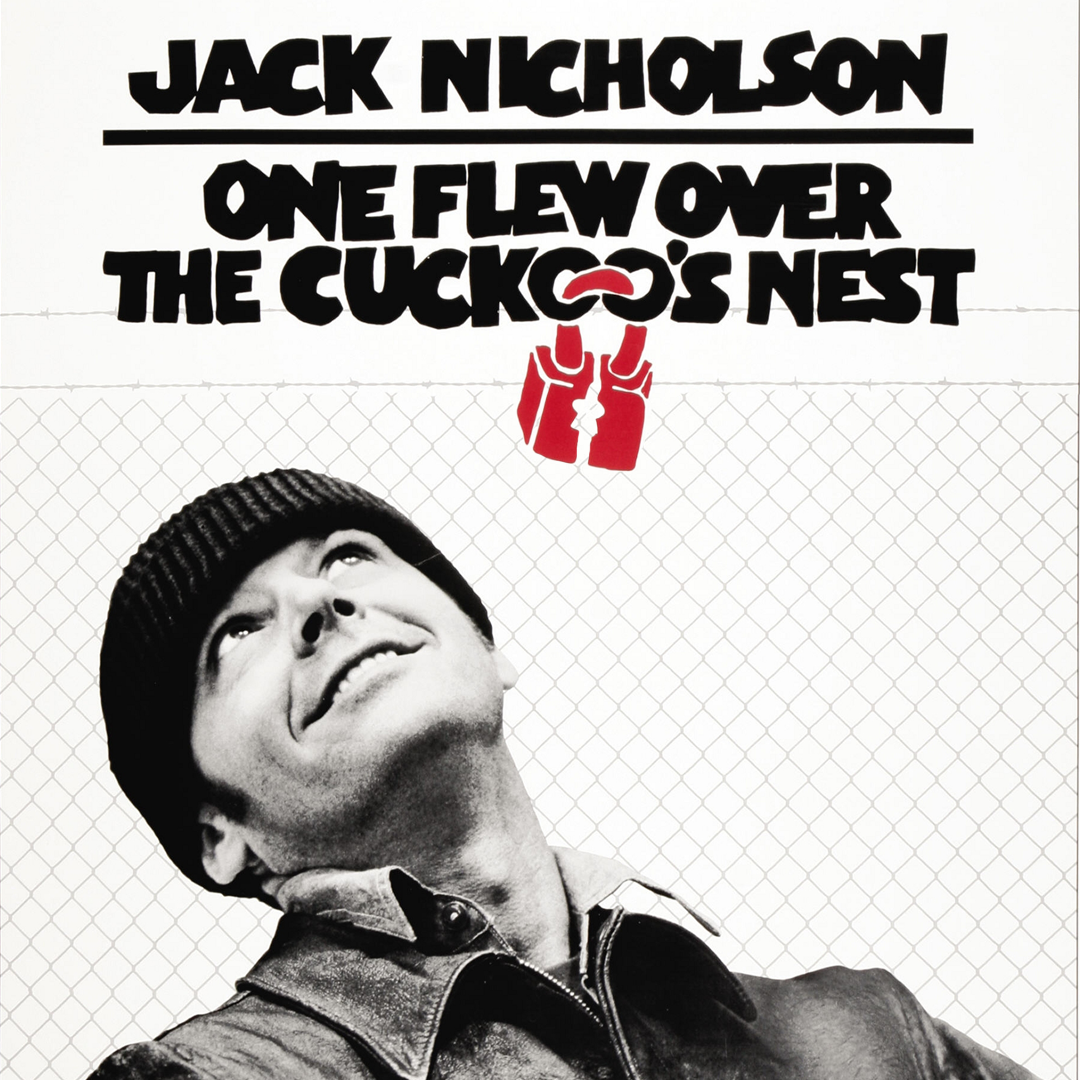
SCREENING + CONVERSATION
With Robert Faggen, PhD, Professor of Literature
Adapted from Ken Kesey’s novel, the film centers on Randle McMurphy (Jack Nicholson), a convict who simulates mental illness in the hope that a transfer to psychiatric hospital might ensure his early release. But he hasn’t bargained for the rigid regimen of Mildred Ratched (Louise Fletcher) who dislikes his disruptive – though he’d say liberating – effect on the ward. Inspired casting (Danny DeVito, Brad Dourif and Christopher Lloyd are among the patients) and Forman’s naturalistic direction lend authenticity to the proceedings, so that the film succeeds both as anti-authoritarian parable and as an affecting reminder of the psychiatric practices of the past. – Geoff Andrew.
Director: Milos Forman (US 1975) 133 min.
SATURDAY, NOV 16 • 6:00
SUNDAY, NOV 17

SCREENING + CONVERSATION
Introduction by Paul Zaentz | Post screening conversation with Mark Berger, AMADEUS Sound Designer, Editor and Mixer. Moderated by Gary Meyer.
Milos Forman creates a rousing adaptation of Peter Shaffer’s stage play about the rivalry between the composers Wolfgang Amadeus Mozart (Tom Hulce) and Antonio Salieri (F. Murray Abraham). In telling the story through Salieri’s perspective, Amadeus becomes a drama about deranged jealousy and betrayal as Salieri fumes over his prodigious counterpart, who is seen as immature and unworthy of his superior talent. Yet through the heat of Salieri’s contempt, Mozart’s compositions come alive with fresh urgency: Amadeus isn’t a stodgy costume piece for classical music fans only, it’s a gripping drama about a divine gift and its costs. – Scott Tobias, The New York Times
Director: Milos Forman (US 1984) 158 min.
SUNDAY, NOV 17 • 1:30
 eatdrinkfilms.com