
By Gerald Peary
(Nov. 10, 2024)
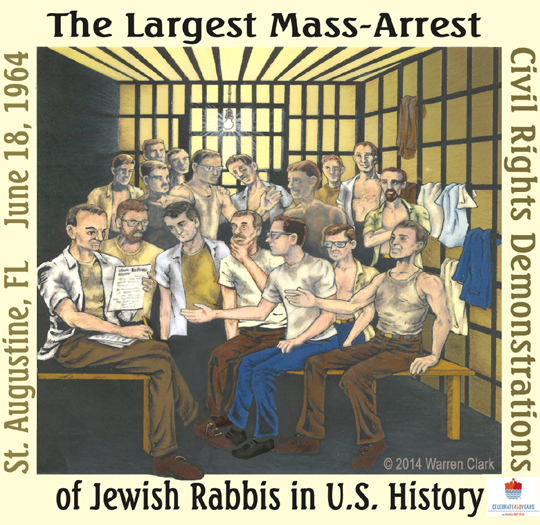
A seven-part podcast, The Rabbis Go South, produced and hosted by Amy Geller and me, has launched! It tells the story of 16 Reform rabbis answering the call of Martin Luther King, Jr. in 1964 to help desegregate St. Augustine, Florida. The rabbis were arrested and jailed, the largest incarceration to that time of rabbis in American history. A very compelling story. But like most of you, we’d never heard about this incident before we began. 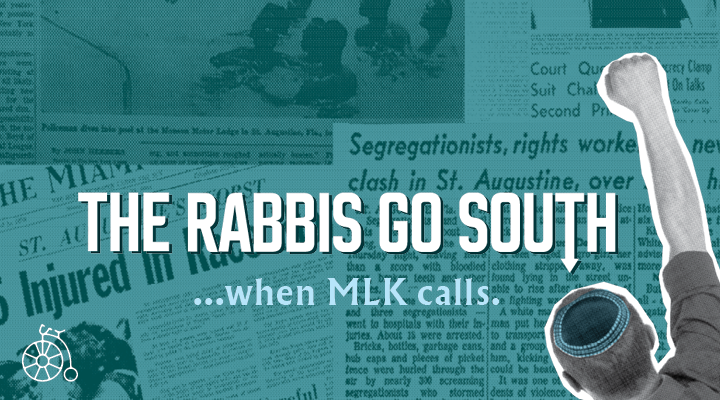
Our podcast wouldn’t have happened if we hadn’t met Rabbi Allen Secher. Amy and I interviewed him for our 2019 documentary, The Rabbi Goes West, which premiered at the San Francisco Jewish Film Festival followed by dozens of screenings at festival, theaters and special events (you can watch it at the end of this article).
Secher was a Chicago Reform rabbi who had retired to Whitefish, Montana, to lead a quiet life. Instead he found himself a target of white supremacists, who threatened to march through his town Charlottesville-style. As we showed in our film, he courageously stood up to them.
 On a day after The Rabbi Goes West was released, Secher telephoned us from Montana with an impassioned request. He wanted a proud moment from his long ago past to be documented and remembered. He was one of those rabbis who in 1964 went to St. Augustine, Florida. “I want this story told before I leave the earth,” he kind of guilt-tripped us.
How could we say “No” to Secher? But St. Augustine? I’m old enough to have lived through the civil rights era, but I’d never heard of anything going on there. When we did some historic research, Amy and I were surprised to discover that St. Augustine was as key a site of civil rights activity as Selma and Birmingham. That’s where Martin Luther King, Jr., and the Southern Christian Leadership Conference (the SCLC) focused their attention in Spring of 1964. And it was a horribly segregated place, where the KKK ran free. MLK was arrested there, put in a squad car alongside a feral-looking police dog. Andrew Young, then a young SCLC lieutenant, was beaten unmercifully, almost murdered, leading a demonstration.
So here was the story that Allan Secher wanted us to tell: about the three days when he and 15 other rabbis went to St. Augustine at the behest of D. King, who had sent a telegram asking for rabbinic help from a Florida jail.

Rabbis holding a prayer service with civil rights demonstrators in the parking lot of the Monson Motor Lodge in St. Augustine, Florida, in 1964, are attacked by motel manager James Brock.
What we learned was fascinating and inspiring. Amy and I loved that these rabbis had been willing foot soldiers fighting for civil rights, and that, literally 60 years ago, there was a genuine Black/Jewish alliance. Could this be a model for today, such a divisive time of racism and antisemitism?
So our film spawned a sort of prequel with Allen Secher appearing in both. The Rabbi Goes West would be followed by The Rabbis Go South.
For several years, we developed our new project as a documentary. During COVID times, we did long-distance, on-camera interviews with Secher and with the only other surviving rabbi from 1964, the LA-based Jerry Goldstein. When COVID had subsided, I made a trip to St. Augustine accompanied by a cameraman to film African-Americans with knowledge of what happened there in 1964. We managed to interview one heroic man who had been arrested time and again for civil rights protesting, and who’d been one of those who rescued Andrew Young from being killed by white supremacists. But others we were looking for had unlisted telephone numbers. In our several days in St. Augustine, we drove around the black neighborhoods trying to speak with several women who, as youth, had been arrested and jailed for sitting in. Alas, they were never home.
We did better finding Jews with deep family roots going back generations in northern Florida. They had been children in 1964 when the Reform rabbis had been arrested in their city. What we learned in St. Augustine is what happened all over the South: outsider rabbis were not exactly welcomed with open arms. Local Jews were fearful and with reason that they would be victimized by anti-Semites and the KKK once the rabbis from elsewhere went home.

Demonstrators pray during a civil rights protest in the parking lot of the Monson Motor Lodge in St. Augustine, Florida.
But when it came to edit the interviews we’d conducted alongside historic footage from 1964, we had an incredible disappointment. The small amount of footage which survives about the civil rights movement in St. Augustine has already been used and reused in three prior documentaries. As for footage specifically showing the 16 rabbis, all Amy and I could locate was one minute of film of the rabbis being arrested. That was it: sixty seconds in St. Augustine! Nothing of the rabbis being greeted by Dr. King, and nothing of the rabbis in and out of jail.
And one more dismaying thing: the rabbis we interviewed, in their mid-80s, were sluggish in their answers, with long contemplative pauses between words, which was…deeply boring. And with nothing really to cut away to! We were stuck…
It took a while for us to admit (especially stubborn me) that there was no path to a decent film. And it took a while longer, after Amy and I sadly abandoned our documentary, for us to realize the obvious. What we did have in our possession was a thrilling audio record of St. Augustine. When we got rid of the gaps in the rabbis’ answers and squeezed their words together, the interviews suddenly sprang to life. What had been enervating became, to our delight, interesting and exciting. We could do something we’d never considered…a narrative podcast!
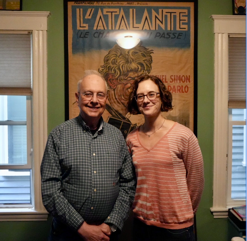
Married and podcasting together: Gerald Peary and Amy Geller. (Photo by Gary Waleik)
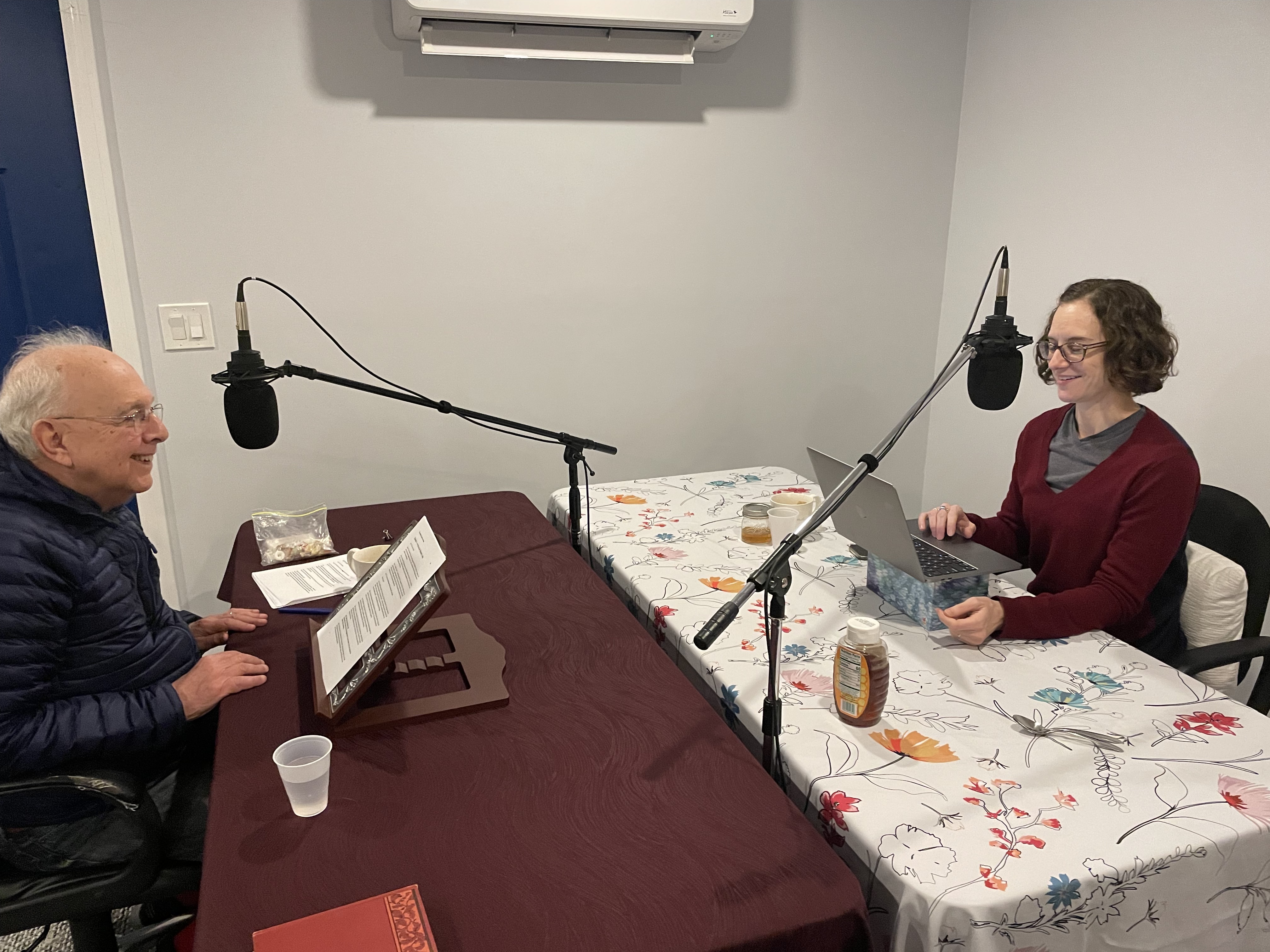
Revitalized, Amy and I went back to work; and, with ourselves filling in as co-hosts, we produced The Rabbis Go South. My forty-five years as a journalist propelled my writing of the narration. I will brag a bit: it’s tight and smart. Harder was the reading of the words by Amy and me, neither of us professionals. Surprise: Amy turns out to have a great radio voice, and mine is, I guess, serviceable. We teamed with an excellent sound engineer, Gary Waleik, to produce it all in his basement studio. Having the most limited budget, we opted for free music in constructing our soundtrack. Miraculously, it works, being both ambient and melodic.
And finally: we broke with the tradition of most podcasts, which are 50 minutes or longer. I am a lover of “B” movies of the early 1930s, which deliver a story in a sweet 69-72 minutes. Our seven episodes are short and taut and on target: a lean 17-20 minutes each.
We’re proud of The Rabbis Go South, and welcome you to listen. We feel it’s rich and entertaining and of historic importance. A significant document of the American civil rights movement.
Subscribe or Follow The Rabbis Go South on Apple Podcasts, Spotify, CastBox, Overcast, PocketCasts or wherever you get your podcasts.
You can also stream the episodes at our website.
If you like what you hear, Please Rate the episode, ideally leave a comment.
Watch the complete documentary feature film, The Rabbi Goes West. Open to full screen or stream to your TV.
(Photo by Tom Meek)
Gerald Peary is a long-time Cambridge, Massachusetts, film critic whose latest book is Mavericks: Interviews with the World’s Iconoclast Filmmakers (Kentucky, 2024). He is the director of the feature documentaries For the Love of Movies: the Story of American Film Criticism (2009), Archie’s Betty (2015), and co-director with Amy Geller of The Rabbi Goes West (2019).
Amy Geller is a veteran Cambridge, Massachusetts, producer and director who is an Assistant Professor at Boston University teaching film production and producing. She was the producer of For the Love of Movies: the Story of American Film Criticism (2009) and the co-director with Allie Humenuk of The Guys Next Door (2017) and with Gerald Peary of The Rabbi Goes West (2019).
BONUSES

Rabbi Secher and his wife Ina Albert, two of the founding members of Love Lives Here in the Flathead Valley, take part in the Kalispell Together entry at the annual Northwest Montana Fair Parade on Friday, August 17, in downtown Kalispell. Secher’s sign reads: “Love is, has been, and always will be love.”
(Brenda Ahearn/Daily Inter Lake)
Spouses Ina Albert (87) and Rabbi Allen Secher (87) reflect on their lives, and explore what spirituality and civil rights mean to them on Story Corps.
Read more about the podcast on The Cambridge Day and Bostonia.
This letter was written by the rabbis who were arrested in 1964 in St. Augustine, FL for assembling in an integrated group as a protest against racial segregation, discrimination, and violence. “Why We Went.”
St. Augustine civil rights sites: Martin Luther King and the ‘Splash Heard Around the World’–A tour of the sites with photos courtesy of “Civil Rights Travel.” (Warning: The “printable PDF” logo is an ad.)
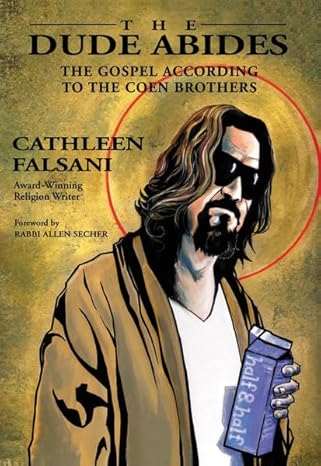
Rabbi Secher wrote the Forward for and is the voice on the Audible version.
(Courtesy of the St. Johns County Visitors & Convention Bureau)
View Photographs by Horace Cort shows a group of white and black integrationists in the former Monson Motor Lodge swimming pool on June 18, 1964 and the manager pouring muriatic acid into the pool .


 eatdrinkfilms.com
Bravo to both of you — the series is thrilling and timely. Thanks for this backstory and for the visual extras, particularly the link to the full “Why We Went” letter, which is deeply inspiring. And thank you to Rabbi Secher for the kick in the pants.