
By Robert Ottoson
One doesn’t have to consult IMDB to see which novel has been filmed the most times.
It’s easily LES MISÉRABLES.

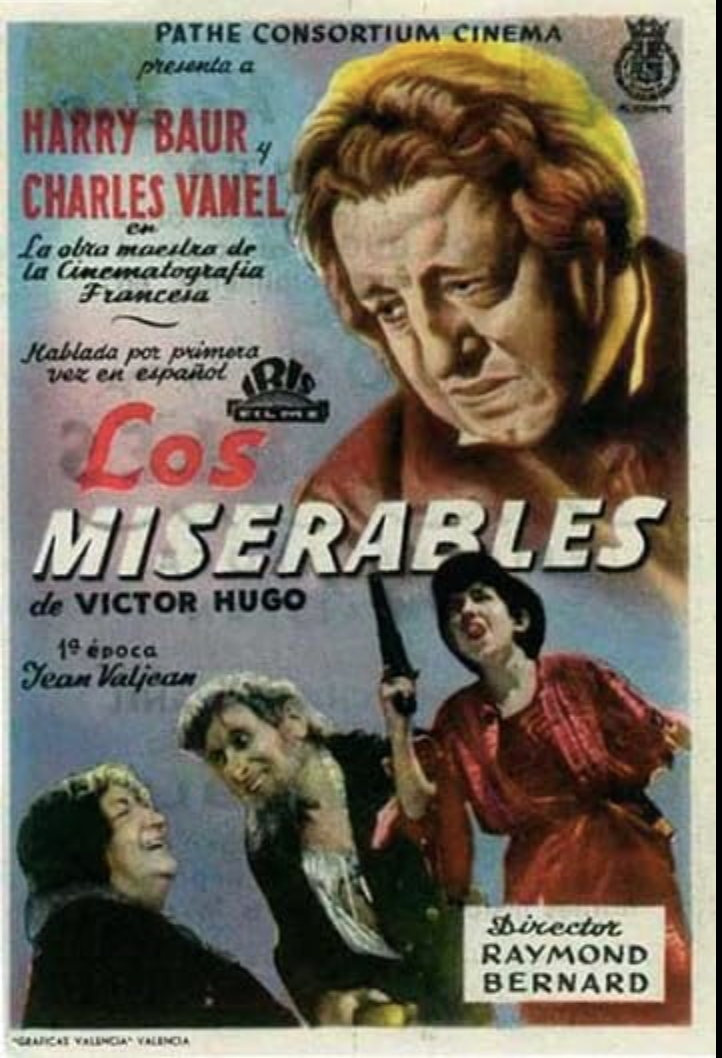
Victor Hugo’s classic of struggle, forgiveness and ultimate redemption is a very long novel (1900+ pages): the magisterial 1934 version (screening at the Roxie Theater in San Francisco as part of THE FRENCH HAD A NAME FOR IT ’24 on October 6) clocks in at over 4 hours—and that’s not even close to being the longest version. (That honor belongs to the French 1925 silent version that runs just over six hours.)
Is Bernard’s three-part version worth your time investment? The short answer: yes.
The genetic code for the French noir that emerged in the 1930s can be found in the works of 19th century novelists, with Hugo the first in a line that led to the naturalistic works of Emile Zola that would later leap onto the screen as full-blown noirs (THERESE RAQUIN, already screened in Don Malcolm’s FRENCH festival).
Hugo works in a much broader canvas with LES MISERABLES, but we can easily connect many of his characters with those we see regularly in film noir.

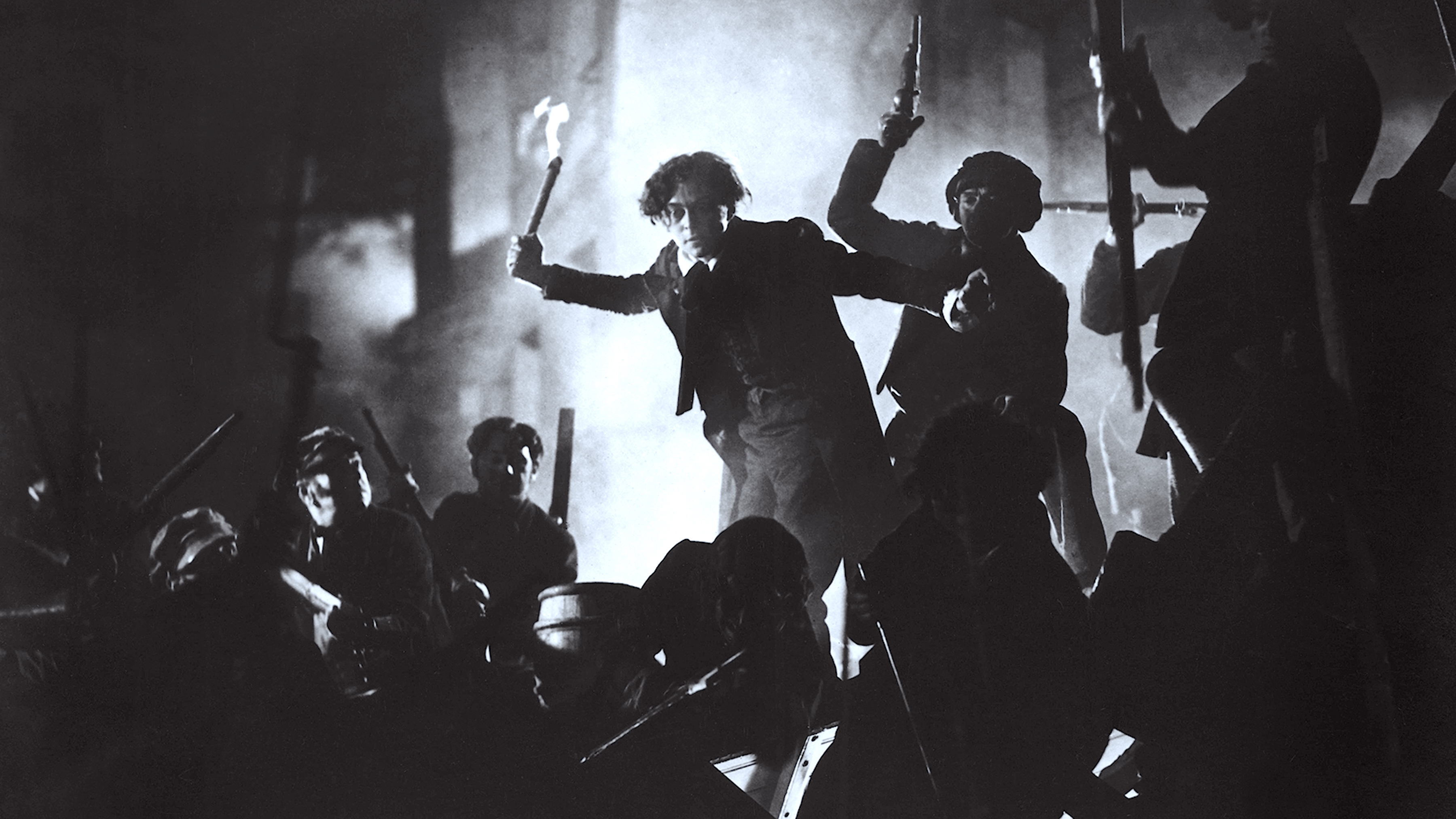
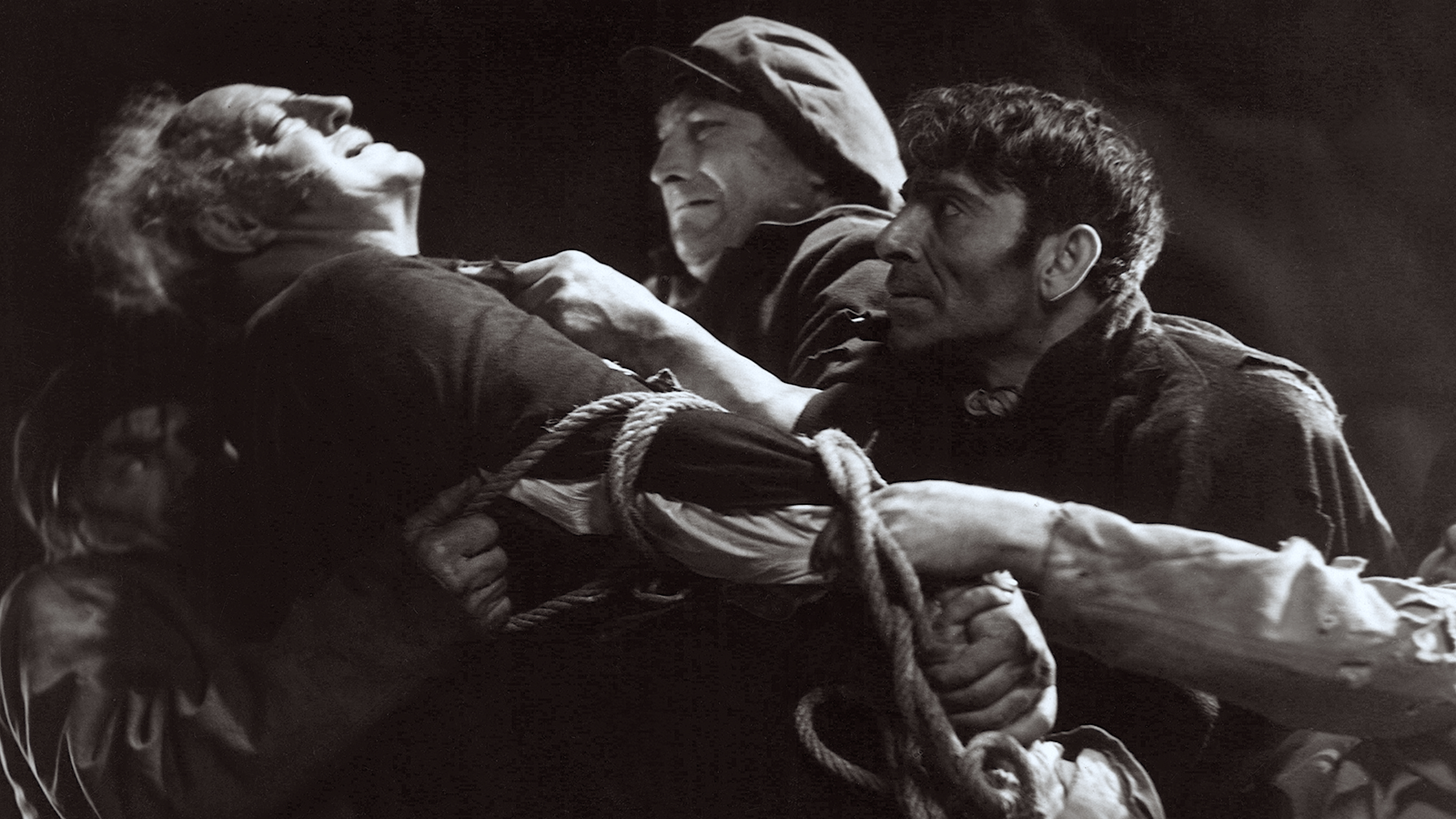
The 1934 version is an ambitious, high-end production, directed by Raymond Bernard, whose long career began in the silent era: as a result, LES MISERABLES has one foot in that unique aesthetic tradition and another in the visual world we’ve come to associate with noir: cinematographer Jules Kruger (Abel Gance’s lensman on NAPOLEON) employs camera tilts (some even hand-held), and copious chiaroscuro, turning 19th century Paris into an unremittingly dark place. Riveting noir set pieces emerge at regular intervals, particularly in the film’s third segment, as exemplified in the lengthy nighttime scenes at the barricades, and Valjean’s transporting the unconscious Marius through the dank sewers of Paris.

Harry Bauer is Jean Valjean
As portrayed by Harry Baur, Jean Valjean is the anchor of the film: the ex-convict who has been hounded for years by the implacable, inhumanly obsessed Inspector Javert. With his homely, haggard, hangdog face, Baur brings a human immediacy to the role that combines power, pathos and nuance in ways that transcend the “prettified” performances that have tended to proliferate in so many later versions. Javert is Charles Vanel, one of the most familiar faces in French cinema in a career that spanned from the 1910s to 1988. He is suitably obsessed…
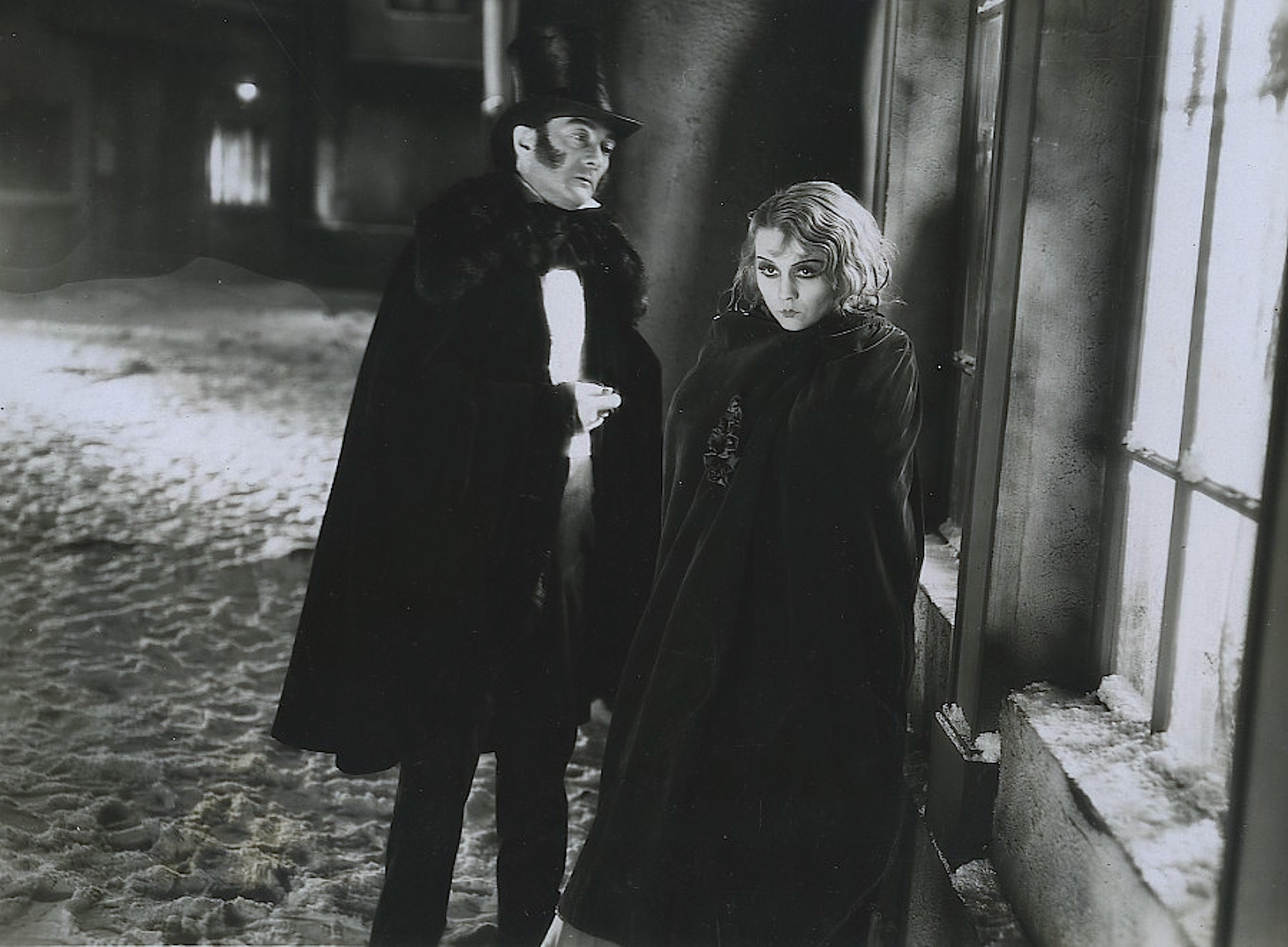
Charles Vanel is Inspector Javert with Florelle as Fantine
Hugo mixes noir narrative strands with a throughline that slowly arcs toward two very different forms of redemption for these two. Their fraught dynamic is the film’s “noir spine” and forms the basis for the countless variations in other films that have either alluded to or directly borrowed from it.
Two other characters are central to the narrative: the Thenardiers, the “heroes” of LES MISERABLES’ second segment—a scruffy husband & wife team (played with relish by Charles Dullin and Marguerite Moreno) who survive one step away from abject poverty any way they can. Valjean interrupts their child trafficking, and in doing so inherits a daughter, Cosette (Josseline Gael) who gives the embattled hero yet another motivation to elude capture.


Bernard’s film is the most highly acclaimed version of Victor Hugo’s timeless tale that is still packing them in as a stage musical in 2024 London—but it is never screened. October 6 marks a most welcome exception to that neglect, and is your chance to see it on the big screen as it was intended to be seen.
It’s an experience that will stay with you.




Robert Ottoson is an author whose books include “A Reference Guide to Film Noir, 1940-1958″ and “American International Pictures: A Filmography.”
 eatdrinkfilms.com