
By Owen Field
(Including fragments of an interview with Midcentury Productions’ Don Malcolm.) (November 30, 2023)
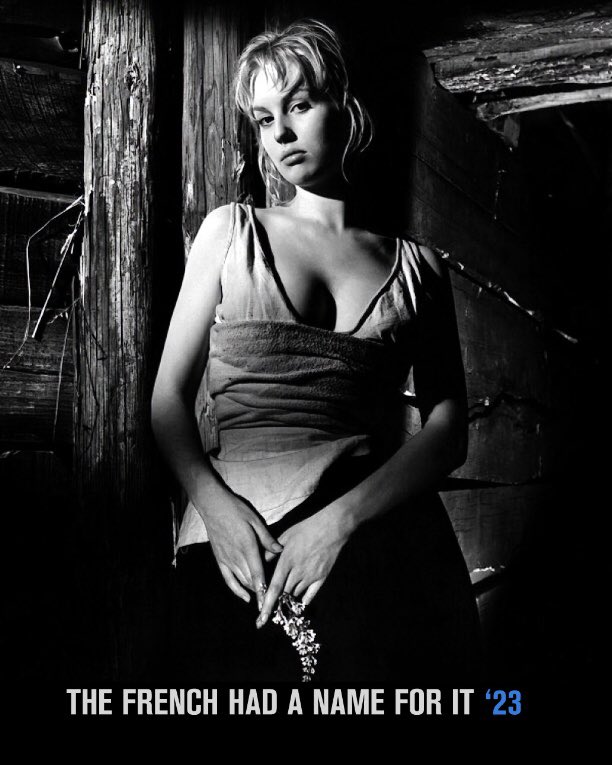
THE FRENCH HAD A NAME FOR IT is one of the world’s best-kept open secrets, spilling out a world of film noir—or, more accurately, perhaps, a “lost continent” that has been relentlessly explored at the Roxie Theater in San Francisco since November 2014.

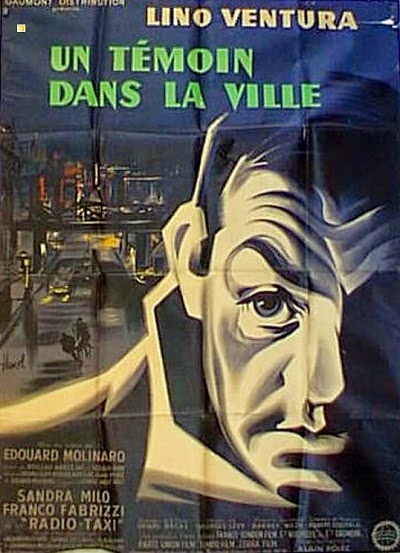
Lino Ventura in WITNESS IN THE CITY (UN TEMOIN DANS LA VILLE)
It was a sensation then, and remained so through 2019, but the great COVID pandemic hit its audience hard, with the skewing-older demographic that had sustained its success skittering away from any and all movie theaters (and still not back at full force even now, in the fall of 2023).
The festival posited something radical—several somethings, in fact. First, that film noir was invented not in America in 1940-41, but in France during the early 30s, borrowing motifs from antecedents in silent film, from German expressionism, and (perhaps most tellingly) from a group of itinerant emigré filmmakers from Russia and Germany. Second, that the entire history of French cinema needed re-examination in the light of this discovery, due to the fact that the “cinema de papa” period in which it thrived (despite and because of the Occupation, despite and because of the “great retribution” that occurred after World War II) had been viciously attacked and successfully marginalized by the critical forces that emerged in the 1950s even as French film noir would break in two—into the “heist films” that would define it for the world from that point forward, and into the “last wave” of film noir as a place to explore the miasma of existence, as captured by forgotten (and subsequently) shunned directors.
ALL of this was latent in the mind of Midcentury Productions’ Don Malcolm in 2014, as he stepped away from a gig with the Film Noir Foundation to begin a ten-year crusade for an astonishing cache of films (over 600 in total) that had essentially been in mothballs since the advent of the Nouvelle Vague.
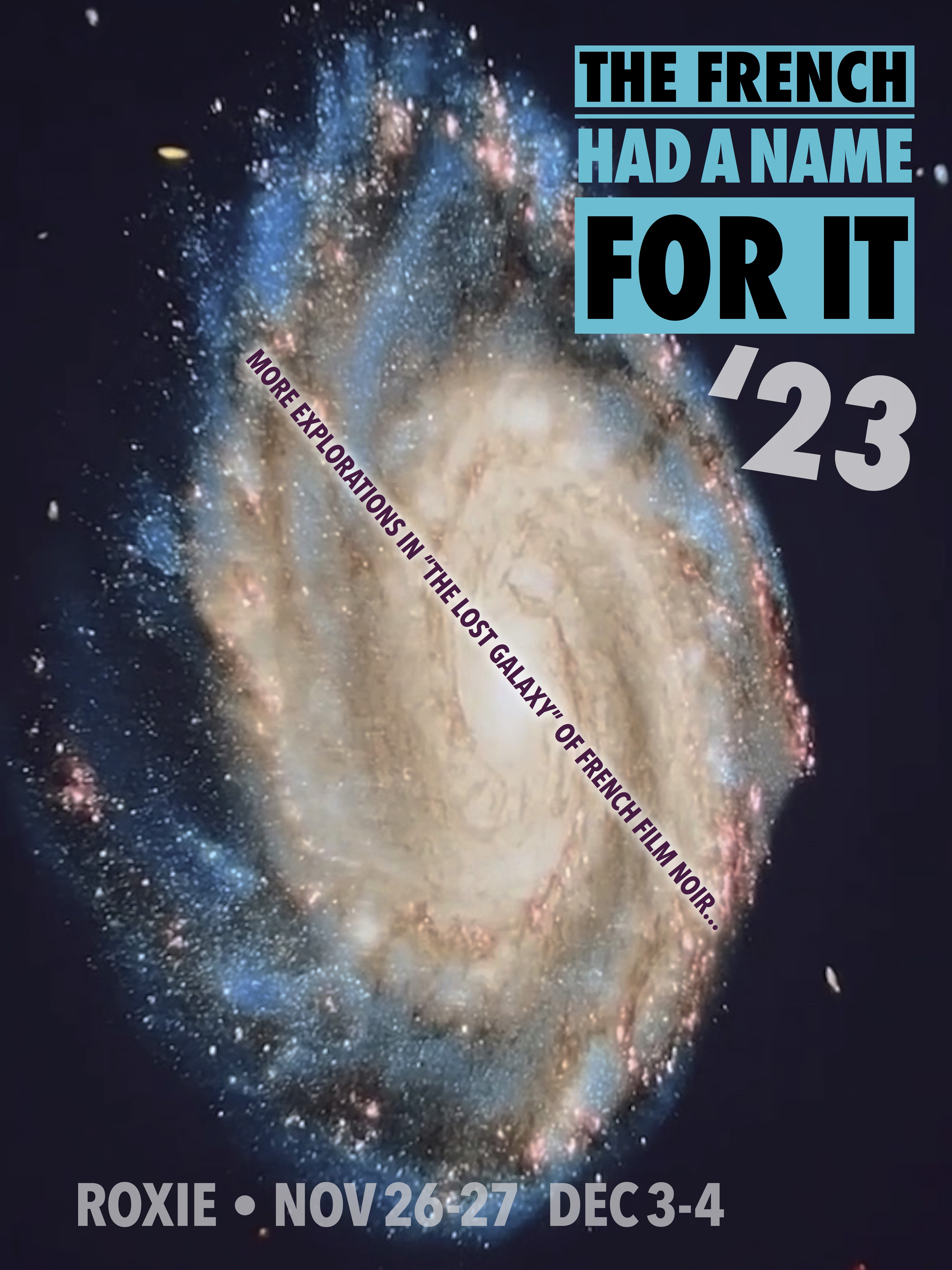
Now, in 2023, the festival has brought nearly 20% of those films back to audiences at the Roxie Theater, but the tricky state of repertory cinema in the Bay Area (echoing similar issues faced all across the United States) have pushed it further into the margins. A “film club” approach since the pandemic has kept the flow of films constant, along with several other remarkable series (MIDCENTURY MADNESS, an impossible treasure trove of 30+ hyper-obscure films from around the world; THE OTHER SIDE OF THE LOST CONTINENT, doing the same thing for “non-noir””cinema de papa” period French film, and A RARE NOIR IS GOOD TO FIND, astonishing international noir beyond even the reach of the venerable Film Noir Foundation—which will take a page next January from Malcolm’s one-shot summer series at the 4-Star Theater, FRANCO-AMERICAN NOIR, where one American noir and one French noir faced off against each other as Don exhorted his audience to “vive la difference.”)
Which brings us to FRENCH HAD A NAME FOR IT ’23, which will venture back into its former digs in the spiffily reappointed Roxie main theater on Monday December 4 after screening eleven of its thirteen films in the “quaint” and “cozy” screening room. For that show, Don has reached back into the glorious backstory of his festival to program a double bill geared to remind folks just how big a deal this festival was in its formative years.
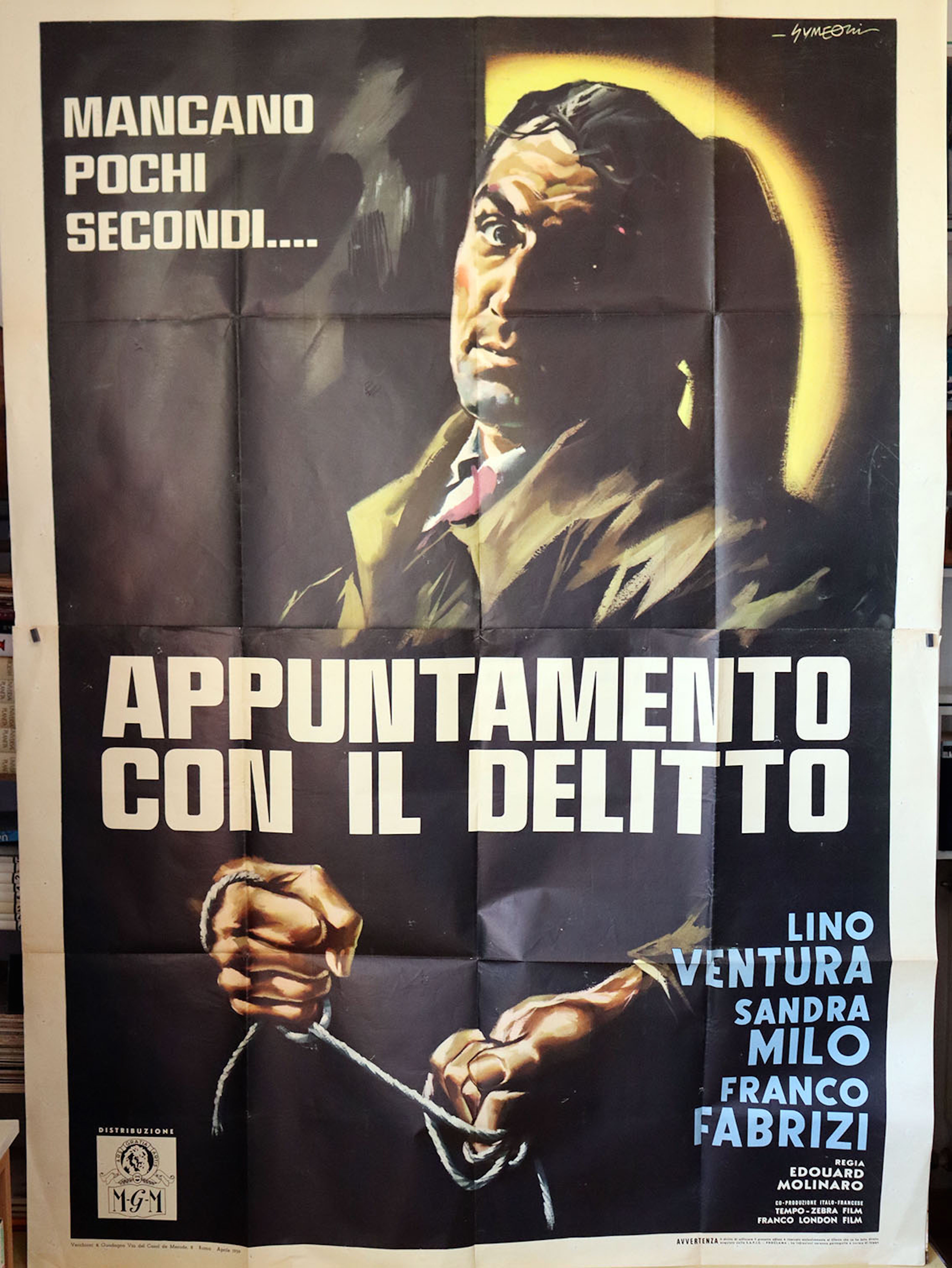
WITNESS IN THE CITY (UN TEMOIN DANS LA VILLE) is the first great Lino Ventura feature, where the craggy ex-wrestler first perfects his brooding persona. His revenge murderer finds himself plunged into a nocturnal Paris landscape that inexorably turns against him as he attempts to take out the one witness who can pin the murder on him; director Edouard Molinaro, one of the “last wave” film noir directors in the 1955-65 time frame finally emerging from oblivion, pulls out all the stops in this grimly escalating cat-and-mouse struggle that winds up with a dizzying array of Parisian taxicabs in something akin to a military operation. The young Costa-Gavras borrowed much from it when he began his career in the mid-60s with his frenetic policier THE SLEEPING CAR MURDERS (1965)—another film that Don brought back to audiences ahead of everyone else.
It’s followed by an even more harrowing, ironic noir masterpiece featuring one of France’s greatest character leads, Bernard Blier, in what is arguably his finest performance.

Bernard Blier in THE SEVENTH JUROR (LE SEPTIÈME JURÉ)
In THE SEVENTH JUROR (LE SEPTIÈME JURÉ), he’s a provincial pharmacist whose sole moment of lechery turns fatal when he accidentally strangles the young woman he foolishly tries to pick up. Covering up his crime, he is soon aghast to discover that her lover is being charged with the crime; overcome by guilt, he maneuvers to get himself on the jury and through his actions, manages to have the man acquitted. But things don’t end there: in fact, they get worse—much worse. Director Georges Lautner never relents in turning the knife just a bit further on his lead character, with stunning consequences.
Taken together, these two films sum up and validate the rapturous pronouncements made in the press back in 2014-15 about the merits of THE FRENCH HAD A NAME FOR IT, and Malcolm has delivered on his promise to rewrite film noir history and the history of French cinema in the years that followed. Now he’s getting close to wrapping up the project, and we recently caught him in his own headlights to see if he’d reveal his exit strategy…
OWEN FIELD: We hear rumors—or should I say, we’ve been spreading rumors—that next year (2024) will be a “grand finale” of some kind. Should I take my own rumors seriously?
DON MALCOLM: It will be a finale, yes—but how grand it is still needs to be determined.
OF: Are we running out of really good French noirs to resurrect? After all, many of the American noirs now being featured at TCM have become increasingly “lesser”…
DM: We’re not running out of worthy material, but we are starting to get low on unseen films with sufficient print quality to screen. And audiences are now much pickier about print quality than was the case back in the day when Elliot Lavine was unearthing impossibly rare American noirs in sketchy prints, and folks accepted that because there was no other way to see it.
OF: You are, however, indeed finishing that book on French film noir that folks have been anticipating for awhile now?
DM: Indeed. (pause) I think I will win, and finish it before it finishes me. And that’s part & parcel of a finale, which I’ll consider grand when the book appears and I am still standing…
OF: OK, let’s shift to this year’s series. While it’s clear that the closing night show is a conscious echo of those early “glory years,” the rest of the festival is pretty stellar in its own right.
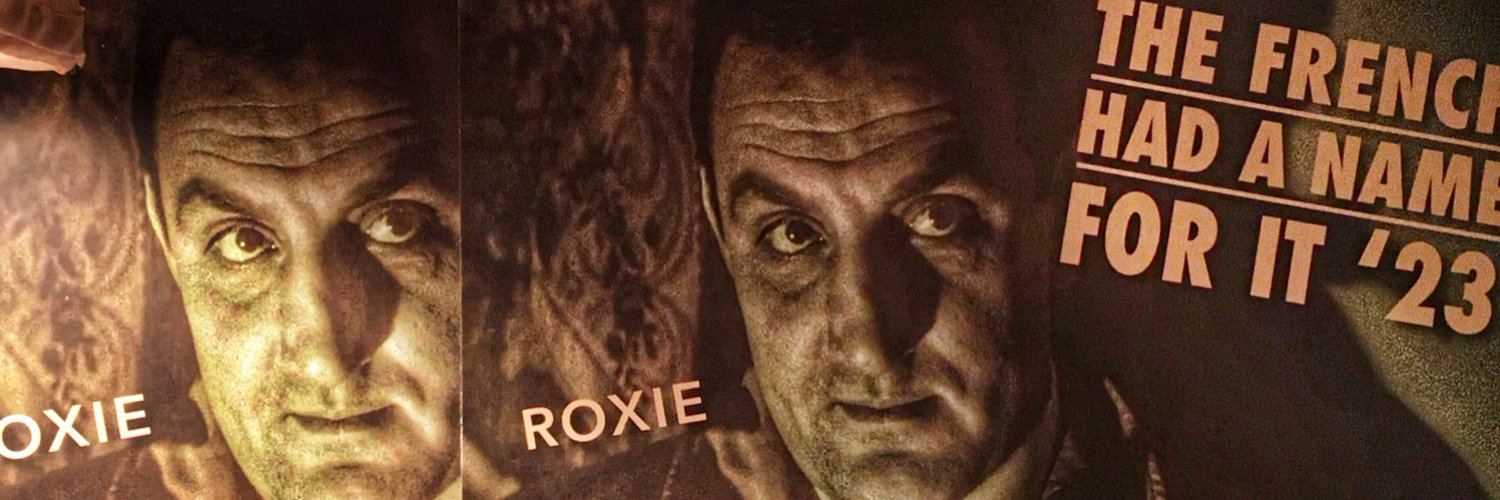
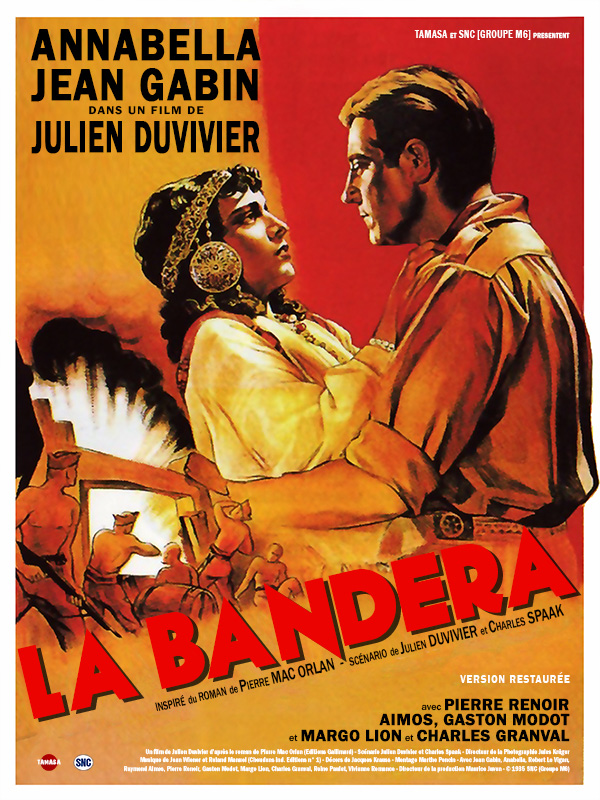
DM: I think this is another very strong entry in the FRENCH series, which transcended its early “sexy/risque” identity in Year Three and has traversed that “lost continent” across all of its temporal territory on that still-emerging map. It’s another series with all four decades—the 30s through the 60s—given coverage, and I’m especially happy with the second Sunday matinee, which follows FRENCH 5½ with its thirties triple bill—and the progression this time from LA BANDERA to CARREFOUR to SANS LENDEMAIN is one of my favorites of the more than fifty combinations we’ve presented.
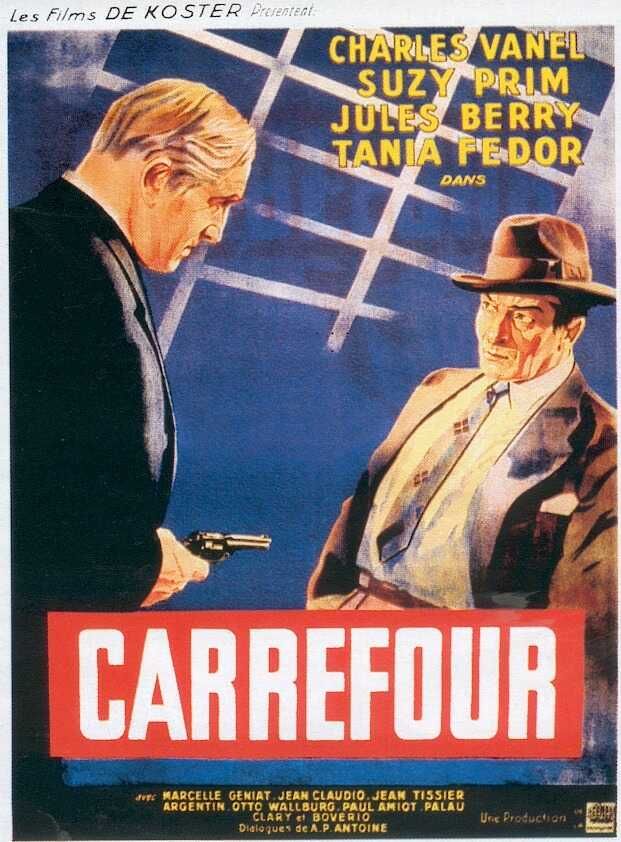
OF: I think the English translations of the film titles might give folks a sense of how they achieve a unique thematic blend—those are ESCAPE FROM YESTERDAY, CROSSROADS, and THERE’s NO TOMORROW.
DM: Yes, absolutely. And that makes it clear that we are in noir territory—specifically, French noir territory as it reaches its first maturity in the late 1930s.
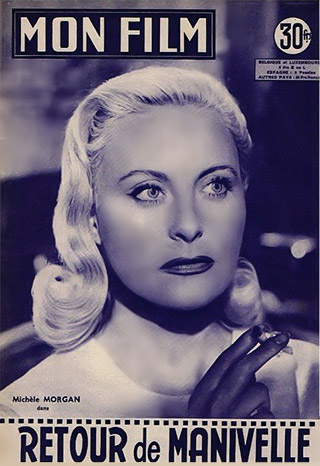
OF: I’m thrilled to see the reprise of the two Signoret films, and a tribute to Michèle Morgan that shows her range.
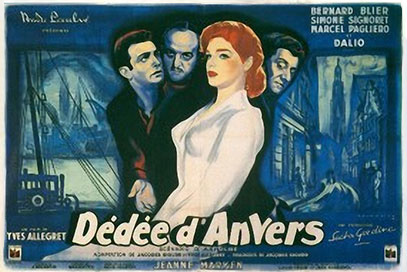
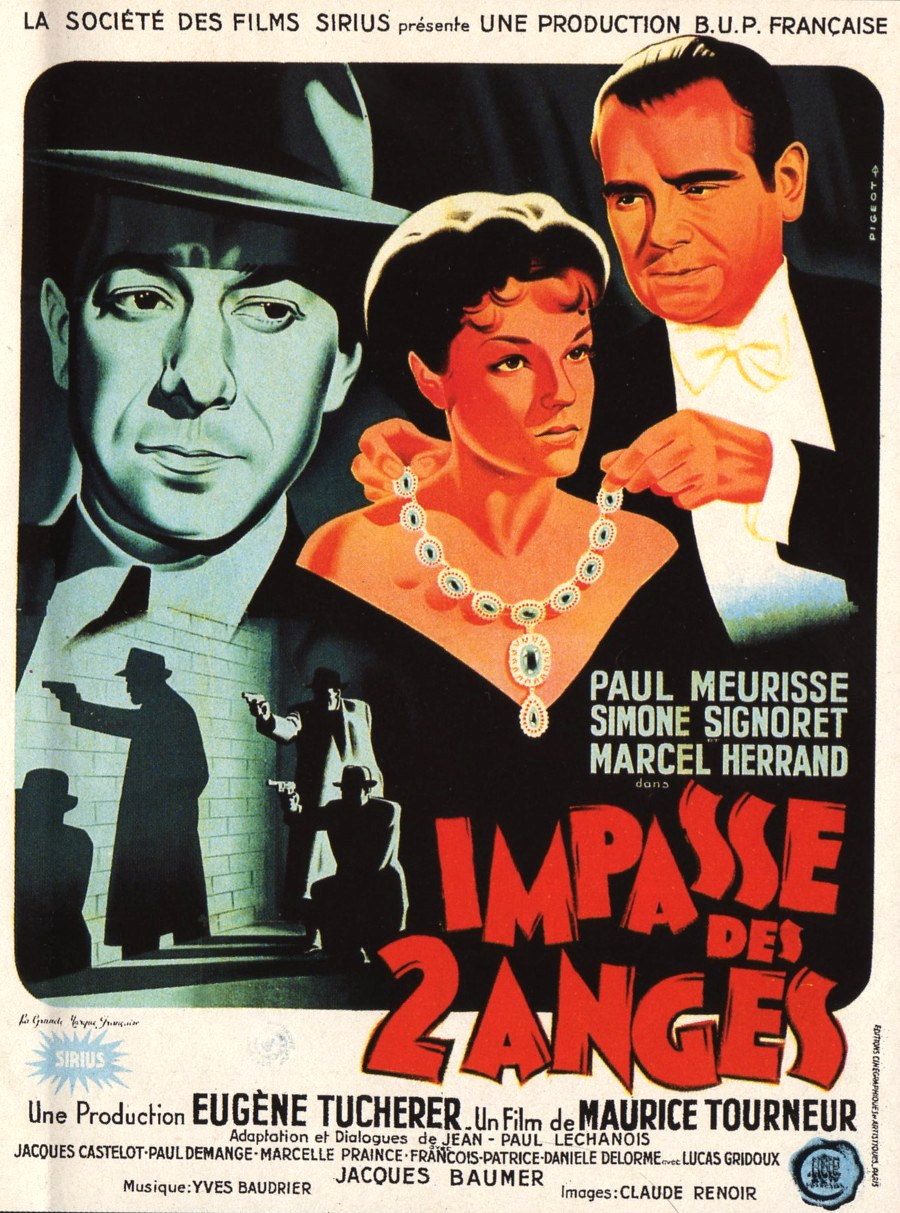
DM: Our long-time fellow travelers have clamored for a reprise of DÉDÉE D’ANVERS, and many others were charmed by IMPASSE DES DEUX ANGES…it represents a perfect snapshot of the ravishing young Simone Signoret, which will provide a refreshing change of pace from her more matronly appearance in THE CRUCIBLE.
And there is Michele Morgan showing everyone that she can get inside the mind of a femme fatale better than any of those more famous for it—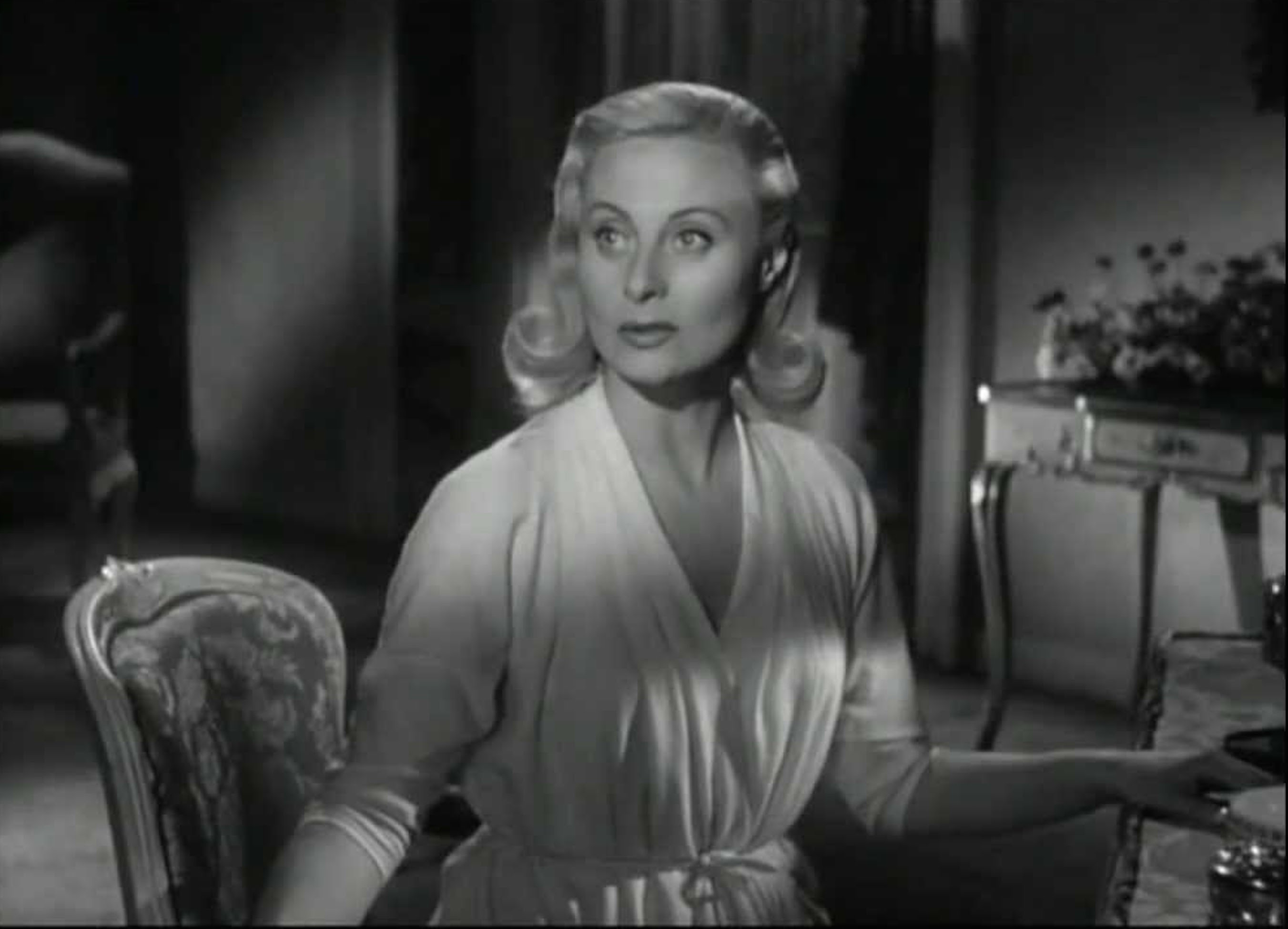
OF: In THERE’S ALWAYS A PRICE TAG…
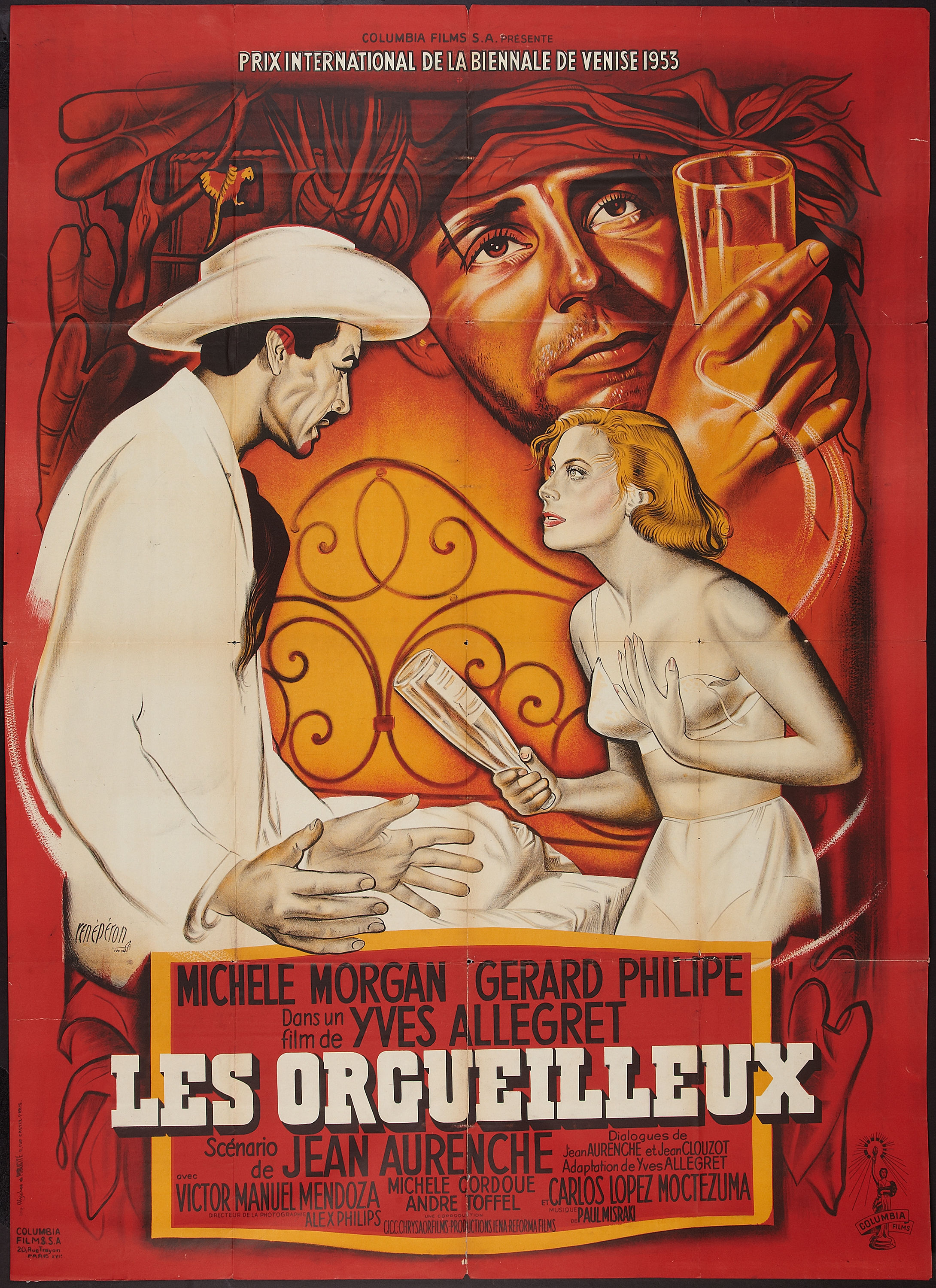
DM: Yes, and there always is, isn’t there? But we also permit her to show her noble side in LES ORGUEILLEUX, in a role that might have gone to Signoret had she not “switched Yves in mid-stream…”
OF: From Yves Allegret to Yves Montand…with whom Signoret stars in that incendiary version of THE CRUCIBLE you just mentioned.
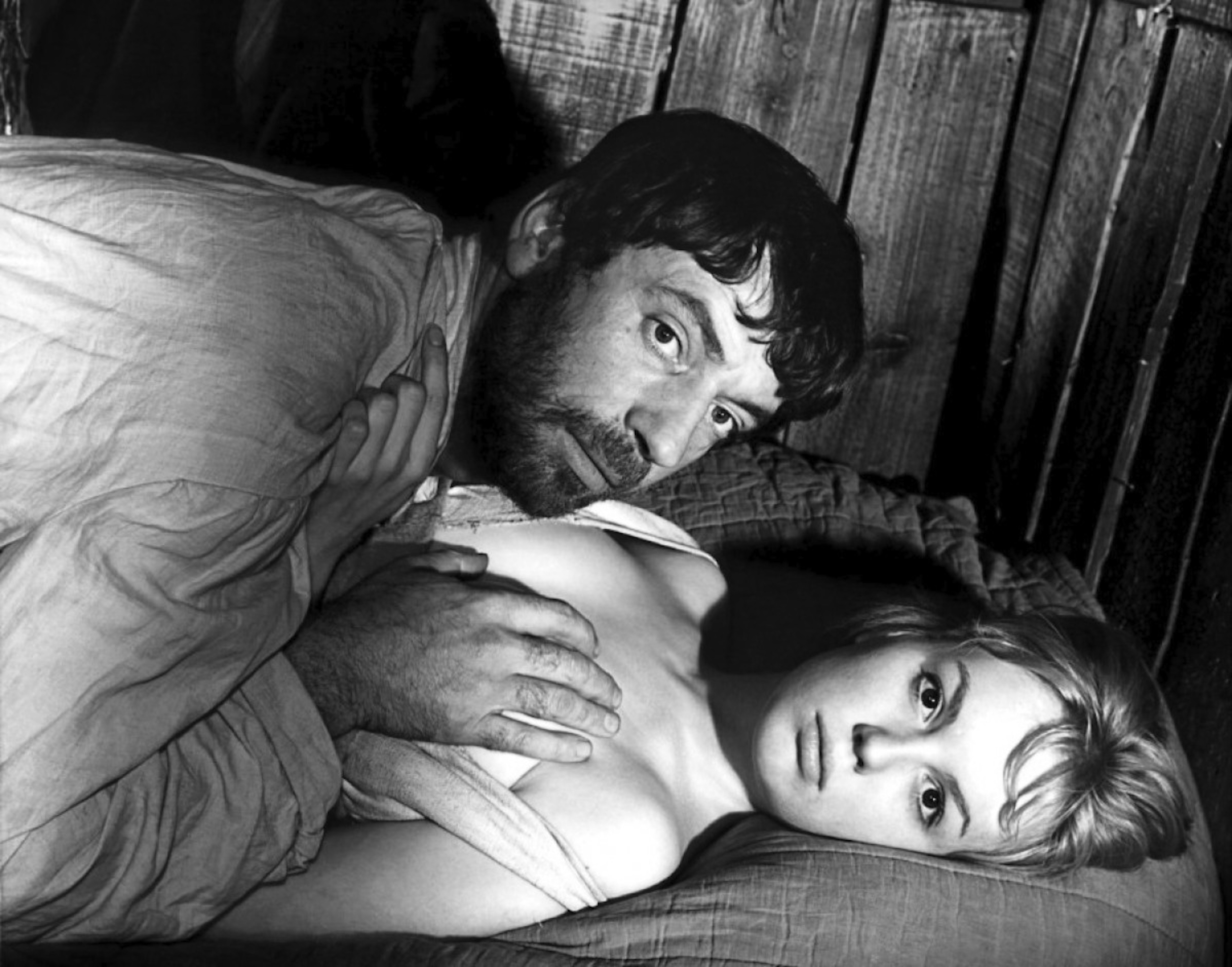
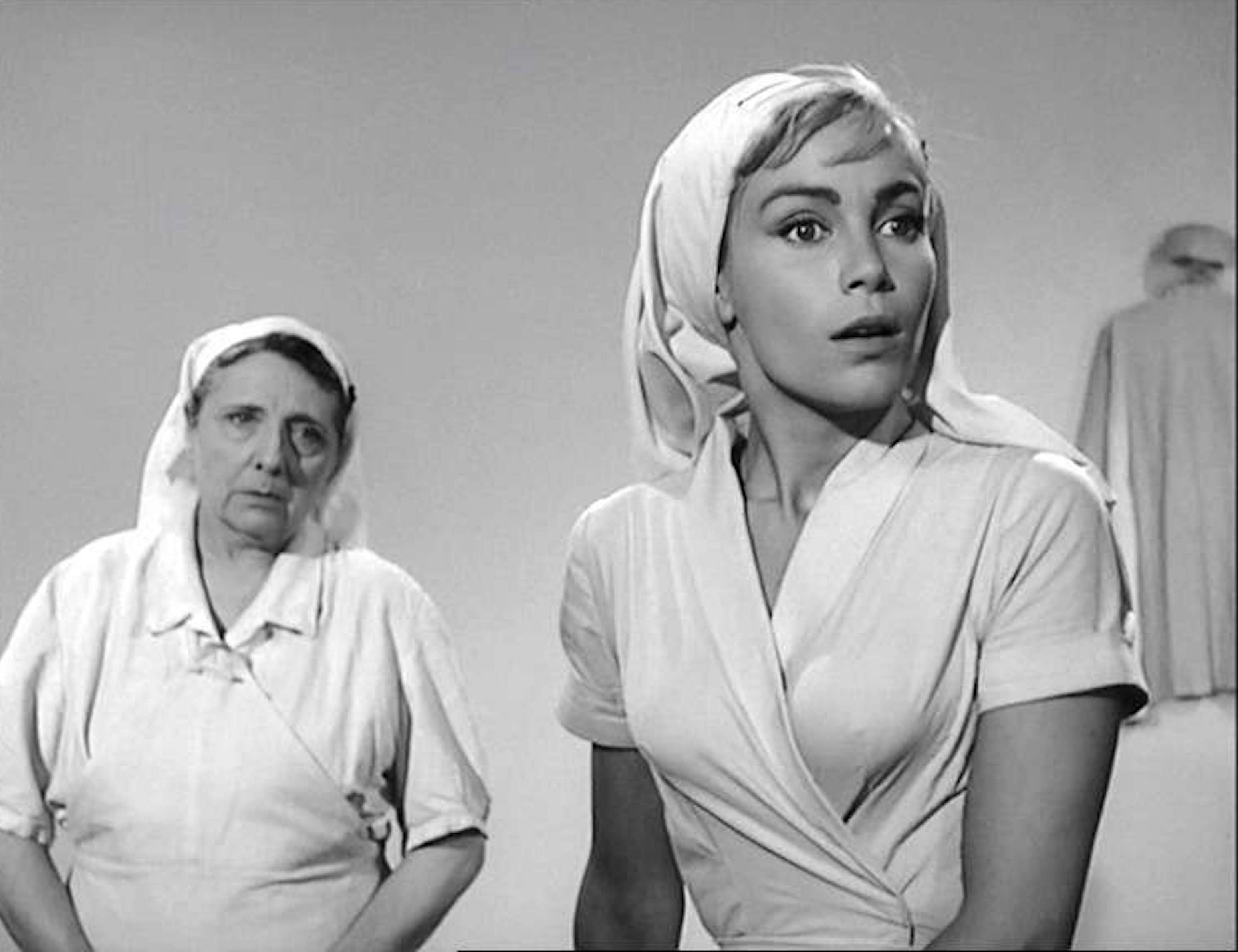
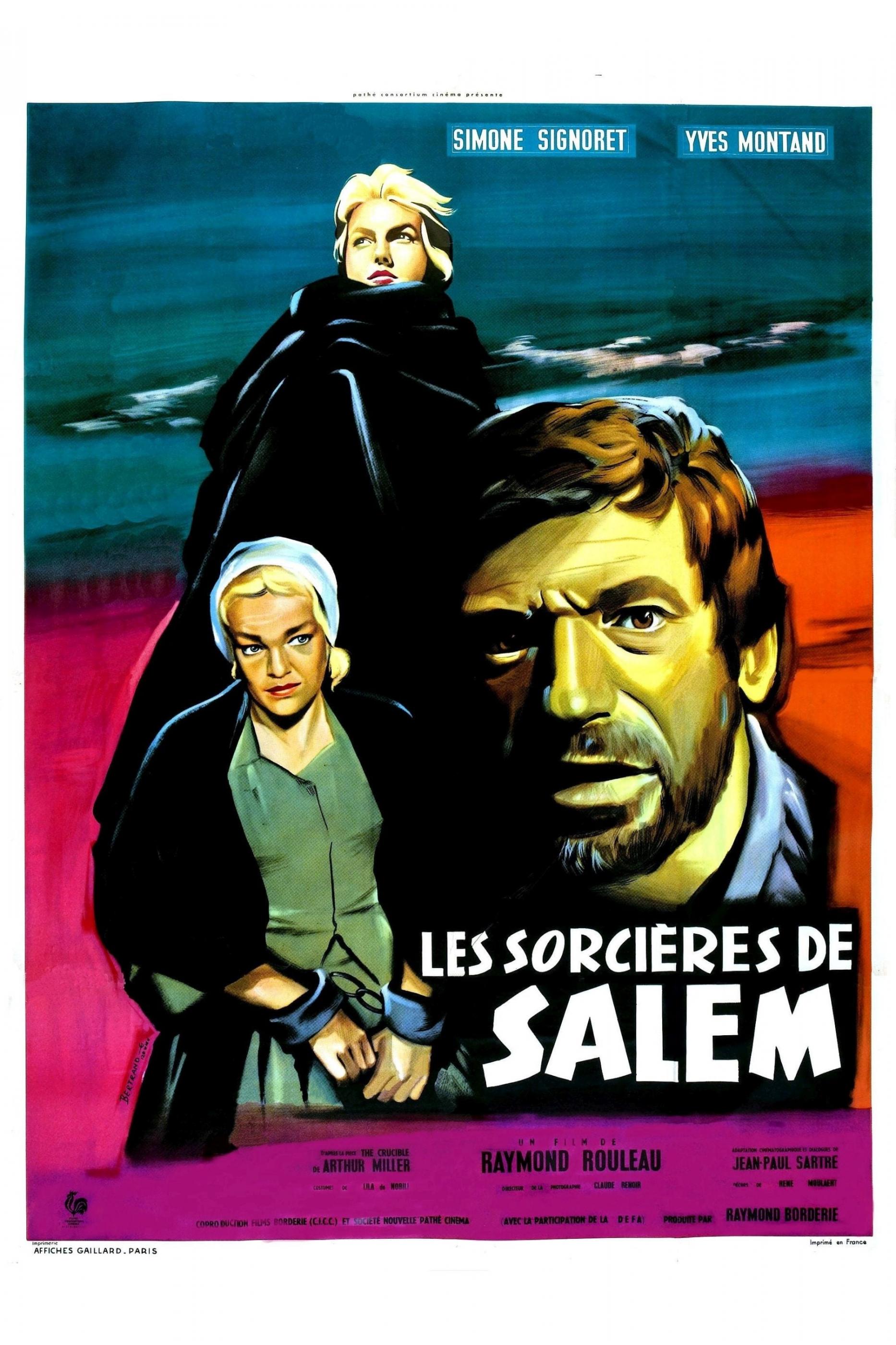
THE CRUCIBLE (LES SORCIERES DE SALEM)
DM: Yes, it was a passion project for the couple, first brought to life on stage. But the film version is better still because it has the young Mylene Demongeot playing the spurned Abigail Williams. And it’s the role that put her on the map, prompting Henri Verneuil to beg her incessantly to play the femme fatale in A KISS FOR A KILLER, one of our first electrifying rediscoveries from “the lost continent” (Don supplies parenthesis with arm gestures…)
OF: Demongeot is the fourth blonde on that opening day—wasn’t the very first festival in 2014 absolutely saturated in blondes?
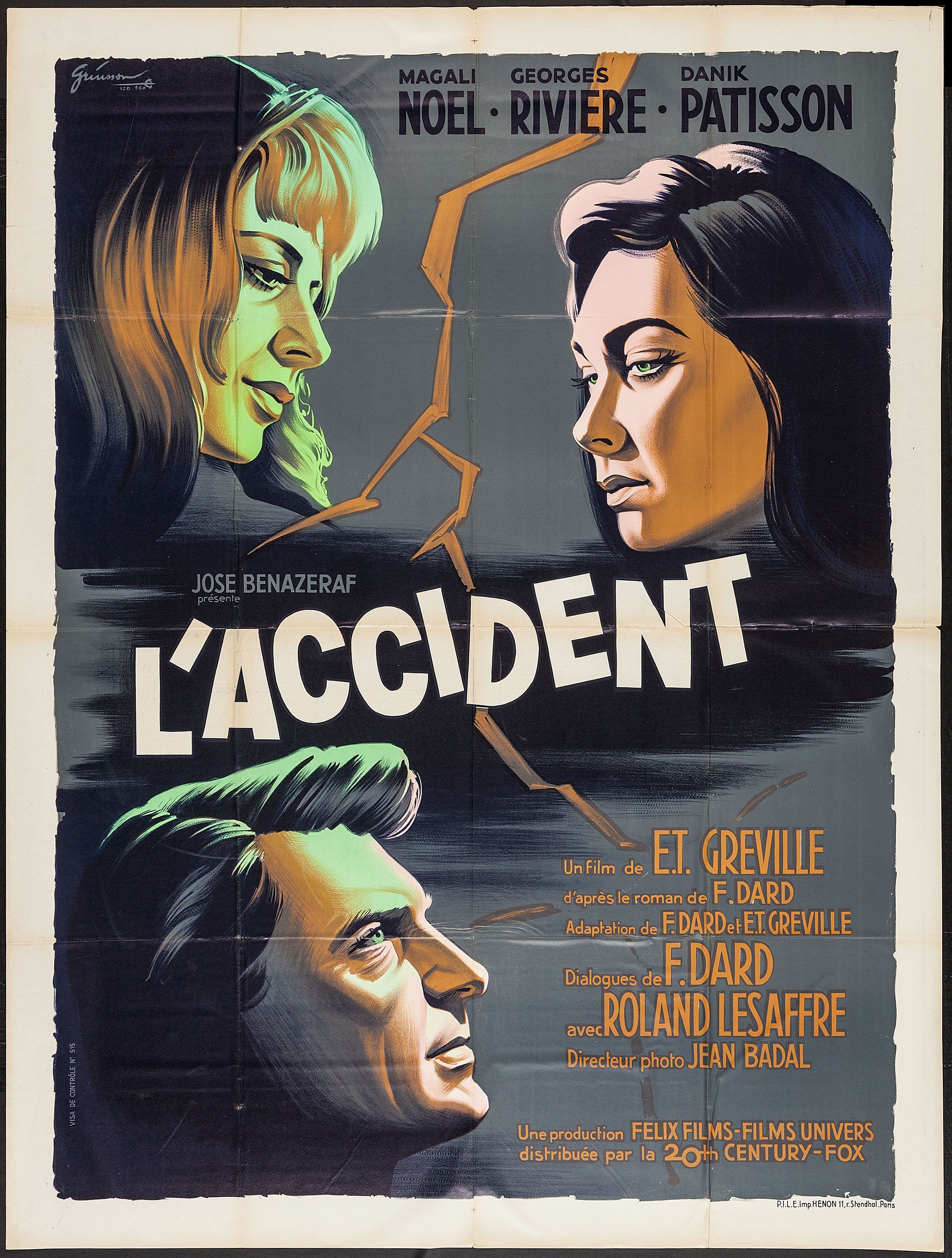
DM: Yes, it was—and I wanted to make a backward allusion to that, so we assembled some films with even more blondes—THE DEVIL & THE ANGEL, SECRETS OF A FRENCH NURSE, THE ACCIDENT—to kick things off with an echo of our first year.
OF: Of course, in real life you’re known to be quite partial to brunettes…
DM: Yes, but…give the people what they want!
OF: So we’ve covered everything, haven’t we—except possibly a big plug for the closing night show in the big theater—
DM: —The scene of so many of our crimes!
OF: (laughs) True enough! —But let’s make sure we really end with something that will motivate those who’ve been away from the series for awhile, or who’ve never been, or are fans of film noir looking for something different…
DM: And perhaps ready to “vive la difference.” OK, here goes: the closing night show is simply one the finest double features of film noir from any country at any time. It captures everything about these films that American noiristas crave, and these films have no trace of the American attributes that our cultural imperialism has detected or imposed—remember even the French critics like to call Jean-Pierre Melville “an American in Paris.”
OF: When, in fact, many of his finest films are suffused with his experience in the French resistance.
DM: Mais oui. But let’s stay on point. WITNESS IN THE CITY and THE SEVENTH JUROR are spellbinding noirs of the type that hadn’t been made in America for quite some time, and they do so on their own terms, thus making for the perfect introduction—or re-introduction, let’s say—to the still under-known phenomenon of classic French noir. Join us on December 4th to see why this festival was such a big deal when it first emerged, and find out that the “lost continent” of French film noir really is a big, big deal.
OF: Hear, hear…
DM: Thanks, Owen—I’ll pay you later…
THE FRENCH HAD A NAME FOR IT ’23 played at the Roxie Theater on November 26-27 and continues December 3-4. Advance tickets are still available from the Roxie, particularly for the December 4 show, held in the big theater. As noted, this closing night is the perfect introduction to the unique glories of these rare films. Make that Monday night your movie night for the week—you will be glad you did…
More details and more on the Midcentury Productions website.
Follow on Instagram. The Facebook page is out of date but has some wonderful posters and past news.
A Gallery of images, posters and trailers from THE FRENCH HAD A NAME FOR IT ’23.
Though some of the trailers in this article do not have English subtitles, all films showing in the festival do have them.



 eatdrinkfilms.com